Most people don't lose credibility because they have bad ideas. They lose it because other people never reach those ideas before running out of attention.
We start with something basic, something simple, and frankly, one of the hardest skills to actually master. Communication for impact.
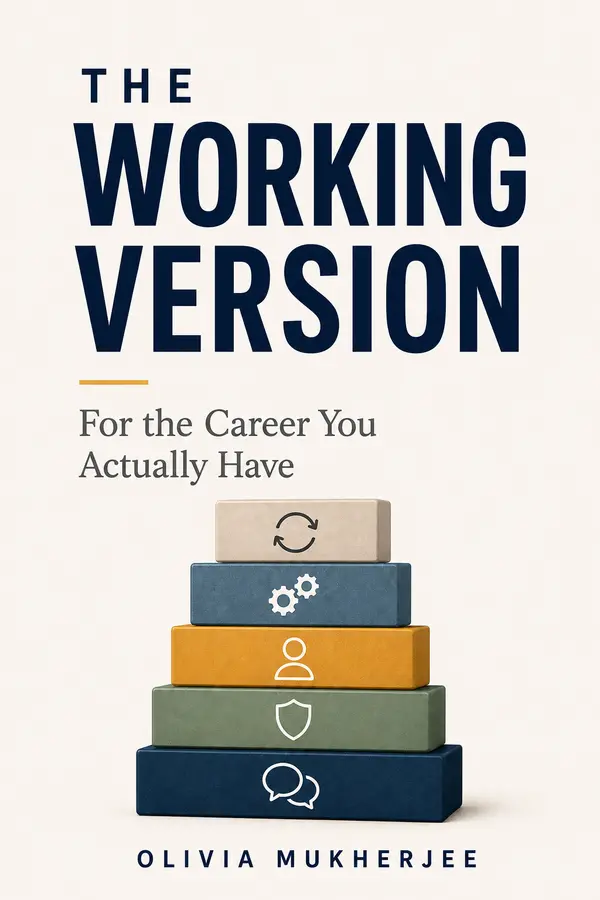
Why start here? Because almost nothing else in this book works without it. You can have the sharpest strategy, the best instincts about office politics, the most polished leadership plan. None of it lands if the person on the other end can't quickly understand what you're actually saying. This is the base layer everything else gets built on.
Consider this:
If you have a lot of freedom in how you run your work, this skill helps you move faster. Speaking and writing this way earns you the authority to drive decisions, instead of waiting for someone else to pull the point out of you.
If you have very little freedom, say, a manager who wants to be looped in on everything, or an org that likes tight oversight, this skill still helps you. Just differently. Even the most hands-on boss appreciates an update that takes ten seconds to read instead of two minutes. It doesn't loosen their grip. It just makes the grip less exhausting for both of you.
Either way, this is worth learning. We'll come back to this idea of reading your own workplace later on. For now, just notice which one sounds more like your situation.
You're in a meeting, and someone starts talking. They give you the background first. Then the context. Then a little history of how we got here. And by the time they get to the actual point, half the room has already checked out and started thinking about lunch.
You might be the person doing this. Or you might be doing the opposite. Cutting straight to a request or opinion before anyone knows what you're even talking about. Catching people off guard. Sounding blunt when you didn't mean to be.
Both of these are the same problem wearing different clothes. One person buries the point. The other skips the setup entirely. Either way, the listener walks away confused, or worse, annoyed. And if this happens often enough, people start tuning out before you even finish your first sentence, because their brain has learned, without them noticing, that listening to you takes effort they don't always have to spare.
Let's talk about why this happens.
If you don't understand why this keeps happening, you'll fix it for a week and then slide right back into old habits the moment things get busy.
This isn't about communication style, and it's definitely not about intelligence. It's about how much a person's brain can actually hold at once. Somebody juggling back to back meetings, five projects, and three chat windows doesn't have unlimited attention left over for your message. When you tell a story the traditional way, background, then context, then buildup, then finally the point, you're asking them to hold your entire narrative in their head, on faith that it's going somewhere useful. Most people, especially the busier they are, run out of patience before you get there. By the time you say the important thing, they've already missed it, or they've stopped really listening.
This is why people who are excellent at their jobs sometimes get quietly written off as hard to follow, when the real issue was never their thinking. It was the order they presented it in.
Good ideas delivered backwards sound like bad ideas.
There's also a trust angle worth naming. When you make someone wait for your point, you're implicitly asking them to trust that you're going somewhere useful. Every extra sentence before the point is a small withdrawal from that trust account. Say the point early, and you're making a deposit instead. Over time, that adds up. People start looking forward to your updates instead of skimming past them, because they know you don't waste their attention.
So what's the actual fix?
It's simpler than it sounds, and that's exactly why most people don't do it. You put the bottom line first. Before the background, before the three reasons why, you say the answer, the decision, or the ask, in the very first sentence.
There's an old military communication idea called Bottom Line Up Front, and a related one from consulting called the Pyramid Principle. Both are saying the same thing. Start with the conclusion. Let the supporting details come after, only as much as the other person actually needs.
Never make someone work to discover why you're talking to them.
Think about the shape of it. Most people naturally write and speak like a story building toward a climax. You climb the mountain, and the point is waiting at the top. What you want instead is the opposite shape. Start at the peak. Say the point first, and let the supporting details trail down underneath it, available if someone wants to dig deeper, but never required just to understand what you're saying.
Here's a written example. Imagine telling your manager about a project delay. The buried version starts with the vendor, then the schedule adjustment, then the resourcing issue, and finally, after all of that, the actual news. The launch date is moving by two weeks.
Now flip it. Say, "The launch is moving back two weeks." That's the first sentence. Everything else comes after, only if they want it.
And here's the same idea, spoken out loud. Your manager asks, "Are we on track?" The buried answer sounds like, "So, last week we spoke with Procurement, and there was some back and forth about the shipping timeline, and then..." The better answer is short. "Yes. We're on track. One supplier slipped by two days, but we've recovered." One sentence, then done, unless they ask for more.
If it helps to have something concrete to copy, here's the basic shape most of these messages fall into.
First, the bottom line. One sentence. The outcome, the decision needed, or the plain status.
Second, the context. One sentence. Just enough background to make sense of the bottom line.
Third, the action. Who's doing what next, or exactly what you need from the person reading this.
That's it. Three sentences, in that order. You won't use this exact shape every time, but it's a good starting point when you're not sure where to begin.
It's worth naming the moment this usually breaks down. It's almost never when you're calm and have time to think. It's when you're anxious about how something will land, or when you're not fully sure of your own conclusion yet. In both cases, the instinct is to hedge, to build up slowly so you can feel out the room before committing to a headline. Watch for that specific feeling, the urge to explain your way into the point instead of just stating it. That's your signal that you're about to bury the lede again.
Now let's talk about how to actually practice this.
Understanding this takes two minutes. Rewiring the habit takes a little longer.
Here's a simple exercise. Take a message you were about to send anyway. Write it the way you normally would. Now go find the sentence where you finally get to the point. It's usually near the bottom. Cut it out. Paste it right at the top, as the first line. Read the whole message again.
Almost every time, it reads better instantly. You didn't add anything or remove anything. You just moved one sentence. But the message now has a clear headline, and everything underneath reads as support for it, instead of buildup toward a mystery ending.
This works out loud too. If someone asks you a question in a meeting, answer it in one sentence first. If they want more, they'll ask.
Here's a mistake a lot of people make. They read the idea, feel convinced, and try it first on something high stakes. A client, a senior leader, a project already under pressure. That's a hard place to start, because if it feels clumsy the first few times, and it probably will, you're now clumsy in front of someone whose opinion actually matters to your career.
So practice somewhere the stakes are low first. Go back through your sent messages from the last month or two. Pick five ordinary ones. Do the cut and paste exercise. Nobody's receiving this version. It's just for your eyes.
Next, try it on messages that genuinely don't matter much if they land a little rough. A peer you're comfortable with. A low pressure update to your own team.
You can also practice out loud, alone, before a room full of people. Next time you're about to walk into a meeting, take thirty seconds and say your update to yourself, headline first. It's the same reason athletes warm up before the actual game.
Only once this starts to feel a little natural should you apply it to the messages that actually matter. By then, this won't be a brand new skill you're fumbling through live. It'll be something you've already rehearsed quietly, enough times that it just comes out that way.
Now, a word of caution, because this can go wrong if you take it the wrong way.
Being direct is not the same as being short because you haven't done the thinking. If you say the bottom line first, but clearly haven't worked through the problem, people notice immediately. A confident opening sentence doesn't cover for weak thinking underneath it. It exposes it faster.
This also isn't about becoming blunt or cold in every situation. There are moments, someone's had a rough week, there's sensitive news to deliver, where leading with pure bottom line first feels tone deaf. Use your judgment. The goal isn't to turn into a robot that only speaks in headlines. It's to stop making people wait unnecessarily for information they need.
Let's talk about how to remember this once the chapter's behind you.
Keep the three sentence shape somewhere you'll actually see it. A sticky note, a pinned note wherever you draft messages. You're not memorizing a framework. You're giving your eyes something to catch before you hit send, until it stops needing a reminder at all.
It also helps to attach this to something you already do daily. Right before you send any message, pause for two seconds and ask yourself, where's my bottom line, and is it in the first sentence?
You don't need anything complicated to know if this is working. Watch for a few small signals. Do people reply faster? Do they ask fewer clarifying questions? Do meetings where you speak move faster, with fewer moments of, wait, what exactly are you asking for? These are the real markers. Not how confident you felt saying it, but how the other person actually responded.
So here's what to actually do this week:
Start with the low stakes practice. Old sent messages, casual notes, the thirty second rehearsal before a meeting. Give yourself two or three days of that before you touch anything that really counts.
Then take every message you send, to a manager, a peer, a client, anyone whose time you're asking for, and force yourself to open with the point.
Your anchor habit for this week is simple. Bold the bottom line as the very first sentence of every message where you're asking someone to understand or decide something. Not just move it. Bold it. It forces you to commit to the headline instead of quietly hedging it back into the paragraph.
By the end of the week, save two or three of these messages somewhere you can find them again. This is your first entry in the running collection you'll be building over the next several months. Small on its own, but everything after it leans on this one being solid first.
Next week, we build on exactly this. We'll look at how to bring a real problem to someone, not just a status update, but an actual issue that needs a decision, without dumping it on their desk half formed. But that only works cleanly if you've already got this one down. Say the thing first. Then we build the next piece on top of it.