Animal Farm by George Orwell — A Revolution on the Farm, and How Power Corrupts
Book Summaries
November 28, 2026
By NPOWS New
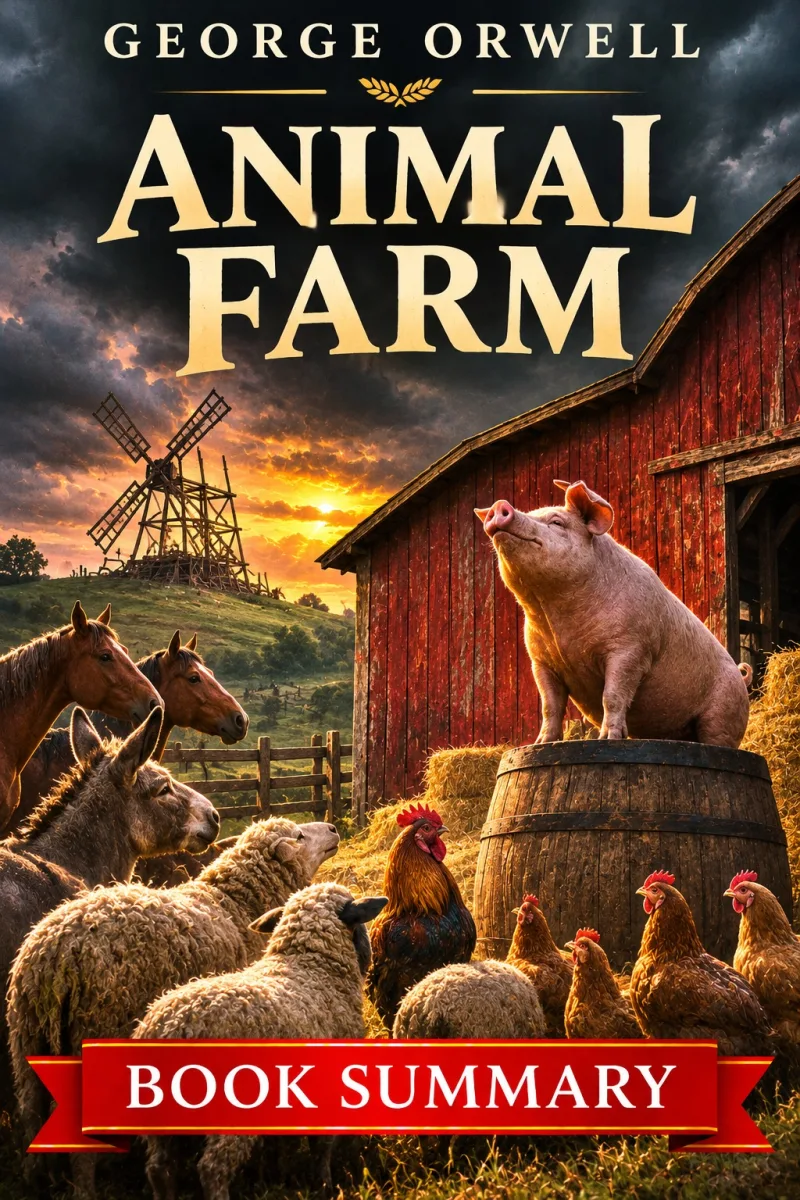
The animals of Manor Farm are tired of being overworked and underfed by their careless owner, Mr Jones. Inspired by the dream of Old Major, a wise old boar, they rise up, drive Jones out and take over the farm for themselves. They rename it Animal Farm and adopt Seven Commandments, the last and most important of which is that all animals are equal. At first, life is better. But the pigs, who are the cleverest animals, gradually take charge, and under the leadership of a pig named Napoleon, the new order begins to look more and more like the old one.
Animal Farm was first published in England by Secker & Warburg in August 1945. George Orwell, the pen name of Eric Blair, also wrote Nineteen Eighty-Four, and he described Animal Farm as a fairy story. It is widely read as an allegory of the Russian Revolution and the rise of Stalin.
A fable with a sharp edge
The book is short, simple and often funny, which is part of its power. Orwell uses farm animals to show, step by step, how ideals can be betrayed. Snowball and Napoleon compete for leadership, Squealer twists the truth with clever speeches, and the commandments painted on the barn wall are quietly changed.
Unforgettable characters
Boxer, the loyal, hardworking carthorse whose motto is "I will work harder", is one of the most moving characters in English fiction. Benjamin the cynical donkey, Clover the kind mare and the bleating sheep each show different ways that ordinary people respond to power.
Themes
The novel explores propaganda, the manipulation of language and history, inequality, fear and the way revolutions can be captured by a ruling few. Its most famous line, about some animals being "more equal than others", has entered everyday language.
Reception
Animal Farm had trouble finding a publisher during the Second World War, but it became an immediate success and is now regarded as one of the greatest novels of the twentieth century. It is read in schools around the world, and its lessons are applied far beyond its original historical setting.
Who will enjoy it
This is for readers from about age twelve to adult, students, and anyone interested in politics, history or powerful storytelling. It is short enough to read in a sitting, though some scenes of cruelty and the death of animals may upset younger readers.