
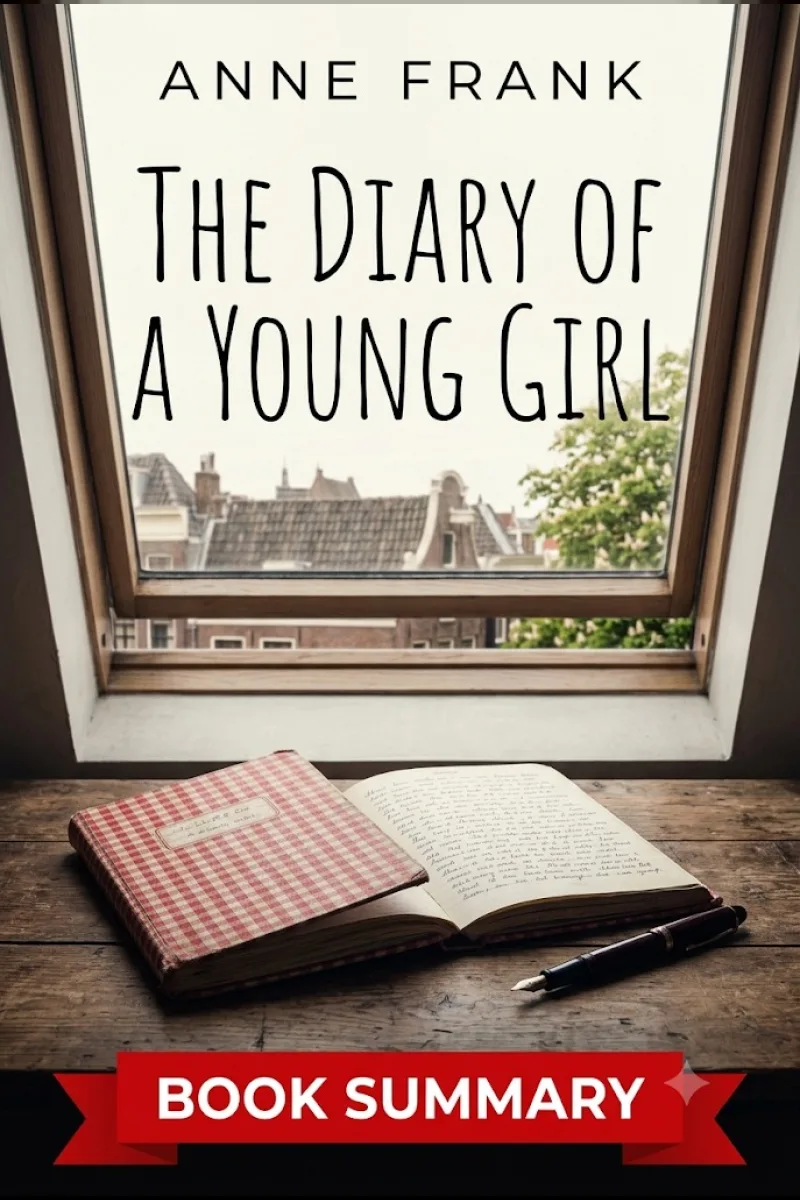
The Diary of a Young Girl by Anne Frank — Two Years in Hiding, in Her Own Words
Book Summaries
November 27, 2026
By NPOWS New
On her thirteenth birthday, 12 June 1942, Anne Frank was given a red-and-white checked autograph book, which she decided to use as a diary. A few weeks later, as the Nazi persecution of Jews in the occupied Netherlands intensified, Anne, her parents and her older sister Margot went into hiding in the "Secret Annex", a set of concealed rooms behind her father's business in Amsterdam. They were joined by the van Pels family and later by Fritz Pfeffer. For more than two years, eight people lived there in silence and fear, helped by a small group of brave employees who brought them food and news.
Anne wrote to her diary as if to a friend she called Kitty. In August 1944, the people in the annex were discovered and arrested. Anne died in the Bergen-Belsen concentration camp in early 1945, aged fifteen. Her father, Otto Frank, the only one of the eight to survive, was given her writings after the war and first published them in Dutch in 1947. The Definitive Edition, published in English in 1995, restores passages that had been left out of earlier versions.
An ordinary teenager in extraordinary times
What makes the diary so powerful is that Anne sounds like a real teenager. She is funny, sharp, impatient and sometimes unfair. She argues with her mother, grows close to Peter van Pels, worries about her looks and her future, and dreams of becoming a writer.
Hope and humanity
Alongside the daily tensions of eight people in cramped rooms, Anne reflects on war, faith, fear, injustice and what it means to be a good person. Her belief in people's goodness, in spite of everything, has moved readers for generations.
Reception
The diary is one of the most widely read books in the world, translated into more than seventy languages, and it is read in schools across the globe. It has been adapted for stage and screen many times, and the Secret Annex is now the Anne Frank House museum. It is regarded as one of the most important personal records of the Holocaust.
Who will enjoy it
This is for readers from about age twelve to adult, anyone wanting to understand the Holocaust through one young person's eyes, and those who love honest, personal writing. It deals with persecution, fear, war and loss, and its ending, known from history, is heartbreaking.