How to Write Dialogue That Sounds Like Real People
Bad dialogue is easy to spot and hard to fix. Characters announce their feelings. They explain plot points to people who already know them. Everyone speaks in full, grammatical sentences, like they're giving evidence in court.
Real people don't talk like that. They interrupt, dodge, joke when they're scared and go quiet when it matters. Good dialogue on the page is a tidied-up version of that mess: it keeps the rhythm and the subtext and throws away the "ums."
The fastest way to learn it is to look closely at dialogue that works. All the examples below come from stories published on BrightChapters.
Let people argue sideways
Here's an exchange from Virender Jaiswal's GrassGo. Riya has just bitten into a biscuit and said "Hmm..." Her mother is peeling potatoes:
"I know that 'hmm.'"
"What 'hmm'? I didn't say anything."
"You said hmm."
"That's just a sound."
"That sound cost us fourteen thousand rupees when you decided to sell handmade soaps from the bathroom."
Nobody says what they mean directly. Riya never announces "I have a new business idea" and her mother never says "please don't waste our money again." They argue about a syllable. That's how families talk, and it's funnier and truer than a straight conversation would be. Notice too how short the lines are. Quick back-and-forth reads quickly, which suits comedy.
The mother then gets the last word with one more line: "The bathroom still smells of lavender... It has been four years." A specific, slightly absurd detail lands harder than any general complaint.
Flirting works by not saying the thing
In Olivia Mukherjee's The Plant, Arjun is caught talking to a dying office money plant by a woman from Finance:
"You know talking only works if you water it too, right?"
"I was watering it," he said.
"You were emotionally preparing."
"Important part of the process."
Two strangers, four lines, and the whole relationship is already there. Neither of them says "I find you interesting." They tease, and each of them plays along with the other's joke. "Important part of the process" is a small act of trust. He's agreed to be silly with her.
If you're writing two characters who like each other, try banning them from saying so. Make them show it through how they answer.
One great line can define a character
From The Highlighter, also by Olivia Mukherjee: Ritoban sits at the back of class, and his friend warns him the teacher will move him one day. "She won't," he says, and explains why:
"Because I'm not absent enough to be a problem and not present enough to be worth fixing."
That sentence is his whole personality: clever, self-protective, a bit sad about it underneath. It works because it sounds like something a sharp teenager would say out loud to impress a friend. Too polished, and it would feel like the author talking. This sits right on the edge, and the friend's reply ("That's actually genius." "I know.") keeps it human.
Subtext: what isn't said
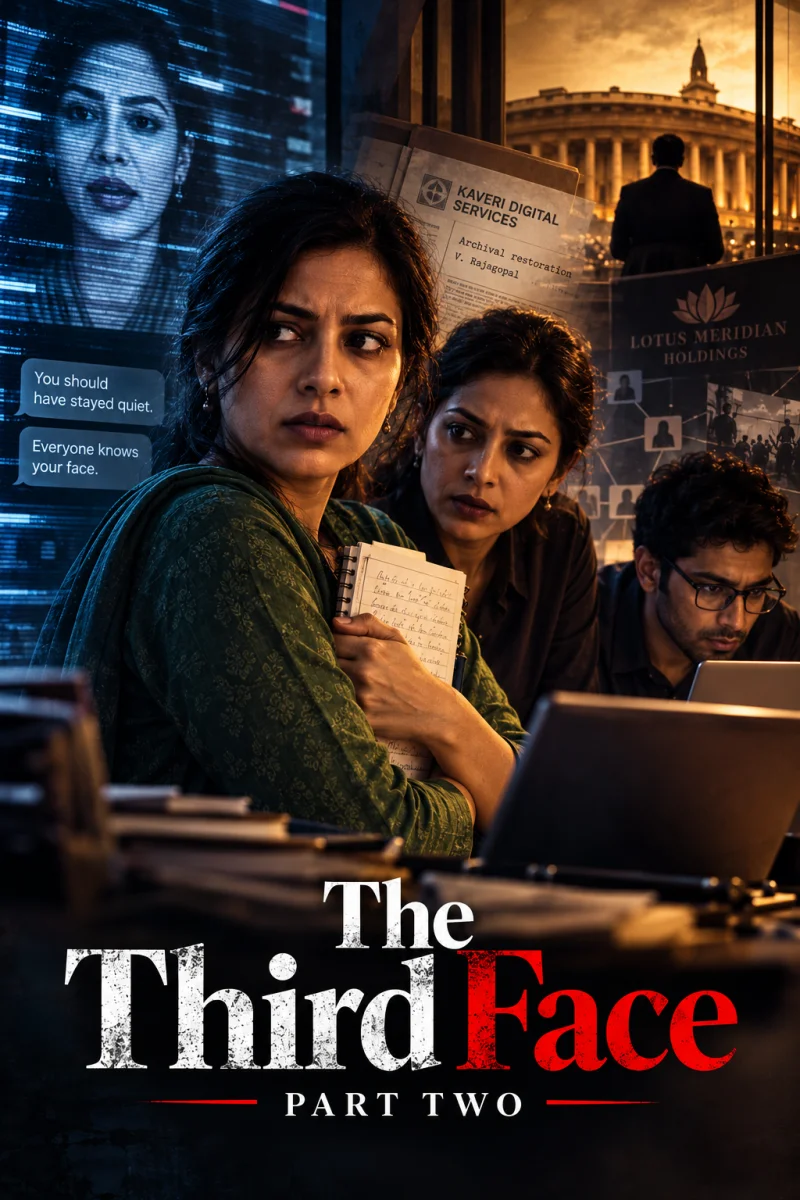
The strongest dialogue often leaves the important part out. In Virender Jaiswal's The Third Face – Part Two, someone knocks on Vasanthi's door. A rival journalist, Smita, says it's her. Vasanthi asks who is with her:
"Nobody who works for him."
Him. She noticed the pronoun and kept it to herself.
Smita never names the man. She doesn't need to. The single word "him" tells Vasanthi (and us) that Smita knows exactly who is behind the attack, and the narration pauses on it for just a beat. That's a lot of story carried by one pronoun.
Let the last line of a scene be short
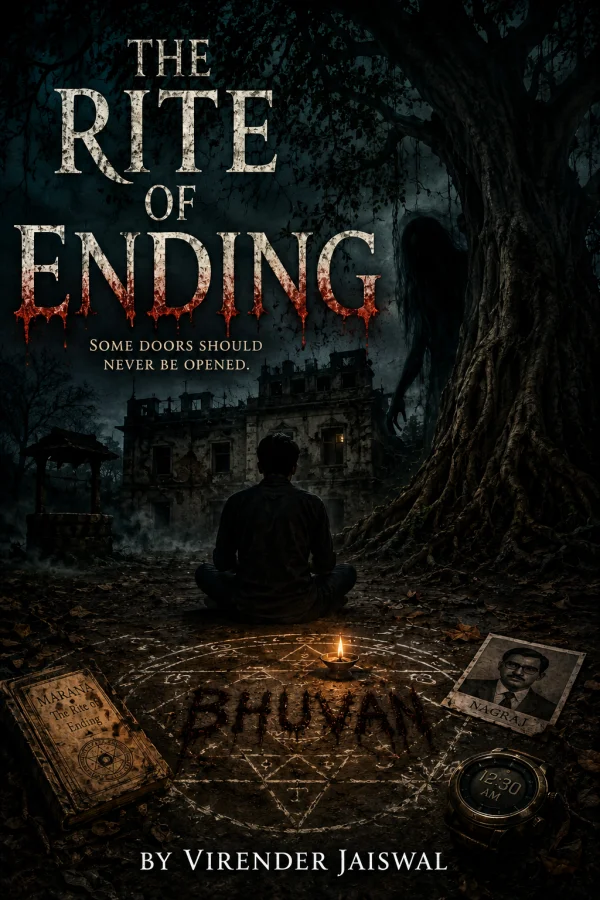
At the end of The Rite of Ending, Bhuvan has done something terrible under a peepal tree. He asks his father, "Did... did I kill it?" His father's answer:
"No," he said softly. "You opened a door. I only managed to latch it."
That's the final line of the story. It answers the question and opens a worse one, in eleven words. Endings of scenes are where dialogue should be at its leanest. Say less than you want to.
The practical bits
A few mechanics trip up a lot of new writers. "Said" is almost always the right dialogue tag; it disappears on the page, while "exclaimed," "retorted" and "opined" call attention to themselves. You often don't need a tag at all once two speakers are established, as the GrassGo exchange shows. Start a new paragraph each time the speaker changes. And put the punctuation inside the quotation marks: "I'm good," she said. not "I'm good", she said.
Then read every conversation out loud. You'll hear the stiff lines immediately. If you wouldn't say it, or couldn't imagine anyone saying it, cut it or rough it up.
Want to practise? Write a two-page scene where two characters argue about something small (a biscuit, a plant, a seat in class) while the real disagreement stays unspoken. Then publish it on BrightChapters and see how readers respond. And if you want more examples, every story linked above is free to read.
Ready to put this into practice?
BrightChapters' Write page is free to use, with no account needed to start a draft.
Start Writing Read for InspirationKeep reading: new on BrightChapters
Stories published by writers on BrightChapters. Free to read, no account needed.