How to Start a Story: Real Opening Lines and Why They Work
Most advice about how to start a story boils down to "hook the reader." Fine. But nobody tells you what a hook looks like when you're staring at a blank page at eleven at night, and the first sentence you've written is about the weather.
So instead of rules, here are real openings from stories published on BrightChapters, and what each one is doing. Some of them break the usual advice. That's part of the point.
Start after something has already gone wrong
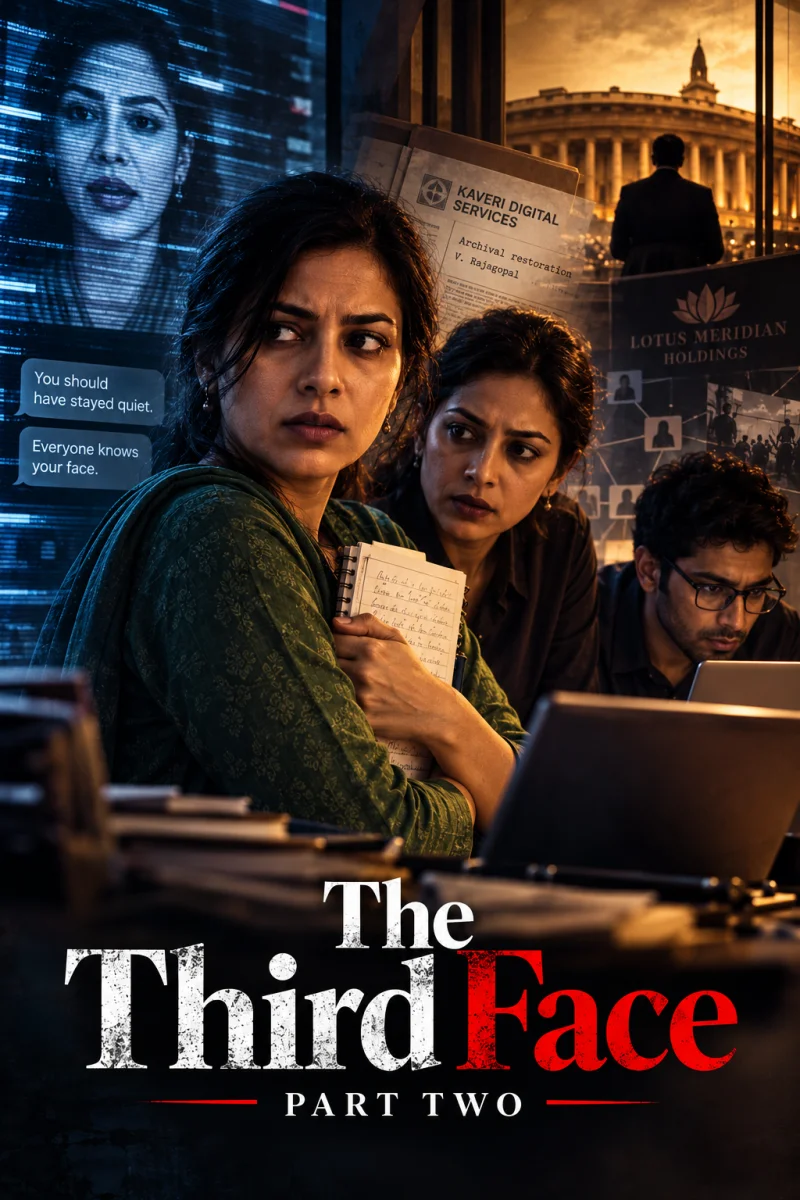
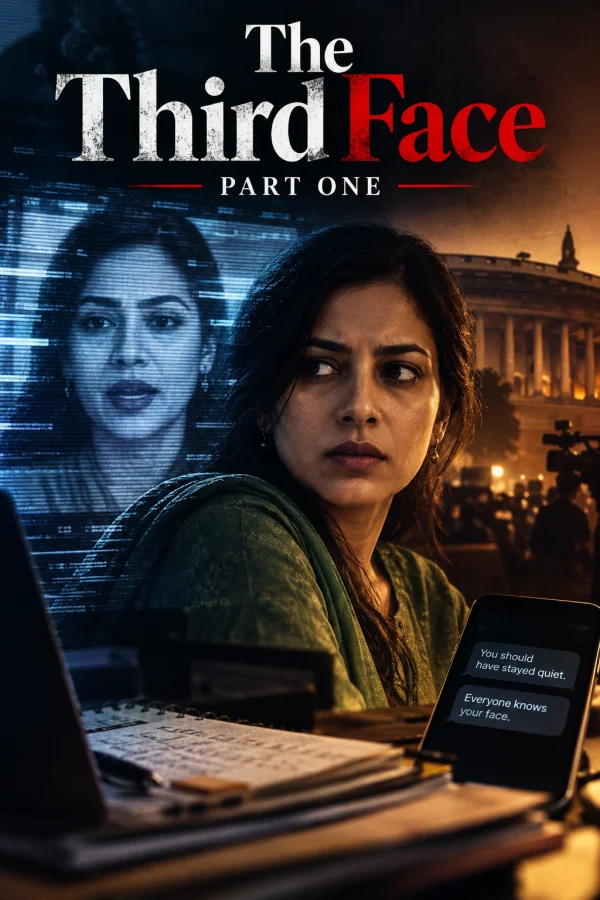
Here's the first line of Virender Jaiswal's The Third Face – Part One:
"The video had been live for forty minutes when Vasanthi Rajagopal watched herself say something she had never said."
Look at how much is packed in there. A video. A deadline that has already passed, because forty minutes is a long time on the internet. And an impossible situation: a woman watching herself say words she never spoke. You don't know yet that it's a deepfake, or that she's a journalist, or who wants to destroy her. You don't need to. The story starts at the moment the floor drops out, and then fills in the rest while you're already falling.
This is the most useful habit to steal. Most first drafts begin too early, with someone waking up, making tea, thinking about their life. Find the moment your character's ordinary day breaks. Start there, or a minute before.
Or start with a voice
Ishani Sen's Grief Has Choreography opens like this:
"There's no dignified way to say this, so here it is plainly: Today I found myself washing a dog's pee mat while doing a full Sufi-style spin to a heartbreak song, singing at a volume my neighbours did not consent to."
Nothing dramatic happens. A woman cleans a mat and dances badly. But the sentence has a person behind it: someone self-aware, a bit embarrassed, funny about her own mess. "My neighbours did not consent to" is the line that does it. You trust a narrator who can laugh at herself, and you'll follow her into heavier material later, which is exactly where this piece goes.
If your story is driven by a narrator's way of seeing things, the first line's job is to let us hear them. Plot can wait a paragraph.
Dialogue first, context later
Olivia Mukherjee's The Highlighter begins with a teacher's voice:
"Dutta. You're in the back again."
Five words. We know there's a classroom. We know this has happened before (that "again" is doing a lot of work). We know someone is tired of it. Within a few lines the boy, Ritoban, delivers his own explanation to a friend: "Because I'm not absent enough to be a problem and not present enough to be worth fixing." By then you know exactly who he is.
Opening on dialogue works when the line carries conflict. A greeting doesn't. A complaint, an accusation, a question nobody wants to answer — those pull a reader straight in.
A small mystery is enough
Not every story needs a body in chapter one. Notes in the Margins, also by Olivia Mukherjee, opens on an object:
"It wasn't a real map. It was drawn in pencil on graph paper, the kind with the pale green grid, and whoever had made it had small, deliberate handwriting that slanted left."
A few lines later we see the map's legend: a star for where the mapmaker would go if they weren't afraid, a cross for where they actually went. Seventeen stars. Thirty-one crosses. That's the whole hook, and it's a quiet one. You want to know who drew it. The specific details matter here: the pale green grid, the handwriting that slants left. They make a stranger real before we've met him.
Let the setting do the threatening
Horror and suspense often open on place, and two of Virender Jaiswal's stories show how differently that can go. The Iron Box starts with salt air:
"Elias hadn't been to the coast in years, and he'd forgotten the way the salt gets into everything out there - into your collar, your sleeves, the back of your throat before you're even halfway up the road."
Uneasy, physical, a little queasy. And the last clause of that paragraph tells you he's already lying to himself: he felt a little sick, and "he told himself, more than once, that it was just the smell."
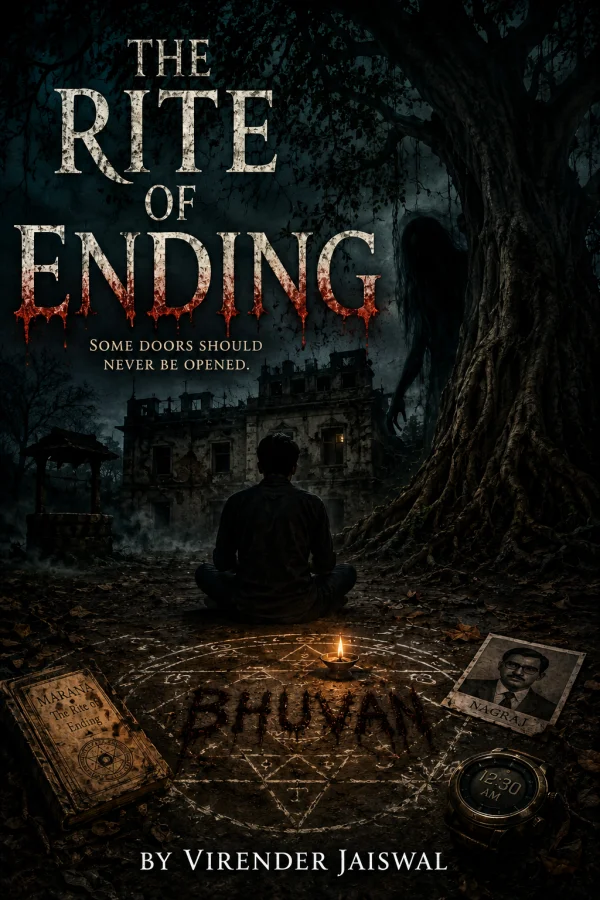
The Rite of Ending uses a clock instead. Bhuvan sits under a peepal tree behind a crumbling ancestral house, and then:
"He checked his watch: 12:30 AM.
One more hour."
"One more hour" until what? We don't know, and that one short line, set on its own, is the hook. A deadline, even an unexplained one, makes a reader lean in.
Comedy can open fast too
In GrassGo, Virender Jaiswal gets a whole family dynamic into the first exchange. Riya bites a biscuit and says "Hmm..." Her mother, peeling potatoes, doesn't look up:
"She could detect a business idea from two rooms away."
Then: "That sound cost us fourteen thousand rupees when you decided to sell handmade soaps from the bathroom." We know Riya's history, her mother's weary affection, and the shape of the story to come, all before the first page ends.
What to do with your own first line
Write the opening last, or at least rewrite it last. You'll know your story much better by the end, and the right first sentence is usually hiding somewhere in your third or fourth paragraph.
When you look at your draft, ask a blunt question: where does this story start to matter? Cut everything before it. If you're nervous that readers won't understand without the background, trust them more. Every opening above drops you in with almost no explanation, and none of them lose you.
Then read your first line out loud. If it could open a hundred other stories, it's not done yet. "It was a cold morning" belongs to everybody. "The video had been live for forty minutes" belongs to one story only.
If you want more examples, the best thing you can do is read openings in bulk. Pick ten stories on BrightChapters, read only the first paragraph of each, and notice which ones made you keep going. Then go and write yours.
Ready to put this into practice?
BrightChapters' Write page is free to use, with no account needed to start a draft.
Start Writing Read for InspirationKeep reading: new on BrightChapters
Stories published by writers on BrightChapters. Free to read, no account needed.