First Person or Third Person? How to Choose Point of View
Before you write a single scene, you've already made one of the biggest decisions in the story: whose eyes we're looking through, and how close we stand to them. Point of view shapes everything. What the reader knows. What they can be surprised by. Whether a lie feels like a lie.
Here's how the main options work, and how to pick.
First person: "I"
First person usually puts the reader inside one character's head and voice (some novels use several first-person narrators, taking turns). It's intimate, immediate and great for personality. It also limits you: the narrator can only report what they see, know or guess.
Olivia Mukherjee's I Don't Think Like a Gambler, or Do I? opens like this:
I looked at my phone for the fifth time in thirty minutes. Still nothing. Which was fine. People get busy. I knew that.
Notice how much of that is the narrator trying to talk themselves into calm, and not quite managing. "Which was fine." "I knew that." Short, reassuring sentences that reassure nobody. First person lets the gap between what a character says and what they feel do the work.
Watch out for the main traps: too many sentences starting with "I", narrators who describe their own appearance in a mirror, and narrators who conveniently know things they couldn't.
Close third person: "she", from the inside
Close third uses "he" or "she" but stays tightly inside one character's perceptions. It gives you most of the intimacy of first person with a little more flexibility, and it's one of the most common choices in modern fiction.
In The Biryani Was for Bruno, we stay with Meera:
Meera dried her hands. This is ridiculous, she thought. Quietly. I am done with this nonsense.
We hear her thoughts directly, almost as if in first person, then pull back to watch her family react. That flexibility is the big advantage. The narrator can be a little funnier, or drier, than the character would be about herself.
Omniscient: the narrator who knows everything
An omniscient narrator can move between characters, comment on events, and tell us things nobody in the story knows. It's a classic choice for sweeping novels and fables.
Done well, it feels like a confident storyteller holding the whole world in their hands. Done well, the narrator moves between minds deliberately, and the reader always feels in safe hands. Done badly, it slides into head-hopping: uncontrolled jumps between characters' thoughts within a scene, until the reader loses track of whose feelings they're inside.
If you want to move between several characters, a safer approach is multiple close-third viewpoints, switching only at scene or chapter breaks.
Second person: "you"
Rare in fiction, powerful in small doses. Second person can feel accusatory, hypnotic or uncomfortably intimate. It shows up in experimental stories, interactive fiction and a lot of personal essays, where "you" quietly means "I" or "we".
Ishani Sen's essay Grief Has Choreography slips into it to pull the reader in:
Maybe yours looks different. You open your phone and start adding things to a cart you'll never check out.
Suddenly it isn't her story any more. It's ours.
How to choose
Ask a few questions about your story.
Does the plot depend on a secret the main character doesn't know? Close third or multiple viewpoints might help you show the reader what she can't see.
Is the voice the main attraction, a funny, unreliable or obsessive narrator? First person is hard to beat.
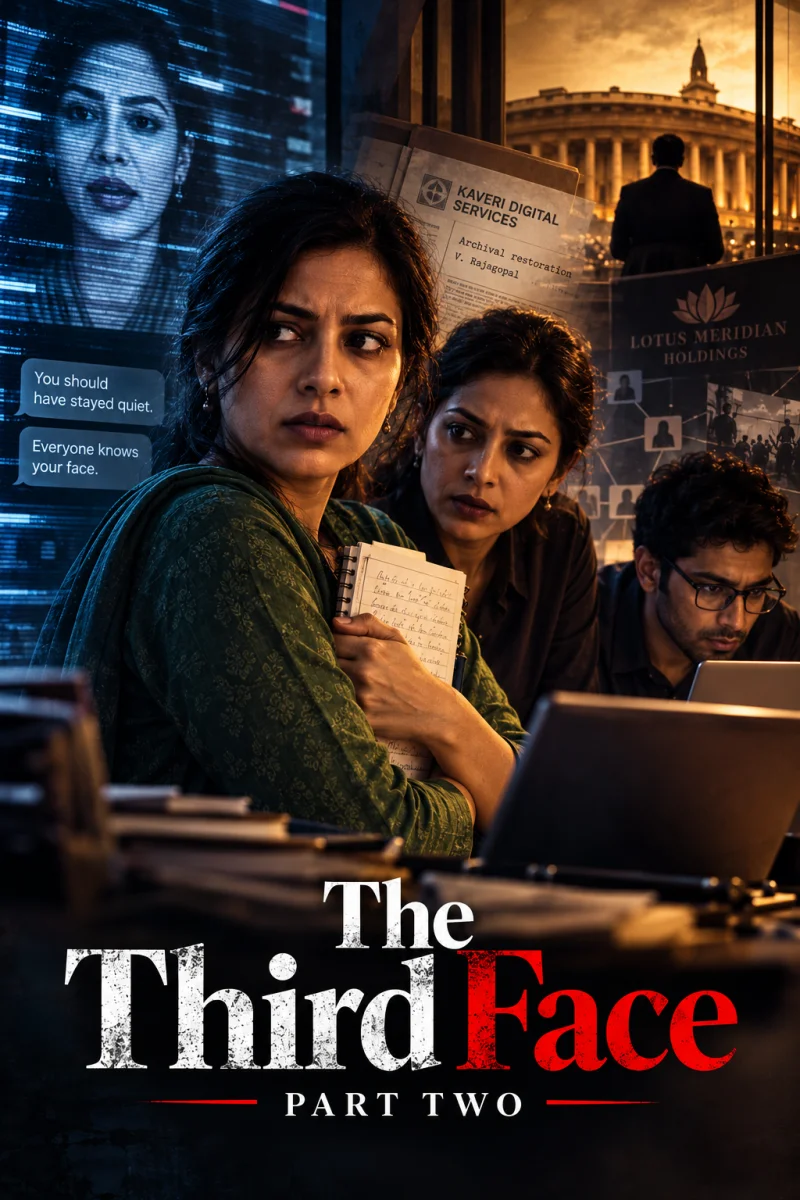
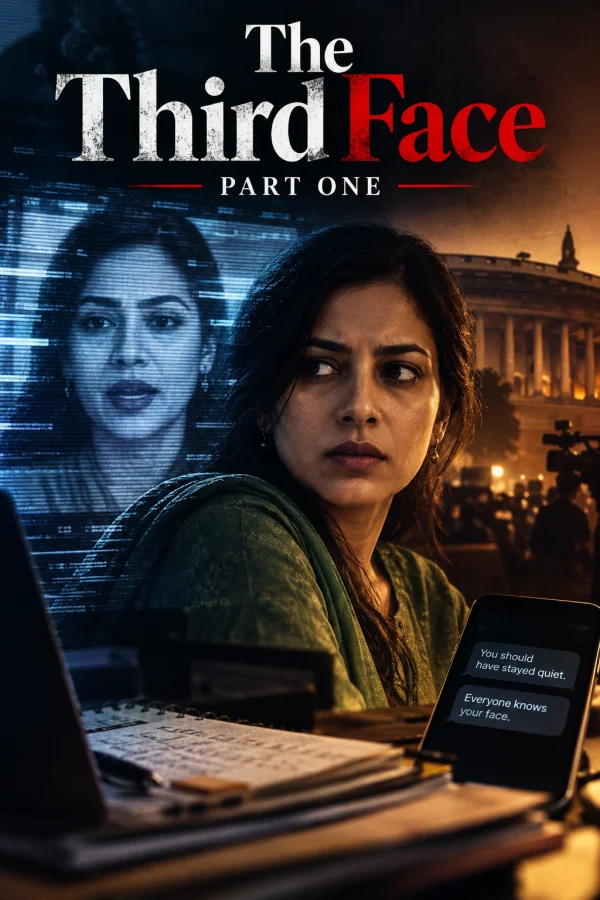
Is it a thriller with several suspects? Staying with one character can make every other person a possible threat. In Virender Jaiswal's The Third Face, we see only what the journalist Vasanthi sees and remembers, so we suspect everyone she suspects.
Not sure? Write the same page twice, once in first person and once in close third. One will almost always feel more alive.
A word on tense
Point of view and tense are separate choices. First person can be past ("I walked") or present ("I walk"). Present tense can feel more immediate, and past tense more like a story being told, though a strong voice can make either feel urgent. Either works, as long as you stay consistent.
The one rule worth keeping
Whatever you choose, be consistent within a scene. Readers will follow you into almost any point of view, but they need to know where they're standing.
If you're building characters to go with your viewpoint, our character development guide pairs well with this one.
Ready to put this into practice?
BrightChapters' Write page is free to use, with no account needed to start a draft.
Start Writing Read for InspirationKeep reading: new on BrightChapters
Stories published by writers on BrightChapters. Free to read, no account needed.