โ˜ฐ
What story do you want to read today?
The Iron Box

The Iron Box

Virender Jaiswal ยท Aug 21, 2026
Horror โ†— Open

Elias hadn't been to the coast in years, and he'd forgotten the way the salt gets into everything out there -  into your collar, your sleeves, the back of your throat before you're even halfway up the road. By the time he reached the gates he felt a little sick, and he told himself, more than once, that it was just the smell.

The house had gone the way these old places always went once the money ran out. No paint left on it anywhere. The wood had turned gray and soft, and one whole side of the roof had started to sag, like the place had simply gotten tired of holding itself up straight. He'd cleared out houses like this before, three or four of them over the years, so he knew what to expect, more or less. The gate stuck when he pushed on it, then gave all at once, swinging open so fast it caught him off guard.

The lawyer had been clear enough about the job. There was a small iron box up in the study, brass handle, hard to miss. Get that, and he'd get the rest of his money — five thousand pounds, which was more than Elias usually saw in a year, let alone for one night's work. Then, almost like it was an afterthought, right as he was heading out the door, the lawyer had added: don't spend too long looking in any mirrors in the house, and if you hear water running somewhere, just leave. Don't go looking for where it's coming from.

Elias hadn't asked why. Five thousand pounds buys a man a lot of not-asking.

The front door was unlocked, which he didn't think much of at the time. The knocker was shaped like a hand, the fingers just a little too long to be right, and he touched it without really thinking, the way you do, and got a small shock for his trouble, sharp enough to make him swear under his breath.

Inside, the air was warmer than it had any business being, for an empty house in the middle of winter, and underneath the warmth there was a smell;  sweet, and just a bit rotten, like fruit left out too long. He didn't stop to think about where that might be coming from. He lit his lantern anyway, more out of habit than need, since moonlight was already coming down through a skylight thick with grime, enough to make out the staircase and the shapes of furniture buried under old sheets.

Somewhere off to his left, water was dripping. Slow. Steady, like a clock.

He thought about what the lawyer had told him, and then he went and looked anyway, because that's what people do. A row of old portraits ran down the hall, the kind rich families used to have painted, and every single one of them had had its eyes cut out — not torn, cut clean, like whoever did it had taken their time. From one of the empty sockets, in a painting of a woman in a lace collar, something dark had leaked out and was still making its way down the canvas.

That wasn't water. Water doesn't move like that.

"Just get the box," he said out loud, mostly to hear his own voice doing something ordinary, and started up the stairs.

The banister was wet under his hand and he didn't ask himself why. The stairs groaned with every step, loud enough that he half expected the whole staircase to give out under him, and somewhere around the fourth step he started talking to himself, quietly, just to keep moving.

"Okay," he muttered. "Okay, that's fine. Just wood settling. Fifteen more steps, maybe less." He counted them off in his head as he climbed. "Ten more. You do this, you get five thousand pounds. Ten more steps for five thousand pounds. That's nothing."

By the time he stopped noticing the groaning under his boots, the warm air from downstairs had given out completely, and the cold that took its place had a strange, wet edge to it, the kind that seems to reach the back of your teeth.

There was a mirror at the top of the stairs, tall and old, the glass gone dark and cloudy. He hadn't been warned about that one exactly -  just mirrors in general -  but walking past it without looking felt more strange than looking would, so he looked.

His reflection was a half-second slow to catch up with him. Not by much. Just enough that he noticed. He didn't stick around to see if it happened again.

He found the study, and the box was sitting right where the lawyer had said it would be, on a desk buried under years of undisturbed paper. It was lighter than it looked, which felt like good news for about three seconds, right up until he lifted it and something inside shifted — not the way things usually shift when you pick them up, but the way something with real weight shifts when it decides, on its own, to move.

That was when he heard the tapping behind him. Slow. Even. Fingernails on glass.

He turned around before he'd decided to.

Something stood in the doorway, tall in a way that didn't look impressive so much as wrong, the proportions a little off, like someone had tried to draw a person from a description they'd only half heard. It had no face to speak of. Just smooth skin where a face should be, and a single long opening across the middle of it that worked like a mouth.

Elias's breath went ragged. His hands shook hard enough that he nearly dropped the box.

The thing opened its mouth, and what came out sounded like someone trying to breathe with water in their lungs.

Elias didn't wait around to find out what it wanted. He put his shoulder through the study window and went straight out onto the balcony, glass and all, into fog so thick he couldn't see the ground, just hear the sea somewhere far below, working at the rocks the way it probably had for a hundred years before he was ever born.

The thing followed him through the broken window, and the glass didn't slow it down even a little.

His back hit the stone railing, and there was nowhere left to go.

The box under his arm started moving again, small scratching sounds coming from somewhere inside it, and he noticed, in a distant sort of way, that the rhythm matched his own heartbeat, almost exactly.

The creature stopped where it was. It tilted its head to one side, slow, with a sound like knuckles cracking, almost like it was curious.

Then it reached out one long finger and laid it on top of the box.

The cold went through the metal and into his chest all at once, and his heart gave one hard, painful stumble before it just stopped altogether. The sound of the sea faded out to nothing. And the last thing he felt, before there wasn't anything left to feel it with, was a hand closing around his throat, slow and almost gentle, like whoever it belonged to had all the time in the world.

They found him on the balcony three days later, when someone finally came looking. The box was still there, sitting a few feet from the body, untouched. Nobody wanted to be the one to pick it up so it stayed there. 

The coroner called the death a heart attack. 

A few months after that, the lawyer put the word out again. He needed someone new — someone who needed the money badly enough not to ask too many questions about the last man who'd taken the job, or the one before him.


Can't Hurt Me -Where the Mental Model Outruns the Body

Can't Hurt Me -Where the Mental Model Outruns the Body

NPOWS New ยท Jul 26, 2026
Non-Fiction โ†— Open

David Goggins' whole book runs on one claim: your mind quits on you long before your body actually has to. Close that gap, and you can do almost anything. Everything else, the mirror, the jar, the rule, is Goggins showing you how he closed it himself, using experiences few people would willingly choose.

The tools, and the life that built them - 

The Accountability Mirror is the starting point. Write your goals and your flaws on Post-it notes, stick them to an actual mirror, and face them daily instead of letting denial do the easier work of looking away. Goggins built this out of a specific low point: overweight, stuck, having just been turned away from the life he wanted, staring at himself and refusing to keep lying about what he saw. The mirror isn't about self-esteem. It's about removing the option to pretend.

The 40% Rule is the more famous idea, and it's simple: when your mind is screaming that you're done, you've usually only used about 40 percent of what you actually have left. This is Goggins' own motivational framing, not a measured physiological threshold, and it's worth holding it that way. Goggins calls the thing holding back the rest the Governor, a built-in limiter that treats discomfort, fatigue, and fear as reasons to stop well before the body's actual limit. Pushing past that isn't about ignoring pain. It's about noticing that the quitting voice shows up long before the real wall does, and training yourself to keep moving anyway.

The Cookie Jar is what he reaches for in the moment the Governor kicks in. A mental inventory of everything you've already survived, weight lost, a stutter overcome, a race finished on broken feet, pulled out on purpose when the current moment feels impossible. The logic is straightforward: you've already proven you can do hard things, so the jar is just evidence against the part of your brain currently arguing that you can't.

Taking Souls is the competitive version of all this, using your own composure under suffering to unsettle someone else who's expecting you to break. And callusing the mind is the umbrella idea holding the rest together: discomfort, sought out deliberately and often, builds a tolerance the same way a hand toughens from repeated friction. Goggins didn't build any of this in a classroom. He built it running BUD/S three separate times, once with stress fractures in both legs, once with a broken kneecap, finally graduating on his third attempt despite kidney problems bad enough to be dangerous. He built more of it in 2005, when he ran the Badwater 135 through Death Valley with almost no training, broke bones in his feet partway through, and kept moving while passing blood from strained kidneys.

Where the cost of the method gets real - 

Here's the part worth sitting with. Ultra-endurance sports carry documented risk of acute kidney injury, and sports medicine research puts the rate among participants somewhere between 30 and 50 percent depending on the race and how it's measured, not a rare fluke but a known hazard of pushing the body that far past its normal operating range. Goggins didn't get unlucky once. He describes this kind of damage as a recurring cost of how he trains, and exercise scientists who've reviewed his methods have made the same point repeatedly: what he's demonstrating is a mental model, not a physical training template most bodies can survive intact. Chronic sleep deprivation and severe training volume, done the way Goggins does them, carry real hormonal and orthopedic costs that don't show up as inspiring footage.

None of this erases the actual insight. The mind often signals that it's done before the body reaches its true limit, and Goggins captures that experience more vividly than most people who've tried. But the book presents the physical cost as proof of commitment rather than a risk worth naming plainly, and a reader who copies the intensity without copying the decades of adaptation behind it is copying the most dangerous part of the method, not the useful part.

If you're taking anything physical from this book, take the principle and leave the literal mileage. Push past the first wave of "I'm done" on purpose, on a run, in a workout, in a hard conversation you've been avoiding. Just build in the recovery, sleep, and medical checkpoints that Goggins' own body has clearly needed and often skipped.

There's a second cost worth naming, this one psychological rather than physical. The Accountability Mirror runs on brutal self-confrontation, and that approach sits uneasily next to what the actual research on self-talk has found. Work on self-compassion, most notably from psychologist Kristin Neff, has repeatedly found that self-criticism activates a stress response and tends to undermine sustained motivation over time, while self-kindness paired with honest accountability produces better follow-through without lowering anyone's standards. Brutal self-honesty and self-kindness aren't actually opposites, whatever the book's tone implies. You can name a flaw plainly without treating yourself the way a drill instructor treats a recruit, and for a lot of readers, the second approach holds up longer than the first.

If harsh self-talk has historically left you more stuck than moved, sitting in shame rather than fixing anything, that's a sign to keep the honesty and drop the harshness, not a sign you need a harsher mirror.

So is it worth reading?

Yes, for the core psychological insight and for the sheer force of the story itself. The mind quitting before the body actually has to is a real phenomenon, and Goggins names it more vividly than most people who've tried.

Skip copying his specific physical regimen, the mileage, the sleep deprivation, the running through stress fractures, unless you're willing to accept the same medical risk he's openly documented taking on. And if the Accountability Mirror's harshness leaves you feeling worse instead of moved, that's worth noticing rather than pushing through. Goggins proved what one extraordinarily adapted body and mind could survive. He didn't prove that surviving it is the only way to get the benefit.

The Let Them Theory - Stoic philosophy?

The Let Them Theory - Stoic philosophy?

NPOWS New ยท Jul 26, 2026
Non-Fiction โ†— Open

Here's where we disagree with how this book gets talked about. It's often talked about as a breakthrough idea. The underlying philosophy isn't new. The idea that you can't control other people, only your own response, is Stoicism repackaged for a TikTok audience, and Robbins herself doesn't claim otherwise about the philosophy. What's more contested is the specific phrase and framing "Let Them," which a writer and poet named Cassie Phillips had already built a following around since 2019, years before Robbins' version went viral. Robbins has denied taking anything from Phillips, drawing a line between a short poem and a full researched book. We think readers should know that the phrase itself has a genuinely contested recent history, unresolved rather than settled either way. None of that makes the actual mechanics of the book useless. It just means the "revolutionary tool" framing oversells what's happening underneath it.

What the book is actually asking you to do -

Strip away the branding and the theory is genuinely two ideas stacked on top of each other. The first is "Let Them": stop trying to control what other people do, think, or feel. If a friend doesn't invite you somewhere, let them. If someone's going to be critical, judgmental, or make a choice you'd never make yourself, let them. Robbins' point isn't indifference. It's that most of the exhaustion in our relationships comes from fighting a losing battle against someone else's behavior instead of accepting that their behavior is information, not a problem for you to fix.

The second half, "Let Me," is the part that actually keeps the theory from collapsing into passivity, and it's worth understanding why it got added at all. Robbins has said the idea first came from her daughter, watching her micromanage her son's prom preparations. She tried "Let Them" on its own for a while, at gatherings, in friendships, at work. When she checked in on how it landed, some people told her it left them feeling shut out and a little lonely, not more at peace. That's what pushed her to add the second half. "Let Them" releases what isn't yours to control. "Let Me" is the reminder that you still get to act, still get to choose your own response, still get to build the life you want instead of just standing back and watching everyone else build theirs. Without that second half, the theory really is just detachment. With it, it's closer to a two-step process: release, then act.

The clearest illustration is Robbins' own framing around being excluded. A friend group doesn't invite you to something. "Let Them" means you stop spiraling about why, stop rereading the group chat, stop trying to force your way back in. "Let Me" means you look honestly at your own side of it too, maybe you haven't reached out either, and you get to decide what you do next: reach out, let the friendship fade, or invest your energy somewhere it's actually reciprocated. The same shape shows up across the book's other applications. A difficult coworker or a boss who overlooks your work: let them behave the way they're going to behave, and then let yourself document your wins, look for other opportunities, and stop waiting for someone else to notice you. A partner who isn't ready for commitment: let them be exactly where they are, and let yourself decide whether that's actually where you want to stay.

Robbins pairs this with a simple behavioral claim that isn't really new to psychology but is stated plainly and usefully here: people show you who they are through what they do, not what they say, and the fastest way to keep getting hurt by someone is to keep expecting them to be someone they've already shown you they're not. She also frames this as training people how to treat you. Every time you tolerate a behavior without addressing it, you're teaching the other person that the behavior is fine. "Let Them" isn't supposed to mean tolerating everything silently. It means dropping the fight over their behavior and putting your energy into your own response instead, including the response of setting a real boundary when one is actually needed.

There's a specific piece on friendship that holds up especially well: the idea that most friendships fade for three unglamorous reasons, proximity, timing, and energy, rather than any dramatic falling-out. Robbins' point is that you don't need a big reason to let a friendship quietly change shape as life moves people apart, and treating every drifting friendship as a personal failure is its own unnecessary weight to carry.

Where "Let Them" becomes avoidance - 

The core mechanism is solid. The failure mode is what happens when people only take the first half seriously and skip the second.

"Let Them" without a genuine "Let Me" is just checking out, and it can become a very convenient way to avoid a conversation that actually needed to happen. A relationship where someone is genuinely hurting you, not just annoying you, sometimes needs direct confrontation and repair, not release. "Let them be who they are" can quietly become permission to avoid the harder, more useful work of saying "this actually isn't okay, and I need it to change" to someone worth having that conversation with. The book gestures at this distinction but doesn't dwell on it long enough, and a reader looking for an excuse to disengage from something uncomfortable will find one here easily.

The second limitation shows up in the workplace examples specifically. "Let the boss overlook you, and let yourself document your wins" is fine advice for a boss who's just inattentive. It's a much thinner answer for someone facing real discrimination, harassment, or unsafe conditions at work, situations where the honest move is escalation, HR, or leaving, not quietly building a portfolio while waiting to be noticed. The theory reads best as advice for garden-variety frustration. It reads a lot weaker as advice for genuine mistreatment, and the book doesn't clearly mark where one ends and the other begins.

If you're in either of those situations, the fix isn't to abandon the framework. It's to notice when "Let Them" is doing the job of avoidance instead of the job of peace, and to bring in an actual conversation, a manager, HR, or a therapist, when the problem is bigger than acceptance can solve on its own.

So is it worth reading?

Yes, for the two-part mechanism itself. Releasing what isn't yours to control, then redirecting that energy into your own choices, is a genuinely useful daily practice, and Robbins packages it more usably than most books covering the same underlying idea.

Know going in that the idea isn't new, and that the specific phrase has a genuinely contested origin worth knowing about. Skip using "Let Them" as a reason to avoid a conversation that actually needs to happen, and don't reach for it as your only tool if what you're facing is real mistreatment rather than ordinary human friction. Used as a daily reset for garden-variety frustration, it works well. Used as a substitute for necessary conflict, it just becomes a more comfortable way to avoid one.

Think and Grow Rich โ€” Desire with a deadline

Think and Grow Rich โ€” Desire with a deadline

NPOWS New ยท Jul 26, 2026
Non-Fiction โ†— Open

Think and Grow Rich is simultaneously one of the most influential and one of the least verifiable self-help books ever written. Tens of millions of copies sold, decades of imitators, an entire genre that traces back to it. And a founding story that falls apart the moment anyone actually checks it. Both things are true at once, and the interesting question isn't which one cancels the other out. It's which parts of the book survive once you set the founding story aside.

Hill's whole pitch rests on one claim: thoughts become things. A burning enough desire, held with real conviction, supposedly pulls its own fulfillment toward you. Everything else in the book is Hill explaining how to hold that desire correctly.

Desire with a deadline, not just desire -

Hill's first real principle isn't just "want something badly." It's want something specific, with a number and a date attached. He lays out a method: name the exact amount you're after, decide what you'll give in return, set a deadline, build a plan, write the whole thing down, and read it aloud twice a day. That last part matters more than it sounds like it should. Vague wanting doesn't organize your behavior. A dated, specific target does.

Faith is the next piece, and Hill means something narrower than blind optimism. He means training your subconscious, through repetition and visualization, to treat your goal as something already decided rather than something you're still hoping for. Autosuggestion is just the mechanical version of this: say the statement out loud, picture the outcome in detail, do it daily until the belief actually sinks in rather than staying a slogan you recite without feeling it.

The Master Mind principle is probably the idea that's aged best. Hill's claim is that when two or more people align around the same goal, something gets created that neither person had alone, a kind of combined intelligence bigger than either mind on its own. Strip away the mystical framing and this is just a solid case for surrounding yourself with the right collaborators instead of trying to build something significant alone. Modern founders would call this a good cofounder or an advisory board. Hill called it a century early.

Then the book gets stranger. Sex transmutation is Hill's term for redirecting a powerful drive, in this case sexual energy, into creative and professional output instead of its usual outlet. He's not arguing for repression. He's arguing that intense emotional energy, whatever its source, can be rerouted into work if you're deliberate about it. It's a real psychological observation wrapped in language that hasn't aged well. The sixth sense goes further still: Hill describes it as a kind of receiver for hunches and inspiration that only switches on once you've mastered everything else in the book, verging on describing something closer to intuition-as-radio-signal than intuition-as-pattern-recognition.

Underneath all of this sit what Hill calls the six ghosts of fear, poverty, criticism, ill health, lost love, old age, and death, and his argument is that you have to clear these out before any of the other principles can actually take hold. That part is probably the most quietly useful chapter in the book, since fear of criticism specifically is still one of the more common reasons good plans never leave the drawer.

Where the authority behind all is questionable - 

Here's the part worth being very direct about. The entire book's credibility rests on one claim: that Andrew Carnegie, then the richest man alive, personally commissioned Hill in 1908 to study five hundred successful people and distill their secrets. That story is the book's foundation. It's also seriously disputed. Carnegie's own biographer, David Nasaw, has said he found no record the meeting ever happened. Hill only started telling this story publicly after Carnegie had already died, at a point when nobody could contradict him directly.

It gets messier. Contemporary reporting indicates he was actually dealing with fraud allegations tied to a lumber business he co-ran that same year, along with a bankruptcy proceeding. This doesn't automatically make every idea in the book worthless. But it means the specific claim that gives the book its authority, extensive research across five hundred real self-made millionaires, isn't something you can take on faith just because it's stated confidently in the introduction.

Where it stops working - 

The blur between concrete advice and magical thinking. Definiteness of purpose, specialized knowledge, organized planning, these are testable, useful ideas regardless of who Hill actually interviewed. But the book keeps sliding from "make a specific plan and stick to it" into "your thoughts vibrate at a frequency that attracts matching outcomes from the universe," and it never really marks the transition. A reader can walk away thinking the planning did the work, or thinking the vibration did the work, and the book is happy to let you believe either one.

If you're using this book, keep the concrete mechanics, the deadline, the written plan, the daily review, and treat the vibration and Infinite Intelligence language as flavor text rather than the actual mechanism. The planning may well account for much of the practical benefit.

Also, the survivorship bias baked into the method itself, even if you accept the five-hundred-millionaire study at face value. Hill only studied people who already succeeded. He never checked how many people held an equally burning desire, wrote an equally specific plan, and still failed for reasons that had nothing to do with their thinking, bad timing, no starting capital, no access to the right room. Believing hard enough is being sold here as sufficient, when at best it's one ingredient among many that Hill wasn't positioned to measure.

If your actual obstacle is access rather than belief, no amount of autosuggestion closes that gap on its own. Pair the definiteness-of-purpose habit with an honest inventory of what's actually in your control versus what depends on circumstances Hill's method has no real answer for.

So is it worth reading?

Yes certainly, for the mechanical parts: a specific goal with a deadline, a written plan you revisit daily, and the Master Mind idea of building the right group around you instead of going it alone. Those hold up regardless of where Hill actually got them from. Skip taking the book's own origin story at face value, and skip the metaphysical layer if you want your effort going somewhere concrete instead of into affirmations alone. Pair the planning principles with a clear-eyed look at what's actually within your control. Hill assembled a remarkably influential goal-setting system. He built it on a foundation story that doesn't hold up to the same scrutiny he's asking you to apply to your own bank balance.

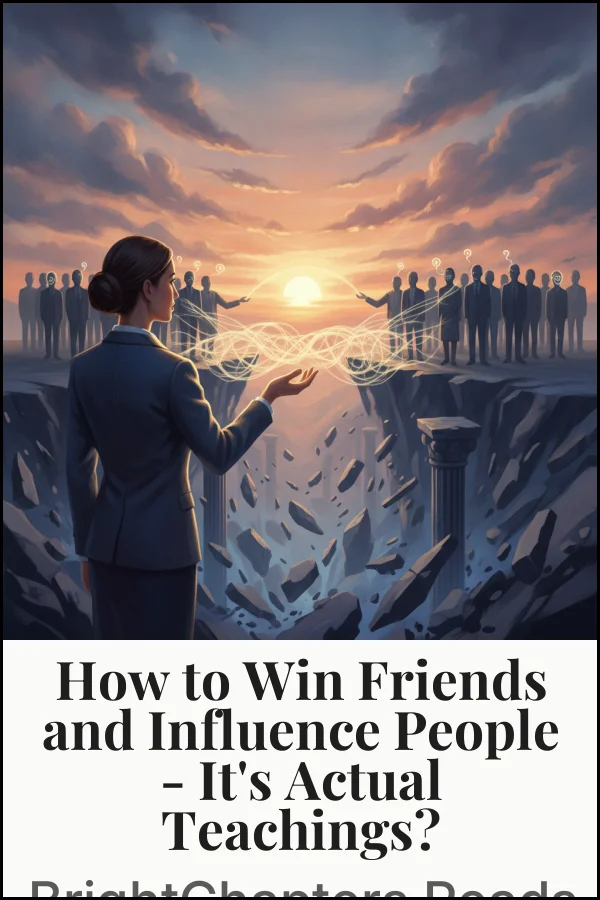
How to Win Friends and Influence People - It's Actual Teachings?

How to Win Friends and Influence People - It's Actual Teachings?

NPOWS New ยท Jul 26, 2026
Non-Fiction โ†— Open

The title promises friendship. What Dale Carnegie actually teaches is cooperation. He claims you can't argue, criticize, or logic your way into getting people to do what you want. You have to make them want it themselves. Whether that counts as friendship is a fair question. It's one the book never quite answers.

The fishing hook, not the fisherman - 

Carnegie opens with a warning about criticism. Point out someone's mistake directly and you don't fix the mistake, you wound their pride. People get defensive, dig in, and start justifying themselves instead of changing. Carnegie's advice is blunt about this: any fool can criticize and condemn, and most do. What actually moves people is understanding why they did what they did first.

He draws a sharp line between appreciation and flattery. Appreciation is sincere. Flattery, in his words, comes from the teeth out instead of the heart out. That distinction matters, because most of the book only works if the appreciation is real. Carnegie isn't teaching you to say nice things you don't mean. He's teaching you to actually notice what's genuinely good in someone. Most people go their whole lives starved for exactly that.

Then comes the idea the whole book is really built on. You don't get people to want what you want. You show them how to get what they already want. Carnegie's own example is fishing. He personally likes strawberries. Fish like worms. So when he goes fishing, he baits the hook with a worm, not a strawberry. The fish's preference is the only one that matters at that moment. Every negotiation, every ask, every pitch works the same way. Figure out what the other person is actually after before you say a word about what you're after.

The six ways to make people like you build directly on that idea. Not all six carry equal weight, though. Becoming genuinely interested in other people is the one doing most of the work. Carnegie's own line is blunt about it: you'll make more friends in two months of real interest in someone than in two years of trying to get them interested in you. Remembering someone's name matters more than it sounds like it should. Carnegie calls a person's name the sweetest sound they'll ever hear. The rest, smiling, listening, talking about what matters to the other person, making them feel important, are really just that same first idea. Genuine interest, expressed in different rooms.

The section on winning people to your way of thinking gets more specific about disagreement itself. Carnegie's position is that you can't win an argument in any way that matters. Even if you're technically right, you've made the other person feel wrong, and they'll resent you for it regardless of the facts. His alternative: let the other person arrive at your conclusion and feel like it was theirs the whole time. Ask questions instead of making declarations. Admit fault quickly and specifically when you're actually at fault, before anyone else gets the chance to point it out.

The last section, on changing people without creating resentment, is really a leadership manual disguised as etiquette. Start with genuine praise before any correction. Point out mistakes indirectly rather than head-on. Talk about your own mistakes before someone else's. Ask rather than order. And critically, leave the other person a way to save face. A correction that humiliates someone rarely produces better behavior. It usually just produces better hiding.

Underneath all four sections runs the same thread, even though Carnegie never states it quite this plainly: protect the other person's sense of dignity, whatever else you're doing. Don't criticize. Save face. Admit your own mistakes first. Appreciate sincerely. Every principle in the book is really a variation on that one instinct.

Where the evidence actually comes from - 

None of this is backed by research, and it couldn't have been. Carnegie published this in 1936, well before modern research on persuasion and social influence had developed. What he's drawing on is decades of running public speaking and salesmanship courses. He also pulled from a long list of case studies from business leaders of his era: Rockefeller, Schwab, Lincoln, Ford. It's observational wisdom distilled from watching what actually worked in a room, not a controlled study. That doesn't make it wrong. Later research on persuasion and reciprocity has actually validated a fair amount of it. But you're trusting Carnegie's read of human nature, not a citation trail.

Where the framework quietly stops working - 

Two places, mainly.

The first is the tension Carnegie never fully resolves, and critics noticed it from the very first printing. The book was accused of teaching manipulation and insincerity almost as soon as it came out. That criticism landed hard enough that a parody appeared just a year later: "How to Lose Friends and Alienate People." Carnegie's defense was always that the interest has to be genuine, and he says so directly and often. But lines like "three-fourths of the people you meet tomorrow are hungering for sympathy, give it to them and they'll love you" read a certain way today. Less like a description of empathy. More like a technique for extracting affection on demand. The distinction between caring about someone and deploying a caring-shaped tactic on them is real. The book asks you to hold that line yourself. It doesn't enforce it for you.

If you're using these principles, the check is simple. Are you doing this because you're actually curious about the person? Or because you want something from them, and this is the fastest route there? The first genuinely builds a relationship. The second usually stops working once people realize the interest isn't genuine.

The second limitation is what kind of relationship this book is actually built for. This is a manual for cordial, functional relationships, coworkers, clients, acquaintances, people you need cooperation from. It has much less to say about real closeness. Actual friendship usually needs the opposite of ego management at some point. The ability to disagree bluntly. To vent without managing the other person's feelings. To be told you're wrong without anyone softening it first. A friendship built entirely on Carnegie's principles tends to stay pleasant and shallow rather than becoming close, especially if nobody ever directly says "you messed up" or airs a real grievance.

If it's real closeness you're after, use this book for the outer ring of your life. Work, first impressions, people you're building trust with slowly. Let your closer relationships operate by different rules, ones that can survive honest friction without everyone managing everyone else's ego.

There's a quieter assumption sitting under the whole system too. Most of it was written for a hierarchical, mid-century workplace. Bosses correcting employees. Salesmen persuading customers. Largely one person managing another's behavior from a position of some authority. It translates reasonably well to flatter, more collaborative workplaces. But it was never built with that structure in mind. A few of the leadership principles read a little top-down for a modern team that expects to be treated as equals rather than managed.

So is it worth reading?

Yes, for exactly what it's good at: getting people to cooperate with you without triggering their defenses. The core insight is durable and genuinely useful in any professional setting. People act on what they want. They resent being told what they should want instead.

Skip treating it as a friendship manual. Pair the appreciation principle with actual curiosity about people, not a script for producing warmth on demand. And when the relationship in front of you needs real honesty more than smooth handling, look elsewhere. Carnegie built a very good manual for getting along with people. He built a much thinner one for actually knowing them.

    The Power of Now โ€” What Presence Actually Fixes

    The Power of Now โ€” What Presence Actually Fixes

    NPOWS New ยท Jul 26, 2026
    Non-Fiction โ†— Open

    Eckhart Tolle's whole book rests on one claim. You are not your mind. Most people think their thoughts are them. Tolle says that's the mistake. The thinking never stops. It just runs in the background, narrating everything, and most people never question the narrator. That's the problem he's trying to solve.

    The voice in your head isn't you - 

    Tolle calls this constant mental noise the mind. Not intelligence. Not the brain itself. Just the nonstop commentary track: replaying old arguments, rehearsing future ones, judging what just happened five seconds ago. He says most people are so fused with this voice that they think it is them. They don't notice the thinking. They just live inside it.

    His fix sounds almost too simple. Notice the thinking as it happens. Watch it instead of being it. The moment you notice a thought, Tolle says, you've created a small gap. In that gap, you're not the thought anymore. You're the one watching it. That gap is what he means by presence.

    Underneath all of this sits what Tolle calls the ego. Not confidence, not arrogance. He means the identity you build out of your thoughts, your memories, your roles, and whatever you own or achieve. Presence doesn't destroy the ego, he says. It just loosens your grip on it, one noticed thought at a time.

    He calls the accumulated version of old emotional pain the pain-body. Tolle treats it as a real psychological and energetic pattern, not just a metaphor. Old hurt, unresolved and unfelt at the time, doesn't just disappear. It sits there. Then something in the present pokes it. An argument, a tone of voice, a memory. The old pain floods back like it's happening right now. Tolle says most people mistake this flood for a reaction to the present moment. It's usually the past, wearing the present as a costume.

    The way out, he argues, isn't to fight the pain-body or analyze it. It's to watch it. Feel the sensation in your body without the story attached to it. He says the story is what feeds it. The raw feeling, watched without judgment, tends to burn itself out.

    Then there's time. Tolle splits it into two kinds. Clock time is useful, the kind you need to catch a flight or show up for work. Psychological time is different. It's regret dressed up as memory, and anxiety dressed up as planning. He says almost all suffering lives in psychological time, not in whatever is actually happening right now. Tolle's claim, not a settled fact, is that pain needs a story about the past or a fear about the future to survive. Strip either one away, and the pain has nowhere to stand.

    The last big piece is surrender. Not giving up. Tolle means something closer to non-resistance: accepting what's actually happening, right now, instead of arguing with it in your head. He applies this to relationships directly. Full acceptance of the other person, exactly as they are in this moment, is what actually shifts a stuck dynamic. Fighting what already happened doesn't change what already happened. It just adds a second layer of suffering on top of the first one.

    That's the whole architecture. Stop being fused with the voice in your head. Watch old pain instead of reliving it. Notice how much suffering is really just an argument with the past or a fear of the future. Accept what's in front of you instead of resisting it.

    Where this echoes older ideas, and where it strains - 

    None of this is new, and Tolle doesn't really claim it is. The witness-versus-thought idea is old Buddhist teaching. The line between events and your reaction to them is straight out of Stoicism. What Tolle does well is strip the religious language out. He hands the same idea to a Western reader in plain, secular sentences. That's a real skill. It's also worth knowing the book leans on metaphysical claims it can't really back up. At points it suggests presence can slow aging, or change the body at a cellular level. Those claims go well past what attention and awareness can actually do. The psychological core remains compelling even without the metaphysical claims. Watch your thoughts instead of being swallowed by them.

    There's a second issue, and some therapists have raised it directly. A few have said clients use "just live in the now" the wrong way. They use it to avoid processing old trauma, instead of working through it. Tolle's own answer is that presence isn't meant to bury the past. It's meant to let old pain surface, so it can be felt and released. That's a fair distinction on paper. In practice, "stop dwelling on it" and "process it fully" can look identical from the outside. A reader without guidance can easily choose the easier-sounding one.

    If this is you, presence works better alongside real processing than instead of it. Therapy, or any structured way of actually working through old pain, pairs well with this book. It's a poor substitute for one.

    There's a smaller but real caution worth naming too. Watching your own thoughts from a distance is safe for most people. For someone already dealing with dissociation, this is worth extra care. The same is true for anyone whose sense of what's real already feels unstable. Deliberately practicing "I am not my thoughts" can add fuel to that, not less of it. If that sounds like you, talk to a professional before making it a daily practice.

    The last strain point is surrender itself. One of the book's fairer critics pointed out that surrender assumes you're already close to okay. It's a lot to ask someone in the middle of a genuine crisis to simply accept what's happening. Someone actively unsafe, in real danger, still fighting for something urgent, needs more than acceptance right now. Tolle's version of acceptance works best once the immediate fire is out. It's not a first response to an emergency.

    So is it worth reading?

    Yes, for the core idea alone. Learning to notice your own thoughts, instead of living entirely inside them, is genuinely useful. Tolle explains it more clearly than most people who've tried. The pain-body idea is a good, usable way to catch an old wound reopening in real time.

    Skip the parts that veer into biology and metaphysics, they're the weakest part of the book by a wide margin. Pair it with real trauma work if your past pain is the real thing you're solving. Don't treat that pain as a footnote. And if you're in the middle of a real crisis, save the surrender chapter for after things settle. Presence is a good long-term practice. It's not a first-aid kit.

      The Subtle Art of Not Giving a F*ck - What Holds Up

      The Subtle Art of Not Giving a F*ck - What Holds Up

      NPOWS New ยท Jul 26, 2026
      Non-Fiction โ†— Open

      The title makes it sound like a book about caring less. It's actually the opposite. Mark Manson's real argument is that you already don't care about most things, whether you notice it or not, and the only real choice you have is which handful of things you do care about. Most people just choose badly; and end up exhausted from giving a fuck about things that were never worth the energy in the first place.

      The problem with chasing how you feel - 

      Manson opens with an idea borrowed from the philosopher Alan Watts: the backwards law. Wanting a positive experience is itself a negative experience, since wanting it means you feel its absence. Accepting a negative experience, oddly, becomes a positive one, because you've stopped fighting something that was already there. Chase happiness directly and it slips further away. Sit with discomfort instead, and it tends to loosen its grip. He calls the anxious version of this the Feedback Loop from Hell, where you get anxious about something, then anxious about being anxious, until the original problem is gone and you're spiraling about a spiral you built yourself.

      None of this means not caring about anything, even though the title suggests exactly that. Manson's own name for it is a subtlety, meaning it means being comfortable standing apart from the crowd rather than being indifferent to everything, and not giving a fuck about the discomfort involved in getting something you actually want. You're always caring about something whether you've chosen it or not. The only real decision is which few things deserve that attention.

      There's a practical half to all this too, something Manson calls the Do Something Principle, and it's worth more space than the philosophy gets. The usual assumption is that motivation shows up first and action follows. Manson flips that, describing a math teacher who told him that when you're stuck on a problem, you work on it anyway, and the right ideas tend to show up once you're already moving. Action doesn't just follow motivation. It generates it. This is probably the single most useful sentence in the entire book if you tend to wait until you feel ready before starting anything: the wait is usually the thing keeping you stuck, not some missing ingredient called readiness.

      The rest of the book walks through what Manson thinks is actually worth building a life around, and it's less a checklist than a mood he keeps returning to from different angles. Responsibility gets the most space, and rightly so: he draws a real line between fault, whose problem something is, and responsibility, who has to deal with it. You can end up somewhere entirely through no fault of your own and still be the only person positioned to respond to it. Confusing the two either leaves you blaming yourself for things you didn't cause, or waiting around for someone else to fix a problem only you can actually act on. Uncertainty gets a shorter chapter with a blunt title, you're wrong about everything and so is Manson, built around the idea that treating your beliefs as unfinished is what lets you keep learning instead of defending a position you settled on years ago. Failure and rejection get folded in almost as a pair, the willingness to fail often enough to actually improve, and the willingness to say no and hear no without either one wrecking you. Mortality shows up last and carries more weight than its placement suggests. Manson leans on the psychologist Ernest Becker's idea that most human striving is really an attempt to feel like we'll matter forever, through fame, money, or our kids, and that keeping your own death in view rather than pretending it's not coming is one of the fastest ways to figure out what's actually worth today's attention.

      Here's where it's worth being honest, though. Manson gestures at research fairly often across the book without naming the actual studies behind most of it. That criticism landed hard enough after the book came out that Manson has said outright he added footnotes to his next book specifically because readers called this gap out. None of this makes the ideas wrong. It just means you're weighing his reasoning and his own experience, not a stack of evidence you could go check yourself.

      Where it starts to strain - 

      The responsibility framing runs into real trouble the moment the actual problem is structural instead of personal. Telling yourself you're responsible for your response, even to things that weren't your fault, works well when you genuinely have room to act. It gets a lot shakier for someone facing discrimination, a serious illness, or poverty, situations where the honest answer really is that the system is the obstacle, not their attitude. Manson draws the fault-versus-responsibility line carefully enough on the page, but a reader who's already exhausted can still slide from "I'm responsible for how I respond" into "this is somehow on me," which isn't what he's arguing but is an easy place to end up. Someone dealing with a genuinely unfair manager can use the responsibility framing to navigate the day to day better. It won't make the situation fair, and the book doesn't always say that part loudly enough. If this is where you're standing, keep the responsibility idea for the part that's actually yours and be honest about the part that isn't. Structural problems usually need structural solutions, community, advocacy, real support, not just a better attitude.

      Not giving a fuck about what people think also assumes you've already got some floor under you. Someone with savings or a stable job can afford to stop worrying about pleasing a difficult boss. Someone living paycheck to paycheck, whose rent depends on that same boss's approval, doesn't have the same room to just stop caring. The attitude isn't wrong, it just quietly assumes a baseline of security the book never really sits with. If that's you, build whatever slack you can first, savings, another option, a backup plan, before you try to stop caring what one specific person thinks of you.

      One more thing worth naming plainly. The Feedback Loop from Hell is a genuinely useful way to describe a common thought spiral, and reframing it helps a lot of people. But for someone whose anxiety is persistent, disabling, or tied to an actual diagnosis, that loop isn't just a habit of thought you can talk yourself out of through willpower and a clever reframe. The book's model is a helpful lens. It's not a replacement for treatment when the loop is clinical rather than philosophical, and the book doesn't really draw that line.

      The title might be the book's biggest liability, honestly. Something built around not caring, dressed up in swearing, invites the exact misreading that its own first subtlety spends a page correcting: that this is permission to check out, lower your standards, or excuse apathy. A lot of readers pick it up wanting that permission, and the book, on its own terms, is arguing close to the opposite. Some of that mismatch is just what a provocative title always attracts. Some of it is on the book itself, for choosing a title that reads, at a glance, like the case for indifference it spends the whole rest of its pages arguing against.

      Worth reading, with a caveat -

      Worth reading if you've been running on the older self-help script of relentless positivity and want something plainer, especially for the responsibility and uncertainty material, which holds up well on its own. It's genuinely funny in places too, which this genre could use more of. Skip leaning on it if your actual problem is structural rather than a mindset, or if you don't have the stability yet to safely stop caring what certain people think. Pair the responsibility idea with real support if the problem in front of you is bigger than your attitude, and pair the whole book with patience if you're still building your own safety net. The philosophy holds up fine. What it assumes about where you're starting from is the part worth checking first.

      The 7 Habits of Highly Effective People โ€” What's Actually Timeless Here

      The 7 Habits of Highly Effective People โ€” What's Actually Timeless Here

      NPOWS New ยท Jul 25, 2026
      Non-Fiction โ†— Open

      Stephen Covey's real argument isn't about productivity tips. It's that most success advice teaches you to manage how you appear, and almost none of it teaches you to actually change. He calls these two paths the Personality Ethic and the Character Ethic. One is built around image, technique, and communication skills, ways of managing how others perceive you. The other is slower, harder, and according to Covey, the only one that actually holds up under pressure. All seven habits are really just an argument for choosing the second path, built in a specific order that matters as much as the habits themselves.

      The three habits that come before anyone else does:

      Covey splits the seven habits into three stages, and the order isn't an accident. The first three habits are about becoming independent, capable of running your own life before you try to run anything alongside someone else.

      Habit one is Be Proactive. This isn't just "take initiative." It's a specific claim about the space between something happening to you and how you respond to it. Covey leans on Viktor Frankl here, the psychiatrist who survived a concentration camp and later wrote about the one freedom nobody could take from him, the choice of how to react. Covey turns that into something you can actually use day to day: your Circle of Concern is everything you worry about, the economy, the news, what your boss thinks of you. Your Circle of Influence is the much smaller set of things you can actually act on. Proactive people spend their energy inside the smaller circle instead of draining themselves on the larger one they can't touch.

      Habit two is Begin with the End in Mind. Before you plan your week, know what you're actually building toward. Covey has readers write a personal mission statement, a short document naming their core values and the kind of life they're trying to create, so day-to-day decisions have something to measure against besides whatever feels urgent in the moment.

      Habit three is Put First Things First, and this is where Covey gets specific with a tool: the time management matrix. Every task falls into one of four boxes, sorted by urgent and important. Quadrant one is both, the fires you have to put out right now. Quadrant two is important but not urgent, planning, relationship-building, prevention, the stuff that never screams for attention but is what actually moves your life forward. Covey's argument is that effective people protect time for quadrant two on purpose, because if they don't, quadrant one eventually eats the whole calendar.

      The three habits that only work with other people:

      The next three habits move from independence to what Covey calls interdependence, working well alongside other people without losing yourself in the process.

      Habit four is Think Win-Win. Instead of treating every negotiation as something one side wins and the other loses, look for the outcome that actually benefits both people. Covey ties this to the Emotional Bank Account, his metaphor for how trust works in any relationship. Every interaction is a deposit or a withdrawal. Keep a small promise, deposit. Cancel on someone at the last minute, withdrawal. Trust is just the balance you've built up over time, and win-win thinking is much easier with someone whose account with you is already in good standing.

      Habit five is Seek First to Understand, Then to Be Understood. Most people listen only long enough to plan their own response. Covey's version of listening means genuinely trying to understand the other person's point before you defend your own, not as a tactic to seem agreeable, but because you usually can't solve a problem you haven't actually understood yet.

      Habit six is Synergize, the idea that two people working from genuine mutual understanding can land on a solution neither would have reached alone. It's the payoff of doing habits four and five properly. Skip the listening and the win-win mindset, and "synergize" just becomes a word people say in meetings that means nothing.

      The habit that keeps the other six from wearing out:

      Habit seven is Sharpen the Saw, renewal across four areas: physical, mental, social and emotional, and spiritual. Covey's point is straightforward. You can't run on the same six habits indefinitely without refilling the tank somewhere, whether that's sleep and exercise, reading and learning, real relationships, or whatever gives you a sense of meaning. Skip this one long enough and the other six start to slip too.

      That's the full shape of the system, and on its own terms it's coherent. Independence first, then interdependence, then renewal to keep the whole thing running. The problem isn't the architecture. It's a few of the assumptions built into it.

      Where the framework quietly stops working:

      Two places, mainly.

      The first is habit four, and its assumption that everyone sits at roughly the same table. Win-win works well between two people with comparable power. It works far less well when the power is lopsided, a junior employee negotiating with a manager who can fire them, a tenant negotiating with a landlord holding every card. One practical limitation Covey doesn't spend much time on: win-win only works if both sides are willing, or able, to negotiate in good faith. When the other side has no real incentive to look for a shared outcome, the framework doesn't offer much of an answer.

      If you're in that kind of mismatch, the fix isn't to abandon win-win thinking. It's to know your alternative before you walk into the room, what you'll actually do if the conversation doesn't go your way. That's what determines your leverage, not your attitude going in.

      The second is habit two, and the personal mission statement. This works well if you already have some sense of your values and where you're headed. It offers almost nothing to someone who genuinely doesn't know yet, someone early in a career, coming out of a major life change, or just at a point where the old answers stopped fitting. Sitting down to write a mission statement when you don't have one isn't clarifying. It's just staring at a blank page with extra pressure attached.

      If that's where you are, the better move is smaller and more experimental. Try things, notice what actually holds your attention rather than what you think should, and treat the mission statement as something you write after gathering evidence about yourself, not before. In practice, many people find that working with a therapist or career counselor trained in values work gets them there faster than a blank page on a Sunday afternoon.

      The assumption sitting underneath everything:

      The whole system assumes you have real control over your own calendar. Quadrant two only works if you have the authority to protect time for it. Someone on a fixed hourly shift, answering to a schedule set by someone else, doesn't get to simply decide planning matters more than the urgent thing their manager just handed them. The matrix isn't wrong. It's just describing a kind of autonomy a lot of readers don't have at work, even if they have it at home.

      For readers without that control on the job, the matrix still has a use, just a smaller one. Apply it to the hours that are actually yours, evenings, weekends, the thirty minutes before everyone else wakes up, instead of expecting it to reorganize a schedule someone else owns.

      Worth saying plainly here too: Covey rarely relies on empirical psychological research. He builds his case through anecdotes, client stories, personal experience, historical examples, and philosophical argument, plus a claim that these principles are self-evident natural laws present in essentially every major religion and ethical system. That's a different foundation than a book that cites psychology research. It doesn't make the ideas wrong. It means readers are mainly evaluating the strength of Covey's reasoning and examples, not a body of experimental evidence they could go check for themselves.

      Why readers mistake this for a universal law?

      Most self-help books imply their advice is broadly useful. This book claims outright that its principles are universal and self-evident. That's a stronger claim than "this worked for me and might work for you," and it quietly invites readers to treat any disagreement with the framework as a failure to see the truth, rather than a real mismatch between the book and their situation.

      One criticism sometimes made of the book is that a framework built so heavily around individual initiative and personal responsibility carries a particular cultural fingerprint, one that assumes a workplace and a society organized around individual achievement rather than collective decision-making. That's not a flaw unique to this book. But a book that claims natural-law status for its principles is less equipped to admit that fingerprint than one that just says "here's a system, use what fits."

      So is it worth reading?

      Yes, mostly for the tools that hold up on their own outside the bigger claims: the Circle of Influence, the time management matrix, and the Emotional Bank Account. All three are genuinely useful ways to think, independent of everything else the book says about them. Someone who feels constantly reactive, at work or in relationships, will get real value from these within the first hour of reading.

      Skip the parts that ask you to accept the whole framework as timeless natural law, especially habit two if you're still figuring out your own values, and habit four if you're negotiating from a position without real power. Pair this book with an actual process for self-discovery if you don't know your values yet, and with a clear-eyed read on your own leverage if the relationship you're navigating isn't between equals. The tools are solid. The claim that they're universal laws is the part to leave on the shelf.

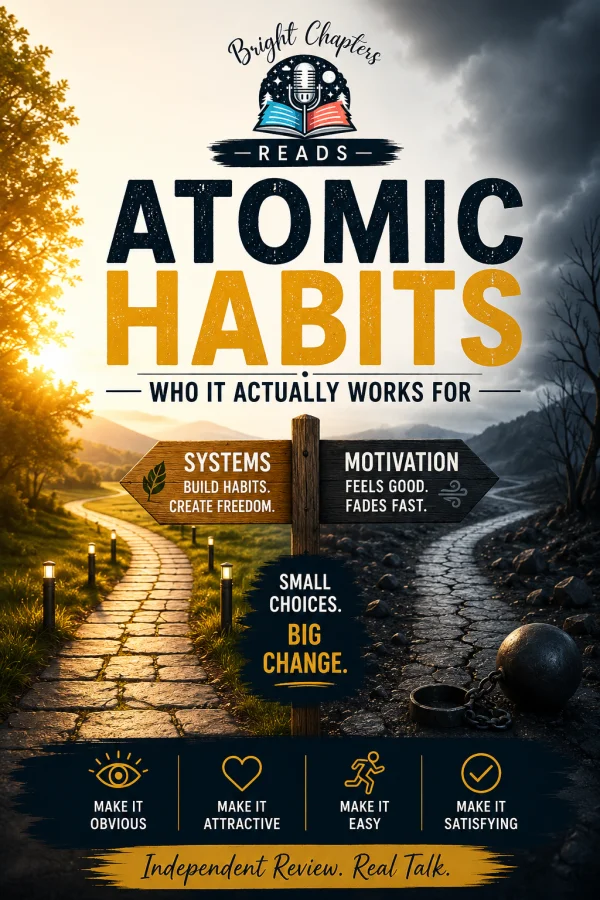
      Atomic Habits โ€” Who It Actually Works For

      Atomic Habits โ€” Who It Actually Works For

      NPOWS New ยท Jul 23, 2026
      Non-Fiction โ†— Open

      People file this book under productivity, but that's not really what it's about. It's about making your behavior automatic, so you don't have to rely on willpower, which runs out, or motivation, which was never something you could count on anyway. Every tactic in the book is really just building toward that one goal. The mechanism, not the motivation Most habit advice just tells you to try harder. Clear does something different. He breaks a habit down into four parts: a cue, a craving, a response, and a reward. A habit isn't really a choice you make each morning. It's a loop running in the background, whether you're thinking about it or not. Change one part of that loop and the habit changes with it. You don't need a pep talk to make that happen. That's the real value of this book. Not "build better habits," but a simple way to see why habits form in the first place. The four laws, make it obvious, make it attractive, make it easy, make it satisfying, aren't just catchy phrases. They're checkpoints. If a habit isn't sticking, you can look at each one and find out exactly what's missing, instead of just telling yourself you're lazy. Habit stacking is the easiest one to picture. You attach a new habit to something you already do without thinking. After I pour my coffee, I do ten pushups. The new habit rides along on the old one instead of needing its own motivation. It's a simple trick. It also just works, and it holds up on an actual Tuesday morning better than most advice in this genre does. The two-minute rule uses the same idea a different way. You shrink a new habit down until it takes less than two minutes to start. Not "read for thirty minutes," just "read one page." Not "run three miles," just "put your shoes on." The two minutes isn't the point. Starting is. Once your shoes are on, going for the run is easier than not going. This part of the book is genuinely good. But it has limits, and the book doesn't spend much time telling you where they are. The reframe that actually holds up Clear's other big idea is that your habits are like votes. Every time you do something, you're casting a small vote for the kind of person you think you are. Skip a workout and it's not just one missed session. It's a vote for "person who doesn't work out." This matters because motivation built around a goal runs out the second you hit the goal, or the second it starts to feel too far away. Motivation built around identity doesn't have that problem, because there's no finish line to reach. You're just slowly building a case for who you already decided you are. It also explains why "just have more discipline" is such useless advice. It doesn't tell you what to actually do on a random Wednesday. Moving the fruit bowl to the counter and the cookies out of sight does. One thing worth saying plainly: not everyone thinks the science here is as solid as the book makes it sound. Some critics, including writers at The Guardian, have argued the book presents behavior science with more confidence than the actual research supports. A lot of the four-law model is really old behaviorist psychology dressed up in new language, and the book doesn't always mention how much of that older research is still debated. The tools deserve the praise. The certainty doesn't. Where the framework quietly stops working Two places, mainly. This is where the system starts to crack. The first is compulsion. Moving things around your environment works well for habits built on convenience, like the fridge being right there on the way to the couch, or your phone being within arm's reach. It works a lot less well for habits built on compulsion. Addiction, OCD, and trauma-driven behavior don't always respond to "just move the thing," because the craving isn't really coming from the environment in the first place. Someone struggling with alcohol can pour out every bottle in the house and still end up driving to a store. Clear never claims otherwise. But the book also doesn't spell that out clearly enough, and a reader could easily assume a system this confident works on everything. If this is your situation, treat the four laws as extra support, not the actual fix. Cutting down how often you're exposed to a trigger genuinely helps, and it's worth doing. But the craving itself usually needs something this book doesn't offer, a therapist, a real program, someone who can actually treat what's driving it. The second is skill. Rearranging your environment and stacking habits solve the problem of showing up. They don't do much for the separate problem of getting better. The book's famous idea, get one percent better each day and you'll end up close to 38 times better after a year, adds up correctly on paper. But it assumes each repetition is slightly better than the one before it. That's true for something simple like flossing. It's not true for anything with an actual skill involved, an instrument, a sport, writing a sentence. Practice the wrong guitar scale for a year and you don't get a year of improvement. You get very efficient at playing it wrong. You can show up every single day and still plateau, because doing something over and over doesn't automatically make you better at it. The fix isn't to throw the habit system out. It's to add something the book never gives you, someone else's feedback. A teacher, a coach, an editor, anyone who can tell you which of your four hundred attempts were actually good ones. Use this book to make sure you show up. Get your feedback from somewhere else. The assumption hiding underneath the whole system Every habit book, including this one, quietly assumes something that almost nobody says out loud: that you can repeat the exact same thing, in the exact same setting, at roughly the same time, for weeks at a stretch. There's real research on how long that actually takes, and it's worth knowing before you get started. One well-known UCL study tracked people building a single daily habit in a fixed setting over twelve weeks. The middle point for a habit becoming automatic was 66 days, not the "21 days" number that gets thrown around everywhere. It ranged anywhere from 18 to 254 days depending on the person and the habit, and that was under pretty ideal conditions, a fixed setting picked ahead of time, nothing getting in the way. So if a habit isn't sticking after a week, that doesn't mean the four laws failed you. It just means you're early in something that takes most people two or three months, even when nothing in their life is going wrong. One nice detail from the same study: missing a single day didn't wreck anyone's progress. People got right back on track once they picked the habit back up. Rearranging your environment only works if you're actually able to rearrange it. Move the cookies, hide the phone charger, put the guitar in the middle of the room. All of that assumes you have a kitchen you're free to rearrange, a schedule with any give in it, a level of stability a lot of people don't have. A nurse working rotating shifts doesn't get a fixed "same time every day" to build a habit around. Someone moving between relatives' apartments doesn't get to permanently rearrange a kitchen that isn't even theirs. Real life doesn't hold still that long. If your life doesn't hold still long enough for a fixed cue to work, the answer isn't to give up on the idea. It's to move the cue somewhere it can travel with you instead of somewhere fixed. A phone alarm at a set time. An object you always carry. A habit tied to something your body does no matter where you wake up that morning. Instead of "after breakfast," try "after my first cup of coffee," wherever that coffee happens to get made. The idea still works. It just needs an anchor you can carry, not one bolted to a room. Why readers mistake a useful model for a universal law Some of this comes down to the reader, not the book. A confident four-law system with a neat little chart is an easy thing to swallow whole. There's something comforting about believing a stuck habit is just a fixable problem with your kitchen setup, instead of something messier, like an unstable schedule, a compulsion, or a skill gap that really needs another person's eyes on it. The kitchen explanation gives you something to do. The messier ones usually don't, at least not from a book alone. But some of it really is the book's own doing. It rarely stops to say "this works well here, and less well there." It reads like a system with no edges at all, and that confidence is part of why it sold better than everything else in this category. A reader who's only ever seen the success stories has no reason to expect there are limits, until they run into one themselves. Most people blame themselves at that point, not the book's silence about where it stops working. So is it worth reading? Yes, for a specific job. If your problem is getting started, breaking a habit built on convenience, or just staying consistent with something simple and repeated, this is close to the best version of that kind of book you'll find. The four laws are real, the tactics are specific, and anyone who keeps starting a habit and losing it two weeks later will get real, immediate use out of this. It's not a full theory of how people change, and it was never trying to be one. It doesn't have much to offer someone whose real problem is instability rather than laziness, someone whose habit is a compulsion rather than a convenience, or someone chasing a skill rather than a routine. The book isn't lying about this. It just doesn't say it loudly enough, and a reader who takes the confident tone at face value can end up blaming themselves for a gap the system was never built to close. Read it if staying consistent is your problem, not if you're after a deep dive into behavior science. Pair it with real practice, a coach, or an editor if what you actually need is skill rather than routine. Pair it with a therapist or a real program if what you're fighting is compulsion rather than convenience. The book does its part well. Figuring out which part is yours to bring is the part it leaves out.
      GrassGo

      GrassGo

      Virender Jaiswal ยท Jul 18, 2026
      Relationships โ†— Open

      Riya walked into the kitchen, poured herself a cup of coffee, and reached for the biscuit tin. She took one bite. "Hmm..." Her mother did not look up from the potatoes. She had been peeling potatoes for thirty years. She could detect a business idea from two rooms away. "I know that 'hmm.'" "What 'hmm'? I didn't say anything." "You said hmm." "That's just a sound." "That sound cost us fourteen thousand rupees when you decided to sell handmade soaps from the bathroom." Riya opened her mouth. "The bathroom still smells of lavender," her mother added. "It has been four years." Riya closed her mouth. Then opened it again, because she was constitutionally unable not to. "Biscuits haven't changed in years." "They're biscuits." "But imagine ifโ€”" "No." "You don't even know what I was going to say." "Healthier. Organic. Premium. Sell online. Disrupt the category." Her mother peeled a potato with the calm of someone who had given this speech before. "Did I miss anything?" Riya stared at her. "...Subscription model," she said quietly. Her mother put down the peeler. Not aggressively. Just with the weight of a woman who needed a moment. "Last week," she said, "mushroom farm." "I watched one video. It was very convincing." "The week before, mobile car wash." "People need clean cars, Mummy." "And before that, you wanted to rent goats." A pause. "To eat weeds," her mother clarified, in case Riya had forgotten the details. "You wanted to charge people to borrow goats. To eat their garden weeds. As a service." "Agri-tourism is a growing sectorโ€”" "Riya." "The goats basically do the work themselvesโ€”" "Riya." "I had a name for it and everything. GrassGo." Her mother picked the peeler back up. This was her coping mechanism. As long as there were potatoes, she could survive anything. Her father walked in at this precise moment, which was either terrible timing or a gift from God, depending on who you asked. He was still in his reading glasses. He had a newspaper under one arm and the expression of a man who had heard everything from the hallway and was choosing, wisely, to pretend otherwise. He looked at his wife. He looked at his daughter. He looked at the biscuit tin on the counter. "What are we opening today?" This was not a joke. He asked this every time. It had started as a joke, years ago, and had since become simply how mornings worked in this house. "A biscuit company," said her mother. He set down his newspaper. Took off his glasses. Polished them on his shirt โ€” which he only did when he was thinking seriously โ€” and put them back on. "Good. We already have customers." Riya looked at him. "We do?" "Our family. Three packets a week. I checked." "You checked?" "I keep a rough household expenditure log." He said this as if it were completely normal. Because for him, it was. "Biscuits are the fourth largest recurring cost after groceries, electricity, and your mother's insistence on buying whole spices when the ground ones work perfectly well." "I heard that," said her mother. "It was meant to be heard." He sat down at the table. "Three packets a week is one hundred and fifty-six packets a year. Multiply that across even a small apartment complexโ€”" "Papa." "I'm just saying the unit economics are interesting." Riya turned to her mother with the expression of someone who had just discovered their accomplice had been hiding in plain sight for thirty years. Her mother pointed to the chair. "Sit. Both of you, sit." They sat. She reached into the tin, held out a biscuit to Riya, and said nothing for a moment. Just looked at her daughter โ€” this ridiculous, wonderful, exhausting person she had made โ€” with the kind of love that doesn't have a cleaner word for it. "Do you want one more?" Riya took it. "For the next ten minutes," her mother said, "you are not the founder of anything. You are not disrupting any category. The goats are retired. GrassGo is not happening." "What am I then?" "A customer. Eating a biscuit. That's all." Riya dipped it into her coffee and ate it. The kitchen was quiet. Her father had, very discreetly, taken out a small notebook. He was not writing in it. He was simply holding it. Just in case. Her mother looked at him. He put the notebook away. She looked back at Riya. "I think we're safe," she whispered. Riya stared at the tin. Then at the shelf behind it, where three other brands sat in a row. Same beige. Same font. Same picture of wheat doing nothing interesting. She swallowed the last of the biscuit. "...Although. Look, Papa already sees it. Three packets a week, you said it yourself. That's not a habit, that's a dependency. We're not selling biscuits, we're selling the thing people reach for without thinkingโ€”" Her father nodded slowly. "The repeat purchase rate aloneโ€”" "Exactly! And if we go healthier, we open a whole newโ€”" "The margins on premium could be significantโ€”" "Papa gets it. Papa completely gets it." They were both leaning forward now. The notebook was back on the table. Riya was gesturing at the tin. Her father was nodding in the way he nodded when something made numerical sense to him. Her mother set down the peeler. She looked at her daughter. She looked at her husband. She looked at the biscuit tin sitting between them like it had called this meeting. "Shut up," she said. They shut up. She picked up the peeler again. But she was smiling. Just a little. Just enough.
      Grief Has Choreography

      Grief Has Choreography

      Ishani Sen ยท Jul 11, 2026
      Non-Fiction โ†— Open

      There's no dignified way to say this, so here it is plainly: Today I found myself washing a dog's pee mat while doing a full Sufi-style spin to a heartbreak song, singing at a volume my neighbours did not consent to. Nobody warns you that grief has choreography. You probably have figured by now, I was mourning a heartbreak but what if I add to it that the heartbreak was more than 20 years ago and the recent adjacent event was a bad review at work. I think you would probably now agree with me, I might be crazy except I am really not. Trust me!If someone had walked in on any of that, they'd have assumed I lost it too, and maybe I did just not in the way they assume.

      What I was doing, instinctively, is what humans have always done with a feeling too big to sit still with; even when it looks, from the outside, like a fully choreographed breakdown.And then, mid-spin, I started thinking: I'm a pretty logical person. But then suddenly something happens, the logic goes out of the window, and the fragile emotional self of 20 years comes back.That's the sentence that started this whole piece. And if you've lived even one version of it, you already know there's a particular kind of night that goes with it.

      Maybe yours looks different. You open your phone and start adding things to a cart you'll never check out. Or you stand in front of the fridge at midnight, eating spoonfuls of something straight from the tub, not because you're hungry, but because you need something to do. Or you put on a song and just sit there, replaying it for the fourth time, even though it's making things worse, not better.Here's the part that's harder to explain: the thing that set it off probably wasn't even that big. A disappointment. A door that quietly closed. And yet somehow, mid-spin, or by the third spoonful, or the tenth item in the cart, you're not just sad about the small thing anymore. You're back in something from years ago, something you thought you'd already made peace with. The logical, composed person you usually are has stepped out of the room, and a much younger, much more fragile version of you has taken their place.

      My analytic brain quickly jumped to pattern, "Hey, on normal days, I can pretty much live without this feeling," is how it got described, looking back. "It really doesn't bother me otherwise. But when something else falls apart, I feel like I'm drowning within the same pain I experienced 20 years back."That sentence is more useful than it sounds. Because it's not really about one heartbreak. It's about something almost everyone has felt and very few people have language for: the way old pain seems to come back to life the moment new pain shows up.

      Your Brain Doesn't File Memories By Date. It Files Them By Feeling. Your memory isn't organized like a calendar. It's organized like a mood board.In the early 1980s, a researcher named Gordon Bower ran a series of experiments where he put people into a sad or happy mood and then asked them to recall memories from their lives. He found people in a sad mood pulled up far more sad memories than happy ones, and people in a happy mood did the reverse.

      Psychologists call this mood-congruent memory; with your current emotional state acting like a search filter, pulling up other memories that carry the same emotional tone.A closely related idea is state-dependent memory, where something learned or experienced in one emotional or physical state becomes easier to retrieve when you're back in a similar state. Together, the two help explain something that otherwise feels almost mystical: why a feeling, not a fact, can be the thing that drags an old memory back into the room.Think of memory less like a filing cabinet labelled by year, and more like a web where every memory is tied by threads to a feeling. A disappointment from this year isn't stored next to other things that happened this year. It's stored next to every other disappointment you've ever felt, regardless of whether one was about a job and another was about a person who left.

      So when something painful happens today, your brain doesn't just retrieve that one event. It tugs the thread labelled "not chosen," or "alone," or "let down," and everything tied to that thread comes with it. The new pain isn't causing the old pain to resurface. It's unlocking it - because underneath, they're wired to the same feeling.That's the drowning. Not one wave. All of them, arriving at once, because they were never really separate to begin with.The Part of You That Comes Back Isn't RandomThere's another layer worth naming. The version of you that shows up in these moments often feels younger; less composed, more breakable than the adult who usually runs the show.

      That opening line; the logic going out the window, the fragile twenty-year-old self stepping back in, well it isn't a contradiction. Many therapists and psychologists describe experiences like this as emotional regression, though the term is used more often in clinical and therapeutic settings than as a precise, formally tested research construct. The idea is that under enough stress, people's reactions can resemble earlier emotional responses. You don't actually become a child, or the twenty-year-old version of yourself. But your nervous system, under threat, often reaches for the most automatic response it has on file rather than the most recent one. If the rawest version of a particular pain: being left, being unseen, not being enough, that first got wired in years ago, that's the wiring your brain falls back on when something today rhymes with it closely enough.

      In my experience,this is why people describe these moments using the language of time travel instead of the language of sadness. Not "I feel sad" but "I feel like I'm back there." That sentence is more literally accurate than most people realize.Why Smart, Pattern-Seeking Minds Get Stuck the LongestPeople who naturally look for patterns and explanations often find unresolved losses especially difficult.You may think, "There must be a pattern here too." But unresolved pain often refuses to give you one.If you're someone who naturally looks for patterns, who isn't satisfied with "things just happen," unresolved pain is especially hard to put down. Psychologist Arie Kruglanski spent decades researching what he called the need for cognitive closure , basically our drive to land on a definite, settled answer, and our discomfort with leaving things open.

      Research using Kruglanski's closure scale has shown this need varies from person to person, but people vary in how strongly they seek cognitive closure. The stronger it runs in you, the more your mind treats an unanswered question as something to be solved rather than something to be lived with.This becomes a trap with any loss that never got a clean ending. Your mind keeps searching for the missing piece that would finally make the story make sense: what they were really thinking, what you should have said, why it happened the way it did; because that's what minds wired for closure do with open loops. The problem is that some losses simply don't come with an answer. The story stopped mid-sentence, and your mind keeps trying to write an ending nobody gave it.This searching has a name too: counterfactual thinking, the mental replay of "what if" and "if only." Research on counterfactual thinking shows it's one of the most natural things minds do after a loss, especially one that felt avoidable. Sometimes this kind of replay genuinely helps; it's how we learn from mistakes that can still be corrected. But after a loss that can't be undone, the same replay often stops being useful and just becomes repetitive.

      It isn't a flaw in your thinking. It's what thinking does when it's denied an ending.And when the search runs long enough without an answer, it can tip into rumination; going over the same thoughts again, not to find anything new, but because the loop hasn't stopped running. Psychological research consistently associates persistent rumination with depression, anxiety, and prolonged emotional distress, because, unlike genuine reflection, rumination rarely produces a new insight. It just wears the same groove deeper.

      Closure Isn't Always Available. That Doesn't Mean You Failed: The goal  most of the time is never to solve the pain. It was to learn to carry it without it taking over the whole room.Which brings us back to the Sufi spin over a half-washed pee mat, the cart full of things you'll never buy, the song on repeat, the tub of ice cream that's now mostly empty."You can't solve everything," is how it gets summed up, "but you can let it out" by affect labelling.

      A process that has been shown, including in brain-imaging research, to measurably reduce its intensity, even when nothing about the situation itself has changed. Saying or writing "I'm grieving" or "I feel abandoned" isn't just venting; it appears to reduce activity in brain regions associated with emotional distress. Singing, dancing, scrolling, or eating a tub of ice cream aren't affect labelling in that strict sense, but they often serve a related purpose: letting a feeling move through you instead of staying bottled up. Not every coping habit does this equally well, though, and the difference usually isn't the activity itself. A song on repeat that lets you finally cry is expression. The same song on repeat used to avoid ever sitting still with the feeling is something closer to avoidance. The honest question isn't "is this a healthy coping mechanism," it's whether, afterward, you feel a little more connected to what you're actually feeling, or a little further from it.

      Sometimes healing isn't finally understanding what happened. But once you recognise what your mind is doing, it no longer gets to convince you that you've gone backwards. Understanding doesn't erase the pain. It changes what the pain means, and that changes how you choose to process it.A note on the science: Mood-congruent memory and the need for cognitive closure are two of the most extensively researched concepts in psychology, each backed by decades of studies.

      Counterfactual thinking, rumination, and affect labelling are similarly well-documented, though affect labelling specifically refers to putting feelings into words, not to coping behaviours more broadly. State-dependent memory and emotional regression are Research using Kruglanski's closure scale has shown this need varies from person to person more loosely across therapeutic and research writing - useful for describing what people experience, even where the evidence is less formally settled. None of this is a diagnosis. It's simply language for something most people feel and few have words for.

      The Smallest Piece

      The Smallest Piece

      olivia.mukherjee1986 ยท May 11, 2026
      Fantasy โ†— Open

      In the city of Moonroot, the lamplighters started work at dusk. The market streets smelled of cardamom and wet stone. And the dogs had rules about humans. 
      Nobody had written these rules down. But they knew them the way they knew everything that mattered. In their nose. In the gut. In the way your ears go up before your brain catches on. 
      Rule one. Humans who move fast are not worth following. 
      Rule two. Humans who smell of fish are worth being patient with. 
      Rule three. A human who gives food without being asked is either very kind or very strange. It takes time to know which. 
      Chiku was seven months old and new to having opinions. He had ignored all three rules. That evening he smelled butter and sugar near the cracked fountain in the park. He followed it straight to a man in a brown coat. The man was carrying a small white dog and a square box. 
      The man looked down at him. Then opened the box sharing a small piece with Parvati, his dog and Chiku. 
      The cake was soft and warm. It tasted like nothing Chiku had ever found in a bin. He sat completely still for a moment. His body needed a second to understand what had just happened to it. 
      He came back the next evening. And the one after that. 
      The man always said the same thing. "Well, there you are again." Like he had been expecting it and was pretending otherwise. Parvati, watched with the look of someone watching a small disaster happen in slow motion. 
      Chiku decided that’s the best part of every day. 
      He told nobody. 
      He told nobody for nineteen days. It certainly took some self-control and not clinging to Laltu at night, but he thought it was worth it. 
      It ended because of Laltu's nose. 
      Laltu had the best nose in the Moonroot pack. He mentioned this about four times a day. One evening in the alley behind the fish market, he grabbed Chiku by the face and sniffed him like he was reading a very important document. 
      "Sugar," he jumped. 
      "Butter." Now his tail was wagging by the thought of what he smelt. 
      Then, slowly, with horror. "CAKE." 
      Bhuri shoved him aside and sniffed herself. Kaalo was the oldest of them. Grey-muzzled. A scar across his left ear from a fight three winter back. He raised his head from the shadows. 
      "You found a human? A feeding human?", he said. 
      "It is just one piece," Chiku said. 
      "One piece," Bhuri repeated. Like she needed to hear it again to be properly upset. 
      "Do you know," said Laltu, pressing a paw on Chiku’s chest, "how long it has been since I tasted butter?  
      Attempting to control his drool with his tongueLaltu continued,” Too long. So long I started wondering if butter was something my mother made up to make me feel better." 
      "Your mother definitely made things up," said Bhuri. 
      "That... That is not the point," said Laltu. 
      Kaalo looked at Chiku steadily. "You hid this from the pack?" 
      Chiku's ears went flat. He had nothing good to say to that. 
      · · · 
      The next evening he tried to leave quietly. This failed straight away. Laltu sneezed behind a barrel. Bhuri stepped out from behind a cart. Kaalo walked out of the shadows like he had been waiting for this moment there the whole time. Which he probably had. 
      "You’re coming too?," Chiku said. 
      "We are looking after you," Bhuri said. Very dignified. 
      "And we want cake," said Laltu. Honestly. 
      The Cake Man opened his box at the fountain that evening. Four dogs stared at him like he was the most important thing in the world. Laltu made a sound somewhere between a whimper and a prayer. 
      "Well now," the man said, laughing. "You brought friends." 
      One piece became four. Bhuri swallowed hers so fast it was hard to say if she had tasted it. Laltu dropped his twice. He ate it off the ground both times with some mud on it, but he didn’t care. Then he sat with his eyes shut for a long moment. Kaalo ate slowly. Like someone who understood this was worth paying attention to. 
      Chiku got the smallest piece. Like he always used to get leftovers after all of them were done. 
      He stared at it. 
      "This is unfair," he said. 
      "Life is unfair," said Bhuri, licking frosting off her nose. 
      "That was my human." 
      "You cannot own humans," said Laltu. "Humans barely own themselves. I watched one argue with a door this morning. The door won." 
      Kaalo made the sound that was his version of a laugh. A small exhale, barely there. From Kaalo, that was the highest praise possible. 
      That night Chiku lay under the broken rickshaw and thought it over. 
      If he got to the Cake Man before the park. Before the others could follow. He could have the whole piece again. Soft and warm and given freely. Nothing like anything he had ever found on his own. 
      It was a small selfish thought. He had it anyway. 
      The next evening he followed the Cake Man home. Past the spice lanes where the air bit sharp with cumin and dried chili. Past the old temple where stone elephants had moss growing between their toes. Past the river bridge where cats held their midnight meetings. Three of the cats watched him go past with the look of creatures who had decided they were above whatever this was. 
      The man noticed him outside a small blue house. There was a mango tree in the front and a lantern by the gate. 
      "Oh no," the man said, without much force. You followed me home." 
      Chiku wagged carefully. 
      The man looked at the sky. Then at the puppy. Then made the sound of someone who had already decided. 
      "OK, fine. Come in." 
      Inside the blue house was warm in a way the city streets never were. The floors held the heat from the day. Blankets smelled of old wool. Of someone coming home to them for a long time. A real bowl of real food sat on the floor, put down without any fuss. 
      And Parvati. 
      She was stretched across a cushion like she owned it. Which she did, really. She opened one eye when Chiku came in. 
      "Oh no," she said, " another goblin." 
      "I am not a goblin," Chiku said. 
      "You have mud on your face." 
      "It rained." 
      "You have mud inside your ear." 
      Chiku had no answer for that. 
      Parvati showed him the rules over the next two days. Patiently. If you want to stay here, do not chew shoes. Do not bark at the lantern. Do not steal from the dad's plate directly. Wait until he looks away. He always looked away. And then it technically did not count. 
      "Dad?" Chiku asked. 
      “Well, not the birth kind, Human Dad kind. You get it?” Parvati asked 
      “It’s complicated”, Parvati answered without Chiku needing to ask a follow up question, his eyes gave it all 
      "Oh ... ok, and why does he look away?" Chiku asked. 
      "Because she is kind," Parvati said. Then corrected herself. "He is kind. Kind people sometimes pretend not to notice. It is how they give you a way out." 
      At night they slept near the warm kitchen. It was more than Chiku had ever had. 
      And still... 
      On the third night he heard it through the glass. 
      Barking. Somewhere across the sleeping city. Bhuri's sharp two-bark. Laltu's spinning frantic sound. And a low and steady cryKaalo. 
      Looking. Calling. Waiting. 
      Chiku pressed his nose to the cold glass and whimpered once. The kind of sound that surprises you when it comes out of your own throat. 
      Parvati came and sat beside him without being asked. 
      "You miss them," she said. 
      "They steal my food." 
      "Yes." 
      "They are loud. Laltu never stops talking. Bhuri once ate something I had been saving for three days. She looked at me while she did it. 
      Parvati remarked, "Hmm. That does sound like Bhuri." 
      "But the city feels very quiet without them," Chiku said. 
      Parvati nodded. "That is what pack means. Not that it is easy. Just that the quiet without them is the wrong kind." 
      He scratched at the door the next morning. The Cake Man said no. Gently at first. Then more firmly. Then with treats. Chiku stopped eating on the third day. In dog terms that means something has gone seriously wrong. 
      That night the front gate shook. 
      The man immediately recognized them and opened it. Outside stood Bhuri, Laltu, and Kaalo. Soaked. Exhausted. Looking like three animals who had been worried sick and were now turning that worry straight into anger. 
      Bhuri did not wait. "You complete idiot! We thought you were dead!" 
      Laltu was already crying. "We checked three garbage zones! Do you know what that does to a person?" 
      Kaalo said nothing for a moment. Then, quietly. "The pack was...." 
      Bhuri completed him,” Incomplete.” 
      That was all. That was everything. 
      Chiku went through the gate so fast he tripped. He crashed into all three of them at once. Mud and tails and noise and the specific relief of things going back to being exactly as messy as they were supposed to be. 
      The Cake Man stood and watched all of it. Then he opened the gate wider. Not halfway. All the way. 
      · · · 
      Bhuri walked into the garden and declared it good territory. Laltu stole stale bread from the bin within four minutes. Kaalo walked to the edges of the garden once, slowly, then lay down and closed his eyes. 
      Parvati watched from the doorway. 
      "More goblins," she said. 
      "We prefer pack," screamed Bhuri. 
      "I prefer quiet," said Parvati. 
      "You should have thought of that before you let the first one in." 
      Parvati had nothing to say to that. Which from her was basically admitting defeat. 
      After that they came and went freely. They looked after the market lanes at night. They walked the Cake Man through the spice streets every morning. Five dogs taking up more space than needed. They slept under the mango tree when it was warm. They fought cats regularly and with mixed results. 
      Every evening the Cake Man now came home with the cake and all five dogs walked to the park togetherBut now the box was bigger. And every evening Chiku still got the smallest piece. Because Bhuri was faster. Laltu was louder. And the universe seemed to feel Kaalo deserved extra frosting. 
      One evening Parvati sat beside him while he looked at his piece. 
      "Still the smallest," she laughed. 
      Chiku looked around. Bhuri was arguing with a pigeon about a bench in the garden. Laltu was chasing his own tail with complete commitment and no clear reason. Kaalo was dozing in the evening light. Old and scarred and completely at peace. 
      "It tastes bigger now," Chiku smiled. 
      Parvati said nothing. She did not need to. 
      The King Who Ate a Frog

      The King Who Ate a Frog

      olivia.mukherjee1986 ยท May 10, 2026
      Fantasy โ†— Open

      Queen Mrinalini understood something her husband did not: power borrowed from fear behaves like a borrowed horse. It runs beautifullyuntil the day it throws you into a ditch and walks off without looking back. 
      Her father, Maharaj Devkant, had built Veerendra's kingdom from the ground up; his armies, his gold, his alliances arriving at precisely the right moment. Veerendra had stopped mentioning this approximately two years ago. Success makes many men rewrite history in their own favourKings do it with particular confidence, having no one to correct them. 
      Three years after the conquest of Radhashila, King Veerendra believed there was nothing left in the world capable of surprising him. 
      His armies had crossed deserts. His banners flew over seven provinces. His treasury overflowed with gold that the king held as a monument to success. 
      He ruled through fear, which he preferred to all other methods. Fear was efficient. Fear didn't ask for festivals. Fear didn't take holidays. 
      One afternoon, in the breathless stillness before monsoon rain, they argued in the palace garden. 
      "You speak to me," Veerendra snapped, "as though this kingdom would not stand without your father." 
      "It would not have stood without him," the queen said simply. 
      Pride can survive mockery. It cannot survive calm truth. The king's face darkened like a sky deciding to storm. 
      "You live in silk because of me." 
      "No. You live like a king because my father allowed it." 
      Above them, unnoticed in the banyan branches, a green parrot sat eating guava with an expression of deep personal satisfaction. 
      He had been listening. 
      He had opinions. 
      He tilted his emerald head. Then, just as Veerendra turned away furiously, the parrot spoke. 
      "Whatever you have today, tomorrow I shall have more. Your gold is merely yellow stone. My guava? That's a score." 
      Silence fell across the garden. 
      "A bird," said the king, in a voice of dangerous quiet, "dares compare itself to me?" 
      The parrot puffed his feathers. "Not just any bird. One with significantly better real estate instincts." 
      Veerendra exploded. The parrot departed, laughing; which was the most irritating sound any living creature had ever dared to produce before him . 
      The soldiers searched for three days and found nothing. Birds, they discovered, are impossible to interrogate. Finally, an old hunter advised: don't search for the nest. Wait for the bird. All creatures eventually return to their nests. Follow him. 
      On the fourth day they followed the parrot to a ruined watchtower, where his nest contained twigs, bright stones, half-eaten fruit, and several stolen golden toothpicks from the royal palace. 
      The court laughed when they heard. Even the king smiled,  ”Toothpicks, really?” 
      Then: "Catch the bird. I shall eat him myself." 
      The ministers exchanged glances with the practiced speed of men who communicate entirely through eyebrows. Wanting to personally consume a talking parrot is, by general consensus, a warning sign. 
       
      The parrot was captured the next morning stealing sweet rice from the temple kitchens. He considered this deeply unfair, as the rice had looked lonely. 
      The king was busy that afternoon, but he ensured he instructed the queen to prepare the bird for supper. 
      Queen Mrinalini sat beside the golden cage, studying the parrot. The parrot studied her back. 
      "This," he said finally, "feels unfortunate for both of us." 
      "You mocked the king." 
      "I composed a verse. Whether it also mocked the king was, I felt, a matter of interpretation." 
      She laughed despite herself. The parrot noted this with great interest. Openings, he thought. 
      "You are far kinder than your husband," he observed. "And considerably sweeter, if I may say; I also know you are wise." 
      "You're flattering me." 
      "No, just the truth" Then, lowering his voice: 
      "A cage of gold is still a cage; a queen deserves a wider stage... " 
      Against her better judgment; which is how most interesting things enter human life; the queen unlatched the cage door. Just slightly. Just to pet him. 
      The parrot exploded upward, ricocheted off the ceiling, knocked over a vase of marigolds, and shot through the window like something fired from a siege weapon. 
      "MAGNIFICENT AUDIENCE!" he shouted, already airborne. "TEN OUT OF TEN!" 
      Then he was gone. Into the grey monsoon sky. Leaving behind one open cage, scattered marigold petals, and one queen staring at all of it in the silence of someone who knows exactly what comes next. 
      At that precise moment, a large frog hopped in front of the kitchen door. 
      The queen looked at the frog. The frog blinked, which is the only expression available to frogs. The queen picked up the frog and said, “Maybe...” 
      That evening, King Veerendra ate his supper with evident satisfaction. 
      "Excellent bird," he declared. "Gamier than expected, but tender." 
      "Yes," said the queen. 
      Then from the window: 
      "O mighty king of gold and throne, who feared no man nor beast nor bone ; how was the frog? Enjoy your stone?" 
      The king set down his spoon. He looked at his plate. He looked at the queen. He looked at the parrot on the window rail, rain-soaked and radiantly smug. 
      "A frog," said the parrot helpfully, "which I personally watched cross your kitchen floor three hours ago. Lovely animal. Extremely birdlike in every respect?" 
      The hall was absolutely silent. 
      Now a wise king would have laughed. Would have said she outwitted me, the woman is extraordinary, and the story would have ended warmly and been forgotten immediately for having no ending worth remembering. 
      Veerendra was not, at this moment, wise. 
      He stood. He said things that could not be unsaid. 
      The queen left. Calmly. Without luggage. Without a backwards glance. 
      She sent word to her father: I am coming home. 
      Devkant roared: How dare he! will bring my army to his door. 
      Fear, as the queen had always known, is a borrowed horse. 
      Within ten days, Devkant's forces arrived. The cities that had obeyed out of fear discovered that fear and loyalty are different things entirely. Loyalty stays when things become difficult. Fear simply finds better arrangements. 
      The palace guards opened the gates. It was not a difficult decision. 
      Veerendra fled to the highest tower and stood among his treasures; listening to a kingdom reorganize itself without him. 
      The parrot sat in the railing, feathers flat, looking considerably less triumphant than expected. 
      "I came for comedy, stayed for the fall, but no jester laughs at the end of it all. The frog was funny. The rest, not so much. A kingdom for pride is too heavy a clutch. " 
      Veerendra looked at the bird for a long time. Then he left it where it was and walked downstairs to his fate. 
      The Plant

      The Plant

      olivia.mukherjee1986 ยท May 09, 2026
      Relationships โ†— Open

      Thursday evening. Most people were gone. Arjun stood beside it with his steel bottle. 
      "You have terrible survival instincts," he told the money plant quietly. 
      "You know talking only works if you water it too, right?" 
      He nearly dropped the bottle. 
      A woman at the photocopier. Files against her chest. Curly hair tied badly — badly enough to suggest she'd done it while thinking about something else. 
      Seventh floor. Finance. He had seen her before. 
      "I was watering it," he said. 
      "You were emotionally preparing." 
      "Important part of the process." 
      She crouched beside the pot. 
      "Oh," she said softly. "This is really bad. You were right to scold it." 
      He laughed before he could stop it. Short. Almost surprised, like it had escaped without permission. 
      She looked up immediately, catching it. 
      Together, without discussing it, they moved the pot from the window. She loosened the soil with a pen. He poured water slowly into the planter. 
      “A fighting chance,” she said. 
      "You seem quite confident for someone performing surgery with office stationery." 
      "It worked." 
      That should have been it. 
      Next morning. A sticky note appeared on the pot. 
      Still alive. 
      — Mira 
      Below it, a smiley face. 
      He took out a pen. 
      Low standards for survival. 
      — Arjun 
      By lunch, another note. 
      That's literally all survival is. 
      For three months, they did not exchange numbers. They exchanged notes. 
      Plant update: one new leaf. Against all odds. 
      You sound disappointed. 
      I distrust sudden optimism. 
      That's because you work in operations. 
      That's because I have eyes. 
      Arjun started arriving ten minutes early. 
      Mira started leaving slightly late. 
      Not enough to be obvious. Just enough to get a glimpse of each other. 
      One rainy evening he found her on the floor beside the window, chips from the packet, watching the city blur. 
      "Bad day?" he asked. 
      "Define bad." 
      "Crying in the office bathroom." 
      "Nope." 
      “Then… tax fraud?” 
      "Not worth it, too much paperwork." 
      He sat beside her. Careful space between them. 
      "My almost-fiancé is getting married," she said eventually. "To someone else. Apparently." 
      "Almost?" 
      "He cheated. Very inefficiently. I practically discovered him by accident because men are incapable of subtlety." 
      "Oh." 
      "That was your entire reaction?" 
      "I don't know him well enough to hate him properly yet." 
      She laughed. A real one. Covered her mouth immediately after. 
      He noticed she did that often. Hid joy the moment it arrived. 
      "I wasted four years on this stupid relationship," she said quietly. 
      "I don't think caring about someone is a waste," he said. 
      She looked at him. 
      "You talk like someone's writing it down." 
      "What do you mean?" 
      "You build sentences carefully. Then hand them over. Like folded clothes." 
      He looked away first. That was new. 
      After that she appeared in his life in small permanent ways. 
      A blue mug got added to his kitchen because she hated his white ones. Handwritten labels on the spice jars — apparently it makes life easier. 
      One Sunday she fell asleep on his couch mid-movie. Head on his shoulder. 
      He sat still for forty minutes. Not because he had to. Because he wanted to. 
      She had started trusting him enough to sleep around him. 
      That landed heavier than attraction ever had.  
      Then she disappeared. 
      Still came to office. Still said the distant hi, the occasional good morning, the automatic see you. 
      But the notes stopped. The waiting stopped. The softness - gone. 
      He lasted four days. 
      Friday. Parking lot. She was looking for something in her bag with the focus of someone not looking for anything. 
      "Mira." 
      "Hmm?" 
      "Did I do something?" 
      Her fingers stopped. 
      "No." 
      "You left a note for ninety-two consecutive working days." 
      Silence. 
      "Ninety-two?" 
      "I counted accidentally." 
      "Really? That's the first time you lied to me." 
      She shut her bag harder than necessary. 
      "He's getting married next month. And I am not handling it as well as I thought." A pause. "I liked you before I was done grieving him. And I hate that about myself." 
      “So, you think loving someone betrays the version of you that got hurt, he said. 
      She stared at him. 
      "Folded clothes again. Nice..." 
      I’m trying very hard to be messy. I promise.” 
      She laughed once. Painfully. 
      "Look, I don't want to break near you." 
      There it was. Not fear of loving him. Fear of being fully seen by him. 
      He stepped closer. 
      "Why not? I think there's at least one person in everyone's life," he said slowly, "in front of whom breaking stops feeling embarrassing." 
      “I want to be that person for you. Can I?” 
      She couldn’t hold it anymore, she hugged him as tightly as she could"You already are, I just didn’t realize." 
      She started crying. Angrily. Which felt completely consistent. 
      "Wonderful," she muttered. "Crying in a parking lot like a divorced aunt." 
      He smiled. Then reached over and tucked a strand of hair behind her ear. Small. Careful. 
      Her eyes closed briefly. Not pain. Relief. 
      "I don't know how to do this properly," she whispered. 
      "Neither do I." 
      "You're supposed to say something reassuring." 
      "Sure, give me a minute." 
      She laughed through tears. He laughed, too. 
      Later. After the rain. After the building lights went to half and the city outside settled into its quieter register. 
      She looked up at him. 
      "Do you know when I fell in love with you?" 
      He shook his head. 
      "The plant." 
      "The dying one?" 
      "You watered it like it mattered." 
      He frowned. "It did matter." 
      She smiled then. Warm. Tired. Completely unguarded. The kind of smile that doesn't perform itself. 
      "Yeah," she said softly. "That's when I knew." 
      The Highlighter

      The Highlighter

      olivia.mukherjee1986 ยท May 09, 2026
      Relationships โ†— Open

      "Dutta. You're in the back again." 
      Ritoban looked down towards the floor, waiting to be ignored by his teacher. 
      "There are seats in the front." 
      "I'm ok ma’am" 
      He looked up now. Glanced at the front row. Back at her. 
      "Not happening," he thought. 
      She stared at him for a moment. "I am tired of this class" 
      She did not want to but anyway moved on. She always moved on. That was the thing about being in the back. Nobody stayed long enough to argue. 
      His friend Karan leaned over. "One day she's going to move you." 
      "She won't." 
      "How do you know?" 
      "Because I'm not absent enough to be a problem and not present enough to be worth fixing." 
      Karan thought about this. "That's actually genius." 
      "I know." 
       
      Life was going pretty smooth his way until one day during a math's test, the ink of his pen got over. He being him, of course did not have a spare. 
      He tapped the desk in front of him. Ahaana Ghosh turned around. 
      "Pen?" he said. 
      She looked at him for a moment. Then opened her pencil case, a small blue thing with a cartoon Pikachu on the front, slightly faded, clearly old, clearly kept on purpose. She handed him a pen without smiling. 
      "Return it," she said. 
      "Emotionally or physically?" 
      She looked at him again. Narrowing her eyes, 
      "Physically will do." 
      "Reasonable." 
      He returned it the next day. She was already at her desk when he came in. He placed it next to her notebook without saying anything. 
      She looked at the pen. Then at him. 
      "Wow, you actually gave it back." 
      "Strong moral code, you see" 
      "Really?" 
      He smirked, "Activates selectively." 
      She almost smiled. Turned back to her notes. He noticed she put the pen back in the Pikachu case. 
      A week later. Physics. A long derivation on the board. 
      She turned around without warning. 
      "Did you understand that?" 
      He looked at the board. At his notebook, which had three words and numerous sketches of windows on it. 
      "I understand the intention behind it," he said. 
      "Right, that's very useful. Thanks" 
      "I can make it sound useful if you want." 
      "What? Try." 
      "The universe needed to prove a point and used seventeen steps to solve it when three would've been enough." 
      She stared at him. "Whatever" 
      She did not turn back, but he caught the smile she aimed at the textbook, the one she thought nobody saw. 
      He was starting to notice that she did that a lot. Laughed at things when she thought she was alone with them. 
       
      That day during lunch while she was eating in the cafeteria, he appeared nearby, casually pulled a chair, and sat down. 
      She looked at him. "Did I invite you?" 
      "No, I did." Suddenly, he turned serious, “Can I join, if .... if you don’t mind?” 
      She considered this. "OK" 
      She opened her tiffin. Rice, dal, something that smelled like home. He had nothing. 
      "You didn't bring food," she said. 
      “No, I don’t like carrying tiffin, but..., I brought appetite." 
      "That's not a contribution." 
      "It creates demand. Economically it is." 
      Without looking up from the table, she gently pushed the tiffin slightly toward him. Just slightly. Like she was adjusting to it, not offering it. 
      He took some rice. Didn't make a thing of it. Neither did she. 
      But she had to ask anyway, “why are you here?” 
      “Oh, I saw you eating alone, so....”  
      “I like eating alone, you can go....”  
      But he didn’t... he quietly sat there looking everywhere excepting at her. He did not know how to but that day onwards he started noticing her, everything about her. 
      She had three pens in her case but only used one specific one during exams. The others were backups she never touched. She tapped her notebook twice when she was about to disagree with something but stopped herself. She always stopped herself. 
      In a group discussion one afternoon, Pooja said something incorrect. He watched Ahaana open her mouth. Tap tap. Close it. 
      After class he quietly walked beside her on the way out from break. 
      "You knew she was wrong," he said. 
      She glanced at him. "What?" 
      "In the discussion. You were going to say something." 
      A pause. "It wasn't important." 
      "You tapped your notebook twice." 
      She stopped walking. Looked at him properly. 
      "You noticed that?" 
      He shrugged. 
      She started walking again. Didn't say anything for a moment. 
      Then: "She wasn't completely wrong." 
      "She was mostly wrong." 
      "Mostly isn't completely." 
      "So you let mostly wrong go unchallenged." 
      "Sometimes it's not worth it." 
      "Sometimes or usually?" 
      She looked at him sideways. Not annoyed. Something else. 
      " You know, you're observant for someone who never pays attention in class," she said. 
      "Who said? I'm always paying attention," he said. "Just not ...." 
      “Just not to what you are supposed to”, both of them laughed. “You got it”, he said with a wide excited smile. 
      During final exams, she was at her desk with four highlighters arranged by colour. He arrived with nothing. 
      Ahaana turned back to check on Ritoban,"Where are your stuff?” she questioned 
      He happily pointed at a pen and pencil clipped to his shirt pocket. 
      “What the ... you're not going to pass," she said. 
      "Hmm, how do you know? Probably... not" He laughed. 
      "Not funny, are you prepared?" 
      "I am." 
      She looked at his empty desk. "Where?" 
      He pointed at his head. 
      She put down her highlighter. "That's not how it works." 
      "It might." 
      "It doesn't." 
      "You don't know that." 
      "I do actually know that." 
      That day, after the exam she waited for him at the cafeteria....  
      He leaned back. "What's the yellow one for?" 
      She looked at the highlighters. "Important definitions." 
      "And pink?" 
      "Formulas." 
      "Orange?" 
      "Dates and names." 
      "And blue?" 
      A pause. 
      "I haven't decided yet," she said. 
      He looked at the blue highlighter for a moment. 
      "Use it for things that you like," he said. "The stuff you're not sure about yet." 
      She looked at him. Then at the blue highlighter. 
      Didn't say anything. 
      When the results were out, she did well; he survived. 
      She looked at his marks, then at him. 
      "You could do so much better." 
      "I could do many things better." 
      "Then why don't you?" 
      He thought about it. Actually thought. 
      "Well, I don't always feel like I have to," he said. 
      She looked at him for a long moment. 
      "Well, that's either very honest or very sad," she said. 
      "Might be both." he smiled 
      She didn't have anything to say to that. But she kept thinking about it. He could tell. 
      One afternoon, raining. Suddenly, heavily. Everyone stranded inside. 
      They ended up near the corridor window without planning to. Someone down the hall was yelling about a wet bag. A drop ran down the iron grille and split at the bottom into two. 
      She said, without looking at him: "You're different when you're quiet." 
      "Hmm, that's because I'm not talking." He laughed 
      "Hey, you also think more than you show." 
      He said, gazing at the rain. 
      She turned. "Don’t we all?" 
      "The notebook tapping. The highlighter you hadn't decided about. The things you don't say in discussions." He paused. "You think a lot more than you show." 
      She looked at him for a long time. 
      "Not always," she said quietly. 
      "Can I write something in your hand .... if ...you don’t mind," she said.  
      "Interesting, sure," he responded. 
      She opened the top zip of her bag, took out the blue marker, and drew a window in his hand with it. 
      His eyes stayed wide open, more in shock than surprise.  
      “You.... you like me?” he asked now overjoyed. 
      “No dumbo, I kind of love you”  
      He was visibly upset, “I was about to ...” 
      She cut him off, “well, you are late”. 
      "That’s not fair, I was just processing." 
      "Nonsense, you were hiding." 
      The argument went on for the next one hour, so did the rain. 
      Notes in the Margins

      Notes in the Margins

      olivia.mukherjee1986 ยท May 09, 2026
      Relationships โ†— Open

      It wasn't a real map. It was drawn in pencil on graph paper, the kind with the pale green grid, and whoever had made it had small, deliberate handwriting that slanted left.
      The map showed a city. Probably. There were streets but no names. A river that curved in a way that reminded her of something. And in the bottom corner, a legend with only two entries: 
      โ˜… (Star) — where I would go if I weren't afraid 
      × (Cross) — where I actually went 
      There were seventeen stars. Thirty-one crosses. 
      She sat with that for a long time. 
      She returned the book. She did not mention the map, did not find a need to. 
      Three weeks later, when she came back to return her next book, she asked the librarian — not about the map, but about the book itself. If she could re-borrow the same book? Looked like it was missing from the shelf.  
      The librarian said, “Ah, might be Raj. He loves Paulo Coelho, particularly - The Alchemist. He picks that book quite often. Let me check.” After turning the pages of the register by a few days, she finally looked up, “Yep, He did pick it up last Thursday”. Then she said, in a different tone entirely: "He comes in on Thursdays. Sits in the corner with the bad lamp." 
      He was there on Thursday, and the lamp was genuinely terrible — a warm underwater sort of light that turned everything amber, like being inside an old photograph. 
      She sat down across from him. Not next to him. Across. She put the map on the table between them, unfolded it slowly, and said nothing. 
      He looked at it, surprised. Then at her. Then back at the map. 
      "You found it," he said. 
      She smiled, "Well, you left it to be found?" 
      "I left it in a book. I didn't think—" He stopped. 
      "You thought no one would look," she said. 
      "I didn’t think it was important to be found." 
      A pause that neither of them rushed. 
      "Hmm, which river is this?", she asked with a curious smile 
      He turned the map slightly, orienting it like it was real, like the table was a coastline. "This one," he said, and his finger traced the curve of it without touching the paper. "It's not a real place." 
      "I know." 
      "I made it when I was...." He looked for the word. "When I needed somewhere to be that didn't exist yet." 
      "There are more stars than crosses, looks like....she paused. 
      "Yes." 
      "Is that getting better?" 
      He thought about it. Genuinely thought about it, which she noticed. 
      "Ahh, I think better," he said. " But slow." 
      They talked until the library closed, which happened in stages — lights dimmed in the far stacks first, then a soft recorded chime, then the librarian walking past them with a look of elaborate innocence. 
      "I don't know your name," he said. 
      "Tara." 
      A gentle smile spread across his face. 
      “Raj”, he said. 
      "Do you want the map back?" she asked. 
      He looked at her. "It got where it was going," he said. 
      Over the following months she learned things about him the way you learn the layout of a room you keep returning to - not all at once, but until suddenly you stop needing the light on to navigate. 
      He made maps, the way other people kept journals. Not of places he'd been but of places he felt. There was a map of the week his father was in the hospital. A map of a city he had never visited but had read about until it was more real to him than places he had lived. A map of a single afternoon that had changed the direction of something important, though he couldn't explain what. 
      Tara would on purpose visit the library on Thursdays to meet Raj and Friday without telling him, to find the new map hidden in the book. Even though unsaid, Raj knew in instances when Tara invariably would bring up something for the past maps like, “Is that why you do not want to visit a mountain? Because they are melancholic? 
      After a few months on a Thursday evening, deep in winter, Tara entered the library , rubbing her palms to each other. The bad lamp was casting its amber underwater light; she unfolded a piece of graph paper on the table in front of him. 
      He looked at it. 
      It was a map. Probably. There were streets but no names. A river that curved like something familiar, his first map. 
      In the bottom corner, a legend: 
      โ˜…(star) — where I would go if I weren't afraid 
      ×(cross) — where I actually went 
      (Diamond) — new 
      There were twelve stars. Nine crosses. And one diamond, placed at the center of the map, in an unmarked square that could have been a park, or a courtyard, or simply the place where two streets finally met. 
      He looked at the diamond for a long time. 
      "What is it?" he asked, though he already understood. 
      She looked at him. 
      "Somewhere I went," she said, "because I wasn't afraid." 
      She paused, a silence that had said more than her words,” And, I would love to be there, forever 
      Outside, the city went on without them for a while. The lamp was still terrible. Neither of them uttered a word; none was needed. 
      Survivorship Bias

      Survivorship Bias

      olivia.mukherjee1986 ยท May 04, 2026
      Non-Fiction โ†— Open

      Somewhere in the last few years, you have probably consumed a story that went something like this. Someone started with nothing, or close to nothing. They had a conviction, or an idea, or a moment of clarity in a parking lot at two AM. They ignored the people who told them it was a bad idea. They worked harder than everyone around them. They did not quit when it got hard. And then it worked. The business took off, or the creative career clicked, or the investment paid out, and now they are here, telling you about it, and the implicit message underneath every word is: you can do this too. Just do what I did. 
      That story is not a lie. But it might be the most structurally misleading thing you have ever read. And the reason has nothing to do with the person telling it. 
      A War, a Statistician, and the Insight That Changes Everything 
      During World War II, the United States military faced a practical problem. Aircraft were being shot down over Europe at rates that were unsustainable, and engineers needed to figure out where to add armor to improve survivability. Adding armor everywhere was not an option because the weight would ground the planes. So they did what seemed reasonable: they examined the planes that returned from missions, mapped where the bullet holes were concentrated, and prepared to reinforce those areas. 
      The damage clustered on the wings, the fuselage, the tail. The engines, by comparison, came back relatively unscathed. The logical conclusion seemed obvious: armor the wings and fuselage, where the planes were clearly taking the most fire. 
      A statistician named Abraham Wald looked at the same data and saw something the engineers had missed entirely. The planes they were examining were the ones that had made it back. Which meant the bullet hole map was not a picture of where planes got hit. It was a picture of where planes could afford to get hit and still return. The engines were nearly clean on the returning aircraft not because they were being missed by enemy fire, but because planes that took engine damage did not come home at all. They were not in the sample. They were at the bottom of the English Channel. 
      Wald's recommendation was to armor the areas with the fewest bullet holes, specifically the engines, because that was where damage was fatal. The military took his advice. The insight saved lives. And it gave a name to something that had been distorting human judgment long before anyone thought to study it. 
      What the Planes Have to Do With Your LinkedIn Feed 
      Survivorship bias is what happens when the sample of information you have access to is systematically filtered by outcome, and you do not realize the filtering has occurred. You are looking at the planes that came back. You are drawing conclusions about all the planes. 
      This would be a manageable problem if it were limited to wartime engineering decisions. But it is not. It is the foundational distortion in almost every piece of success advice that exists, and it operates so invisibly that even the people producing the advice are usually unaware of it. 
      Here is the mechanism in plain terms. When a strategy, a path, or an approach produces a successful outcome, the person who followed it has a story to tell and usually an audience willing to hear it. When the same strategy produces failure, there is no equivalent amplification. The person who tried the same approach and got nothing is not invited to give keynotes. They are not featured in magazine profiles. They do not attract the kind of following that creates a book deal. Their experience is just as real and arguably more statistically representative, but it is structurally invisible. Success is loud. Failure is silent. And you are building your understanding of the world from the noise while the signal sits quietly underwater. 
      The Math That Nobody Shows You 
      Consider what happens when a thousand people pursue the same path: starting a particular type of business, following a specific investment philosophy, pursuing a creative career using a method that worked for someone famous. Suppose ten of them succeed in a meaningful way. Those ten people now have something to say, and the world is interested in hearing it. They write the books, record the podcasts, post the threads. Their advice is genuine. Their experience is real. But it represents one percent of the attempts and carries none of the information about what happened to the other nine hundred and ninety. 
      Now you, arriving at this body of advice, hear a remarkable consistency. Multiple successful people, apparently independently, converged on similar principles: believe in yourself, be willing to fail, find your edge, stay the course. It sounds like validation. It sounds like a pattern that has been confirmed across multiple data points. What it actually is, is a pattern that has been confirmed across the subset of outcomes that survived a filter you cannot see. 
      The other nine hundred and ninety people, many of whom also believed in themselves, were also willing to fail, also thought they had found their edge, and also stayed the course for years, are not in the conversation. Not because their experience is less instructive. Because it is less visible. 
      The Specific Ways This Is Costing You 
      The places where survivorship bias does the most damage tend to cluster around the biggest decisions people make. 
      In entrepreneurship, the cultural mythology around starting a business is constructed almost entirely from survivor testimony. The dropout who built a billion dollar company, the person who bet everything and won. These stories are not representative. Research on new business formation consistently shows failure rates that the success narrative does not prepare people for. A significant portion of small businesses do not survive their first five years. The people who could tell you most honestly about the actual odds are the ones who tried and did not make it, and they are largely absent from the conversation about whether you should try. 
      In investing, the same distortion operates in reverse. The funds and strategies you hear about are disproportionately the ones that have performed well. Funds that underperformed close quietly. The track record you are shown when considering any investment vehicle is, by definition, a survivorship-biased sample. Research by financial economists has documented this extensively: databases of mutual fund performance systematically exclude defunct funds, which makes average returns look better than they actually were across all capital deployed. 
      In self-improvement broadly, the bias creates what might be called the advice pollution problem. The self-improvement industry is built on the testimony of people for whom a particular approach worked. Waking up at 5am, journaling, cold showers, a specific diet, a particular morning routine. Each of these practices has articulate, successful advocates. What is missing is any systematic accounting of how many people tried the same practices with the same commitment and got a different result, because those people did not build an audience around their morning routine. 
      The Harder Question About Failure 
      Here is something worth sitting with. The person who tried ten different approaches and failed has information that the person who tried one approach and succeeded simply does not have. They know what the dead ends look like from the inside. They know which promising-sounding paths turn out to go nowhere. They have tested the territory in ways that a single success story cannot capture. In a rational world, their experience would be treated as valuable data. In the world we actually live in, they are largely invisible because their outcome did not clear the filter that grants access to an audience. 
      This is not a small problem. It means the advice ecosystem is systematically weighted toward a particular type of experience, the kind that ended well, and systematically missing the information that would give you the most honest picture of the actual distribution of outcomes. You are navigating using a map that only shows the routes that worked for someone else, with no indication of how many people followed the same route and did not arrive. 
      What You Actually Do With This 
      None of this means you should stop learning from successful people or dismiss the value of case studies and role models. It means you should hold that information differently, with an awareness of what is not in it. 
      The most useful habit to develop is asking what the denominator is. When someone tells you a strategy works, the follow-up question is not whether they are telling the truth. It is how many people tried it. What does the full distribution of outcomes look like, not just the one you are hearing about? Is the success you are looking at the result of a reliable process, or the result of a reliable process combined with timing, market conditions, personal circumstances, and a meaningful amount of luck that the story has quietly edited out? 
      Seeking out failure data deliberately is also more useful than it sounds. The person who tried the path you are considering and did not succeed has specific, practical information about where it broke down that the success story structurally cannot give you. Finding those voices, even when they are less glamorous and less amplified, gives you a more complete map. 
      And when you hear advice that sounds like a clean formula, follow your passion, trust the process, outwork everyone, the question to carry is not whether the person giving it is wrong. It is whether you are hearing the whole story. Because you are almost certainly not. The most important part of most success stories is the part that got left out before the story even began: everyone else who tried the same thing, in the same way, with the same conviction, and did not get the same ending. 
      The planes that came back were real planes. The bullet holes were real bullet holes. But they were never the whole picture. 
      They were just the part that survived long enough to be seen. 
      Nobody Is Thinking About You

      Nobody Is Thinking About You

      olivia.mukherjee1986 ยท May 04, 2026
      Non-Fiction โ†— Open

      Nobody Is Thinking About You. And That Should Feel Like Great News. 
      Picture this. You are walking into a room, maybe a party where you know only the host, or a meeting where you are the newest face, or a gym on your first week back after months away. Nothing dramatic happens. Nobody stops talking. Nobody turns around. And yet, inside your head, it is a full production. You are suddenly aware of how you are walking. You wonder if you look as uncertain as you feel. You replay the last five seconds of your entrance like there is footage to review. And underneath all of it runs a quiet, insistent conviction: everyone in this room just clocked you. 
      That feeling is almost universal. It is also almost entirely wrong. 
      The Research That Should Embarrass All of Us 
      In the late 1990s, psychologists Thomas Gilovich, Victoria Husted Medvec, and Kenneth Savitsky ran a study at Cornell University that has since become one of the more quietly devastating findings in social psychology. They asked participants to put on a T-shirt featuring a large, noticeable image, think Barry Manilow level of conspicuous, and then walk into a room where other people were already seated and working. Afterward, the researchers asked the T-shirt wearers to estimate how many people in the room had noticed what they were wearing. The average guess was around fifty percent. The actual number was closer to twenty-five. 
      The participants were off by a factor of two, about something that was literally printed on the front of their clothing. 
      Gilovich and his colleagues named this the Spotlight Effect, and subsequent research has replicated it across different scenarios: people overestimate how much others notice their bad hair days, their fumbled answers in meetings, their nervous silences in conversations, their visible mistakes. The gap between perceived attention and actual attention is consistently large. We are not talking about a modest miscalibration. We are talking about a systematic, significant, and almost universal tendency to believe we are far more visible than we actually are. 
      Why Your Brain Does This to You 
      The explanation is not that you are unusually self-absorbed. It is that you are human, and human consciousness is egocentric by design. Not in the pejorative sense, but in the literal sense: your entire experience of reality is centered on you. You feel your own thoughts from the inside. You feel the heat in your face when you say something that lands wrong. You feel the spike of self-consciousness when you trip over a word in a presentation. That feeling is immediate, vivid, and visceral. 
      So your brain makes what feels like a logical inference: if this feels big and loud to me, it must register as big and loud to the people around me. Psychologists call this anchoring on your own experience. The problem is that other people are not receiving the broadcast you think you are transmitting. They do not feel your internal intensity. They are, at any given moment, managing their own internal intensity, their own running commentary, their own quiet loop of self-monitoring and self-assessment. 
      The person across the table who you think noticed you stumble over your words is almost certainly thinking about something they said three minutes ago that they are not sure landed right. The colleague who you assume is silently judging your presentation is probably rehearsing the question they are about to ask. Everyone is the star of their own internal drama, which means nobody has much bandwidth left to be a critical audience member in yours. 
      The Invisible Tax You Have Been Paying 
      This would be a relatively minor quirk of human psychology if the consequences stayed small. But the Spotlight Effect does not just make social situations feel more stressful than they need to be. It shapes decisions. It shapes behavior. It shapes, quietly and cumulatively, the size of the life you are willing to live. 
      Think about the last time you did not say something in a meeting because you were not quite sure it was the right thing to say, and the room felt like it would remember if it was not. Or the time you held back from starting something publicly, a creative project, a new direction, a public attempt at something you cared about, because the imagined audience for your potential failure felt too large and too attentive. Or the version of yourself you keep slightly dialed back in new social situations, just in case. 
      All of that hesitation has a source, and a significant portion of it traces back to an audience that is not nearly as large or as interested as you have been assuming. 
      Research by Gilovich and colleagues found that people consistently overestimate how long others will remember their mistakes and awkward moments. The psychological term for this is the Illusion of Transparency, closely related to the Spotlight Effect: we believe our internal states, our nervousness, our embarrassment, our uncertainty, are far more visible to others than they actually are. The audience we are performing for, and moderating ourselves for, and shrinking ourselves for, is largely a construction. 
      A Check You Can Run on Yourself Right Now 
      Here is a question worth sitting with honestly. Think back to yesterday. Can you recall a specific awkward moment that someone else had in your presence? Not a dramatic incident, just a regular stumble: a word mispronounced, a joke that did not quite land, a slightly unfortunate outfit choice? 
      Most people, when they actually try to retrieve these memories, find they are not there. Not because nothing happened, but because other people's minor social stumbles do not encode deeply in memory. They pass through without sticking. They are noticed, if at all, for a fraction of a second, and then displaced by the next thing. 
      That is what is happening to your moments too. The ones that feel permanent and neon-lit from the inside are passing through other people's consciousness like background noise. 
      What Actually Happens When You Stop Performing 
      There is an irony buried in the Spotlight Effect that is worth naming directly. The self-monitoring that the spotlight feeling produces, the careful editing of what you say, the constant low-level management of how you are coming across, actually makes you less compelling to be around, not more. People can feel the difference between someone who is present in a conversation and someone who is partially elsewhere, running quality control on their own performance. The second kind of person is harder to connect with, harder to trust, and paradoxically more likely to come across as awkward than if they had simply stopped trying to manage the impression. 
      Research on social anxiety consistently finds that the behaviors people deploy to protect themselves from negative evaluation, speaking less, avoiding eye contact, over-preparing, monitoring their own facial expressions, tend to generate more of the negative social experiences they were trying to avoid. The protection strategy becomes the problem. 
      When people let go of the performance, when they accept that the audience is smaller and less critical than they feared, something shifts. They speak more naturally. They listen better because they are not simultaneously broadcasting and receiving. They become easier to be around. And the social feedback they were so anxious to protect improves, not because they tried harder, but because they stopped trying so hard. 
      The Actual Size of Your Audience 
      Here is what the research points to when you take it seriously. Your genuine, consistent audience, the people who are regularly thinking about you, tracking your progress, noticing your choices, is very smallIt is probably three to five people on a good day. It might be your closest family, a friend or two, a colleague who cares about your work. That is roughly it. Everyone else is intermittent at best and mostly absent. 
      This sounds deflating until you realize what it means in practice. The vast social tribunal you have been unconsciously modifying your behavior to satisfy does not actually exist. The crowd of observers tracking your failures and your awkward moments and your imperfect attempts is not assembled. You have been paying an enormous tax, in hesitation, in self-censorship, in held-back effort, to a court that is not in session. 
      What You Do With This 
      The practical application is not to stop caring what anyone thinks, which is both impossible and not actually desirable. It is to recalibrate the size and attentiveness of the audience you are imagining when you make decisions. 
      Next time you feel the spotlight, next time the self-consciousness spikes and the internal editing kicks in, try running one honest question: will anyone remember this tomorrow? Not rhetoricallyActually think about it. Trace out what the realistic answer is. In almost every case, the answer is no, and in the cases where someone does remember, the memory will be far less vivid and far less charged than the version you are currently imagining. 
      Then make the choice you would make if the spotlight were off. Say the thing. Try the thing. Start the thing. Post the thing. Not recklessly, but honestly, from the part of you that is not performing for an audience that was never really there. 
      The spotlight you have been standing under is one you constructed yourself. And the moment you see that clearly, you realize you can simply step out of it whenever you choose. 
      That is not a small thing. That is most of the game. 
      Parkinsonโ€™s Law: Why You Always Take Longer Than You Should

      Parkinsonโ€™s Law: Why You Always Take Longer Than You Should

      olivia.mukherjee1986 ยท May 04, 2026
      Non-Fiction โ†— Open

      Somewhere on your desk, or in your browser tabs, or in the back of your mind, there is a task that should have taken two hours. It has now been three days. You have touched it, left it, returned to it, revised the parts that did not need revising, and somehow it is still not finished. You are not lazy. You are not disorganized. You are simply obeying a law you probably never knew existed. 
      In 1955, a British naval historian named C. Northcote Parkinson published an essay in The Economist that began as satire about government bureaucracy. He had noticed something odd about the British Civil Service: the number of administrators kept growing even when the actual amount of work did not. Officials were generating more meetings, more memos, more committees, not because the workload demanded it, but because the structure allowed it. More time and more people created more work to fill both. He distilled this observation into a single sentence that has since outlived every bureaucracy he was mocking: work expands to fill the time available for its completion. 
      What he meant as a joke about government turned out to be an uncomfortably accurate description of how all of us operate, every single day. 
      The Uncomfortable Experiment You Can Run Right Now 
      Here is a thought experiment that will probably feel familiar. You need to write a report. If your deadline is one week away, you will spend a day or two thinking about the approach, another day gathering information you may not use, some time drafting, more time second-guessing the draft, and a final stretch polishing things that were fine two edits ago. If your deadline is two hours away, you will open the document, decide what needs to be said, write it, check it once, and send it. The output will be roughly the same quality. The time investment will be radically different. 
      Same task. Same person. Same brain. Completely different behavior. 
      The variable that changed was not your capability or your effort or your intelligence. It was the container. And the container shaped everything that went inside it. 
      What Your Brain Is Actually Optimizing For 
      The reason this happens is that your brain is not, by default, optimizing for efficiency. It is optimizing for comfort. When time is abundant, the brain interprets that abundance as permission: permission to delay starting because there is no urgency, permission to overthink decisions because there is room for uncertainty, permission to chase perfection because there is still time to keep going. 
      None of this feels like wasted time while it is happening. It feels like diligence. It feels like thoroughness. You are being careful, being responsible, making sure you get it right. But a significant portion of what you are calling careful preparation is just expansion. The task is getting bigger not because it needs to be bigger, but because the time you gave it allows it to grow. 
      Psychologists studying procrastination and time perception have found that humans are remarkably poor at distinguishing between effort that produces results and effort that produces the feeling of results. When we spend a long time on something, it registers in the brain as important work, which in turn makes us feel productive, which in turn makes it easier to keep going without noticing that the return on that effort dropped off sometime around hour two. 
      The Deadline Is Not Your Enemy 
      Everyone has experienced the deadline effect, that strange transformation that happens when time genuinely runs out. You have been circling a project for days. Then suddenly you have two hours, and something shifts. You become focused in a way you have not been all week. You stop second-guessing, stop reopening decisions you already made, stop adding things that were not on the original list. You finish. And it is good. Often it is better than the version you would have produced if you had kept tinkering. 
      The deadline did not improve your abilities. It removed the noise. The overthinking, the perfectionism, the endless revision loop: all of it dissolved because the constraint made it impossible. Urgency forced honesty. You could only work with what actually mattered, because there was no time left for anything else. 
      This is the part that tends to make people uncomfortable when they first sit with it. If your best, most decisive work tends to emerge under pressure, what exactly have you been doing with all that extra time? 
      The Three Hidden Ways Expansion Shows Up 
      Parkinson's Law is most visible in deadline crunches, but it operates quietly in subtler ways throughout every working day. 
      The first is artificial complexity. A task that is genuinely simple gets surrounded with scaffolding it does not need. You research before you start, then research again after you draft, then question whether your sources were the right sources. You create a planning document for a task that did not require a plan. The work grows not because the problem is hard but because the time budget invites elaboration. 
      The second is decision cycling. When you have time, you reopen decisions you have already made. You revisit the structure you settled on yesterday. You wonder if the approach you chose last week was really the best one. This is not reflection or quality control. It is expansion wearing the costume of due diligence. The decision was made. The time you still have is persuading you it was not. 
      The third is what researchers sometimes call effort justification: the tendency to value something more if you spent a lot of time on it. When a task takes a long time, it starts to feel weighty and important, which creates a subconscious incentive to keep treating it as weighty and important, which keeps you spending time on it. The task did not earn its status. You assigned it status by pouring time into it, and then the status made you pour more. 
      The Counterintuitive Prescription 
      The standard advice for productivity is to find more time: wake up earlier, batch your tasks, protect your mornings, build longer focus blocks. All of that can be useful. But Parkinson's Law points at something the more-time prescription completely misses. More time, given to a brain that expands work to fill whatever container it is handed, is not always a gift. Sometimes it is just a larger container. 
      The more counterintuitive move is to shrink the container deliberately. Not to rush, not to produce sloppy work, but to set a boundary that is honest about what the task actually requires rather than what your anxiety or perfectionism would like to give it. 
      If you usually allow yourself a full morning to write something, try allocating ninety minutes and treating it as a hard stop. If you normally schedule hour-long meetings, run one at forty minutes and see how much the conversation actually needed the other twenty. If you have been living with a task in your to-do list for two weeks with no deadline, give it one. Not a gentle guideline. An actual constraint. 
      What tends to happen is not that the quality drops. What tends to happen is that you discover the task was never as large as the time you had been giving it. 
      The 80/20 Reality That Nobody Wants to Look At 
      There is a pattern in almost every creative or analytical task that takes longer than it should. The first portion of the effort, maybe twenty or thirty percent of the total time, produces almost everything of value: the core argument, the key decisions, the substance that actually matters. The remaining time produces refinements and adjustments that are, when evaluated honestly, close to invisible in the final result. 
      Parkinson's Law is most expensive in that second zone. It is not that the extra effort is harmful. It is that it is largely indistinguishable from the version you had before it. You cannot feel the difference between the piece you would have submitted at the two-hour mark and the piece you submitted at the five-hour mark. But your calendar absolutely can. 
      This is not an argument against doing good work. It is an argument for being honest about when good work became compulsive refinement, and what that distinction is actually costing you across a week, a month, a career. 
      What Changes When You Understand This 
      The practical shift is not dramatic. You do not need a new system or a new app or a new morning routine. You need to change one question. 
      Most people approach a task by asking how long it will take. That question hands control to the task. It invites the task to set its own container, and a task with an open container will always fill it. The better question is how much time you are willing to give this. That question puts you back in charge. You are no longer discovering the size of the work. You are deciding it. 
      That one shift in framing changes everything that follows: how you start, how you prioritize, when you stop, how you evaluate what done actually means. 
      The Real Thing Parkinson Was Describing 
      What Parkinson noticed in the Civil Service was not really about bureaucracy. It was about human nature in the presence of abundance. When resources are plentiful, whether the resource is money or staff or time, systems naturally find ways to use all of it. Not out of malice or laziness. Out of expansion as a default mode. 
      You are not immune to this. Neither is anyone else. The question is simply whether you are running the expansion, or whether the expansion is running you. 
      Time is not just a resource you spend. It is a signal you send to your own brain about how much this matters and how hard you need to work. Send the wrong signal long enough, and tasks that should take an hour start taking a day, and days that should produce real results start producing the sensation of busyness without the substance of progress. 
      The container shapes what goes in it. You get to choose the container. 
      Choose it smaller than feels comfortable, and see what happens. 
      The Science of Manifestation

      The Science of Manifestation

      olivia.mukherjee1986 ยท May 04, 2026
      Non-Fiction โ†— Open

      Your Brain Is Already Doing the Thing You Call Manifestation 
      There is a version of you that you have probably met only a handful of times. Maybe during a stretch at work when everything clicked. Maybe on a morning run when the miles dissolved. Maybe during a conversation where the right words just arrived, effortlessly, like you had rehearsed. 
      You were sharp. Calm, but switched on. Decisions felt obvious. Effort felt almost unfair, like you had found a shortcut nobody told you about. 
      Most people shrug this off as a good day. Some people call it luck. And a growing number of people are calling it manifestation: the idea that your thoughts, your energy, your vibration, somehow bent reality in your favor. 
      Here is the thing though. Something real is absolutely happening in those moments. The science behind it is genuinely fascinating. It just does not work the way the manifestation crowd thinks it does. And understanding what is actually going on might be more useful than any vision board you have ever made. 
      The State Has a Name, and It Is Not Magic 
      Psychologist Mihaly Csikszentmihalyi spent decades studying what he called flow states: those windows of time when a person is so absorbed in a task that self-consciousness disappears, time distorts, and performance peaks. His research, which spans thousands of subjects across professions and cultures, found that these states are not random and not mystical. They are the product of a very specific neurochemical configuration. 
      When you are in flow, dopamine rises and keeps you motivated. Serotonin stabilizes your mood so you do not crash and spiral. Norepinephrine sharpens your focus so you stop bouncing between tabs and start actually finishing things. Your nervous system, which spends most of its time toggling between low-grade stress and low-grade distraction, finally lands somewhere useful. 
      The result is that you act without overthinking. You notice more. You respond better. You stay consistent when you normally would have quit on Tuesday. 
      From the outside, and honestly from the inside too, it looks like the universe showed up for you. But what actually happened is that your brain and body were working at their best. Same world. Different internal state. Wildly different results. 
      The Invisible Chain You Keep Mistaking for Fate 
      Here is where the psychology gets interesting, and where the line between science and spirituality starts to blur in ways worth examining. 
      When your internal state is regulated, something called attentional bias shifts in your favor. Your brain, which is constantly filtering out the overwhelming flood of sensory information around you, starts letting through different signals. Opportunities that were always there begin to register. Conversations you might have blown past start feeling worth having. You make micro-decisions differently, tens or hundreds of small choices each day that are each individually invisible but collectively add up to a very different trajectory. 
      This is closely related to what psychologists call a self-fulfilling prophecy, but that phrase undersells the mechanism. It is not just that you believe something and then it happens. It is that your belief changes your attention, your attention changes your decisions, your decisions change your behavior, and your behavior changes your outcomes. The loop is real. The feedback is measurable. You just cannot see most of it happening. 
      So when someone says they visualized something and then it showed up in their life, they are probably not wrong that there is a connection. They are just wrong about the mechanism. The universe did not rearrange itself. They rearranged themselves, one small choice at a time, and the universe responded to that the way it always does: predictably, causally, without any magic required. 
      What the Energy People Get Right, and Where They Lose the Plot 
      It would be easy to dismiss the entire manifestation and energy conversation as nonsense, but that would actually be the less scientific position. Your body genuinely interacts with energy in ways that affect how you feel and function. 
      Sunlight hitting your retina in the morning triggers a cascade that sets your circadian rhythm, regulates cortisol, and influences mood for the rest of the day. This is not metaphor. It is photoreceptors and hypothalamic signaling. Your heart generates an electrical field detectable several feet outside your body. The Earth does have a weak magnetic field that some research suggests biological systems can respond to, though the mechanisms are still being worked out. 
      So the energy is real. The body is responsive. The connection between your internal state and your outcomes is genuinely there. 
      Where the conversation goes off the rails is the leap from "sunlight affects my mood" to "my thoughts send a frequency into the universe that attracts matching frequencies back to me." There is no proven mechanism for that second claim. Not even a proposed mechanism that holds up to scrutiny. And the difference between those two ideas matters, because one of them you can actually do something about, and one of them asks you to wait. 
      The aura frameworks, the layered energy fields, the idea that your intentions travel outward and shape external events before you have taken any action: these remain unverified. Not impossible, but unverified. Decades of controlled research have not found the signal. That does not mean the people describing these experiences are lying. It means the explanation they are reaching for does not match what is actually producing the experience. 
      Why the Honest Version Is More Powerful 
      There is a practical cost to the mystical framing of manifestation that does not get discussed enough. If you believe your outcomes depend on whether the universe is aligned with your frequency, then on the days you are struggling, on the days your nervous system is dysregulated and your thoughts are scattered and nothing is clicking, you are likely to conclude that you are vibrating wrong. That something is off with your energy. That you need to cleanse, or recalibrate, or do the inner work before you are allowed to take the outer action. 
      That is an expensive detour. 
      The scientific version offers a different path. Your state is not a cosmic verdict on your worthiness. It is a physiological output, and physiological outputs are adjustable. Morning light exposure, consistently. Movement that genuinely elevates your heart rate. Sleep that you actually protect. Social connection that is not mediated through a screen. Stress responses that you interrupt before they compound. These are not glamorous interventions. They do not have the same aesthetic appeal as manifestation rituals. But they are the actual levers. 
      When your biology is working with you, your attention sharpens, your decisions improve, your behavior shifts, and your outcomes follow. Not because reality bent. Because you changed how you moved through reality. 
      The Part Worth Keeping 
      None of this means you have to abandon spirituality, or the sense that there is something larger at work, or the genuine comfort that comes from believing your intentions matter. Those things can coexist with the science. Belief is a real variable in human behavior. Ritual creates consistency. The feeling of meaning is not nothing; it actually improves health outcomes in research. 
      What is worth dropping is the passive version: the idea that right thinking replaces right action, or that alignment is something that happens to you rather than something you build. 
      The people who seem like they have the universe on their side are almost always people who have, whether consciously or not, built the conditions for their own flow. They move their bodies. They manage their inputs. They rest on purpose. They point their attention at what they want rather than what they fear. 
      They are not waiting for alignment. 
      They are creating it. 
      That is not a lesser version of the magic. It is the actual mechanism behind it, and it is available to you today, without a single ritual, at no cosmic charge. 
      Every Night at 2:17

      Every Night at 2:17

      olivia.mukherjee1986 ยท May 03, 2026
      Horror โ†— Open

      "This is Meera," Arjun said. 
      Meera stepped forward with that open smile of hers. The one that made people trust her immediately. It took 2 years, but she finally convinced him to come home. 
      She didn't know why. 
      His father didn't embrace him. Instead, he said, "You remembered the way." 
      It didn't sound like welcome. 
       
      The autorickshaw took forty minutes through lanes that hadn't changed. The same paan-stained walls. The same satellite dishes bolted over old wooden shutters. But when they turned into the gully and the house appeared at the end of it, Arjun felt something shift in his chest. 
      It looked smaller. Or maybe quieter. As if it had learned, over nine years, not to expect anyone. 
      The paint was peeling in long strips. The gulmohar tree in the courtyard had grown into the boundary wall, its roots buckling the tiles. The iron gate that had always shrieked when opened was now silent. His mother had oiled it. That silence was worse than the sound would have been. 
      "It's beautiful," Meera said. 
      She was already moving toward the door, trailing her fingers along the walls. The plaster was cold. Thick walls. Built for another century. 
      Arjun stood in the courtyard and watched the gulmohar tree. A red flower fell to the ground without sound. 
       
      His old room was exactly as he had left it. College timetable tacked to the wall, edges curling yellow. The ceiling fan wobbling at the same irregular rhythm. A small click on every second rotation. The mattress had been freshly covered. But underneath, when he pressed it, it held the shape of years. 
      The pillow smelled of neem leaves and old cotton and something underneath that he didn't pursue. 
       
      That first night, he lay in bed listening to the house breathe. Timbers settling. A pipe somewhere ticking as metal cooled. The gulmohar knocking its branches very gently against the window. Meera was asleep beside him, her breathing deep and even. 
      He was not asleep. 
      The clock on the nightstand read 2:17. 
      He watched it for no particular reason. 
      At 2:17, Meera sat up. 
      Not the way a person wakes. The way a door closes on a latch. Her spine straightened. Her hands flat on the sheet. Her face turned toward the door, which was slightly ajar, which showed only the dark corridor beyond and the faint suggestion of the mosquito net screen at the corridor's end. 
      Her eyes were open. 
      "You left," she said. 
      Her voice was not her voice. It was the voice of someone who had been waiting a very long time to say something simple and true. 
      Arjun's mouth went dry. 
      "Meera?" 
      She didn't blink. Didn't turn. Then she lay down again. Smoothly. Like a mechanism completing. Within seconds, her breathing was the deep tide of the deeply asleep. 
      He sat very still in the dark. 
       
      In the morning, she made pancakes with his mother. She laughed at something about the neighbor's cow. She asked intelligent questions about the old city. She was entirely herself. 
      "You were talking in your sleep again," Arjun said. 
      "Was I?" She looked genuinely curious. "What did I say?" 
      "Nothing," he said. "Nothing important." 
       
      The second night, he lay on his side and watched Meera's form in the darkness. The fan made its irregular orbit above them. The house held its breath. 
      1:00. 1:30. 2:00. 
      2:15. 
      2:17. 
      She sat up. 
      His heart was already racing. 
      Same posture. Same stillness. Same terrible clarity in her profile. 
      "Do you remember?" she said. "My laugh?" 
      Arjun's hands clenched the sheet. 
      "Stop," he said. 
      But the voice continued. Patient. Measured. The voice of someone who has been holding words for a very long time and will not be interrupted now. 
      Too loud. Do you remember? My dumb laugh? " 
      And he did remember. 
      "I stopped laughing," the voice said. "You made me stop." 
      The memory came in pieces. 
      You're too needy," he said another time. "You call me three times a day. You wait outside my hostel block. You're becoming the kind of girl people make fun of. I'm telling you because I care about you." 
      She had believed him. He watched her believe him. 
       
      "You isolated me," Meera's voice said now, in the darkness. "embarrassed you. Too loud. Too needy. Too pathetic to deserve better." 
      Arjun felt something break inside his chest. 
      He had done exactly that. 
      "I remember," he whispered. 
       
      The memories came faster now. Unstoppable. 
      Sitting in the common room when she arrived for a visit. Always introducing her to his friends as neighbour. Making sure everyone knew she was not his girlfriend, staying distantBut then, when they were alone, he would use her for emotional support when needed and the next minute criticizing the way she dressed. The way she spoke. The way she had opinions. 
      "You should let me decide what you wear," he had said once. "Your taste is... not good." 
      She had started wearing only the clothes he approved of. 
      She had started asking his permission to visit her own mother. 
      She had started apologizing for things that weren't her fault. For existing. For wanting to be loved in a way that was recognizable. 
       
      In the morning, Meera woke without memory. 
      She stretched. Showered. Came downstairs smiling. 
      But Arjun couldn't look at her. 
      Because looking at her meant seeing Naina. Seeing what he had done. Seeing the specific gravity of it. 
       
      The third day, he found his mother in the kitchen. 
      "Ma, you remember Naina?" he asked. 
      His mother's hands stopped moving. She was holding a knife. A tomato. She set both down very carefully on the cutting board. 
      "Yes," she said. 
      The way she said it. The specific sadness in that single word. 
      "Of course, I loved that girl. She would help me with the cooking. She would tell me about her studies. She was a kind girl. Quiet. But kind." 
      His mother looked at him then. Really looked at him. The way a person looks at someone who has done something terrible. 
      "Why do you ask?" 
      He couldn't answer. 
       
      That evening, he sat in the drawing room alone.  
      He had not thought about Naina in nine years. 
      But the fact of her death had always been there. A stone he had carried without acknowledging its weight. Naina had been alone in a locked room. An entire bottle of her mother's migraine medication. Sleeping peacefully, forever. 
      He had been there as a visitor, not as a boyfriend. 
      He had not gone to the funeral. He had more important thing to do, a cricket match. 
      He had not allowed himself to wonder what had led to that locked room. He was too busy and too cool for that. 
      But he knew now. 
      He had made her small enough that she believed she deserved to disappear. 
      And then he had left. 
       
      The fourth night was worse. 
      2:17 came and Meera sat up with that terrible clarity and began to speak. Not with anger. With precision. She described moments he had forgotten. Things he had said in passing that had lodged themselves inside her like a shrapnel. 
      " When I cried because you mocked my poetry, you said I was too sensitive. You made me believe that my pain was a character flaw." 
      "You were right, I would never be as pretty as Anjali " And then she laughed, her innocent laugh. 
      Each sentence landed like a stone. 
      Each sentence was true. 
      And each sentence described a version of cruelty he had perfected. Not violence. Not shouting. Not anything that left marks. Just the careful, systematic erosion of another person's sense of self. 
      Just teaching her, brick by brick, that she deserved less. 
       
      On the morning of the fifth day, Arjun's father found him in the storage room. 
      His father looked at the photograph on the wall. At Naina's face. At her smile. 
      "Her mother called this house," his father said quietly. "After... She wanted to know if we knew anything. If you had said anything.... did we Arjun?" 
      Arjun couldn't speak. 
      "I told her no.... but I guess you know better" 
      His father turned to look at him. 
      Arjun couldn’t look up, he was ashamed, small. He wanted to be invisible. 
       
      That night, Arjun didn't lie in bed waiting for 2:17. 
      He sat on the floor of the bedroom, waiting, in the dark. He sat there until he could barely breathe. 
      And when 2:17 came, it happened again. 
      Not as an apparition. Not visible in any conventional way. But present. So absolutely present that Arjun felt it in every cell of his body. A presence that had been waiting. That had been holding itself together through sheer force of need. 
      The need to make sure that the erasure was not complete. 
       
      "I was nineteen," the presence said. And this voice was different. This voice was Naina's voice. Younger. Clearer. "How could you?” 
      Arjun couldn't move. 
      Arjun felt tears on his face. 
      "Did you ever care?", she asked. 
      Arjun's chest heaved. 
       
      The next morning, Arjun went to the old mandir at the end of the lane. The one with the neem tree in the courtyard. The bell with the crack that made it ring in two voices. 
      The priest was very old and very small. He listened to everything without interrupting. 
      When Arjun finished, the priest looked at him for a long time. 
      "This is not anger," he said finally. 
      "Then what is it?" 
      "Truth. Something that was never given a chance to finish. Something that was trapped. It will not leave until it is fully heard. Until you have understood, not just with your mind, but in your body, what you took from her." 
       
      That night, before 2:17 came, Arjun went to the storage room. 
      He brought Meera. He brought the photograph of Naina. He brought every memory he had been avoiding. 
      He lit candles. He knelt on the floor. And when the presence came, when Naina was as close as she could possibly be, he began to speak. 
      "My name is Arjun," he said. "And I want to say your name without shame. Your name was Naina. Do you hear me Naina?" 
      He paused. The candles flickered. 
      He started sobbing uncontrollably. 
      "I am so sorry Naina, I was cruel to you," he continued. "Not because you deserved cruelty. But because I was insecure.... Because, because I needed to feel powerful. And... the easiest way to feel powerful was to make you feel small. I am so sorry, I made you doubt your own mind. I made you believe your own love for yourself was a flaw.... I convinced you that disappearing was the only honest choice left to you." 
      The room felt pressured, heavy, suffocating until .... the candle suddenly went off. 
      Home

      Home

      olivia.mukherjee1986 ยท May 02, 2026
      Relationships โ†— Open

      Rohan had a system. 
      Open the gate slowly. Step over the third floorboard. Keep his jacket on until he reached his room. 
      That evening, it almost worked. 
      "What happened to your hand?" 
      He froze. 
      Ananya stood in the kitchen doorway, wiping a steel plate. Her eyes had already found the cut on his palm. A rough scrape. Skin peeled back just enough to burn. 
      Somehow had a radar for these things that never failed. 
      "Nothing," he said. "I fell." 
      "From where?" 
      "My cycle." 
      "On the highway?" 
      "No" 
      "Rohan." 
      "...the field behind South City College," he muttered. "It wasn't on the road." 
      The plate stopped moving in her hands. 
      "You were racing again." 
      "It was a field. Not the highway." 
      "That makes it safe?" 
      "Nothing happened!" 
      "You're bleeding!" 
      "It's a small cut!" 
      She crossed the room, took his wrist, and sat him down at the kitchen table. Her grip was firm. The kind of firm that doesn't ask permission. 
      "Sit." 
      The antiseptic hit before he saw it coming. 
      "Ah!" 
      "Don't move." 
      "That stings!" 
      "Yes. It does." 
      She cleaned it slowly. Methodically. And then she blew on it. A small breath. Light as a reflex. Like she'd done it a thousand times. Like she didn't even notice she was doing it. 
      "You could have fractured your wrist," she said. "Or hit your head on a stone." 
      "I didn't." 
      "That's luck, not skill." 
      "We know how to ride, Ma." 
      "You know how to take risks." 
      "That's called living!" 
      "It's called being careless." 
      And there it was. 
      The same argument. 
      Different wound. Different day. Same ending. 
      Rohan pulled his hand back. 
      "You overreact to everything." 
      "And you never react at all." 
      "You don't trust me." 
      "I don't trust a field with what not and boys trying to impress each other." 
      "I am not a kid!" His voice rose. "Just let me breathe ,Ma" 
      He knew he should have stopped but he didn't. 
      "Maybe if my real mother was here," he said, "she wouldn't be like this." 
      The room went quiet. 
      Not the kind of quiet that happens naturally. 
      The kind that falls. 
      Like something dropped from a great height. 
      Ananya looked at him. A long, steady look. The kind that doesn't flinch and doesn't forgive in the same moment. 
      Then she stepped back. 
      "You are right, if your real mother was here," she said, her voice completely level, "maybe things would be different." 
      She set the antiseptic down. 
      And walked away. 
        
      Kolkata breathed outside the windows the way it always did. Horns. Neighbours. The smell of someone's dinner drifting up from the floor below. 
      But inside their apartment, something had begun to feel like a knot that nobody knew how to reach. 
        
      A week passed. 
      Neither of them mentioned it. 
      That was somehow worse. 
      On a Tuesday morning, without looking up from his phone, Rohan said: 
      "I want my adoption papers." 
      Ananya went still for a second. 
      Then quietly she walked to the metal cabinet in the corner of her room. The one she kept locked. She opened it. She placed a file on the table. 
      She didn't ask why. 
      She didn't say anything at all. 
      She just left the room. 
      And Rohan sat there, staring at that file, suddenly wishing she had said something. Anything. 
        
      The file smelled like old paper and something else. Something he couldn't name. 
      Inside was a name, Ria Mukherjee. A city. Durgapur. 
      Two, maybe three hours by train. Far enough to feel like a different world. Close enough to reach on a Saturday. 
        
      He started searching the same night. 
      The name was common. Too common. He refined it. Cross-referenced locations. Went through old records. Scrolled through social media profiles with a patience he'd never had for schoolwork. 
      He found a profile that matched. 
      He typed the first message carefully. 
      Hi. Is this the same Ria Mukherjee who used to stay in - 
      Flat 2B, Shanti Residency 
      Benachity, Durgapur – 713213 
      Opposite Netaji Park 
        
      He reread it four times. Then sent it. 
      No reply. 
      He tried another person. Seen. Ignored. 
      A third. 
      Blocked. 
      That one sat in his chest for two days. He didn't tell anyone. Not his friends. Not Ananya. 
      Especially not Ananya. 
      Then on a Thursday night, past eleven, his phone lit up. 
      Who is this? 
      His heartbeat shifted. 
      He explained. Kept his tone level. Said he had documents. Said he didn't want to disrupt anything. Said he just wanted to meet once. 
      She went quiet. 
      For hours. Then days. 
      Day three. 
      Day four. 
      Day five. 
      He had almost accepted the silence when the message came. 
      Yes, but do I know you? 
      He replied with the images of his adoption documents , requesting to meet her. 
      can't do it Rohan, I have a family and honestly it has been a long time. I am not interested to meet you. All the best, my best wishes. 
      The words appeared before any meeting had even taken place. 
      His jaw tightened. 
      But then, a second message followed. 
      If you still want to meet... we can meet outside. Not my home. 
      A café in Durgapur. An address. A time. 
        
      "Let me come with you," Ananya said. 
      "No." 
      "Rohan." 
      "I'll manage, Ma." 
      "I know you think you can. That's not what I said." 
      "I don't need you for everything." 
      She looked at him. 
      Something moved behind her eyes. Something she chose not to say out loud. 
      She didn't argue. 
      "Call me when you reach," she said. 
      It was quiet. No drama in it. No ultimatum. Just a request from someone trying very hard not to ask for more than that. 
      He didn't answer. 
      He picked up his bag and left. 
      He didn't see the way she stood at the door for a moment after it closed. 
        
      The Howrah to Durgapur train was exactly as crowded as it always was on a Saturday morning. 
      A vendor selling chai nearly spilled it on his shoe. A toddler two rows ahead screamed for the first forty minutes of the journey. The seat fabric smelled like a hundred other Saturdays that didn't belong to him. 
      But Rohan barely registered any of it. 
      He sat with his back straight and watched the city dissolve into outskirts. Buildings grew smaller. More scattered. The highway ran beside the track for a while, then quietly veered away. 
      One thought kept circling. 
      What if she looks like me? 
      What if she doesn't? 
      What if the missing piece is actually there, in a café in Durgapur, waiting with a cup of tea? 
        
      The café was small. 
      Pale yellow walls. Two ceiling fans turning slow. The smell of filter coffee and something fried. A few couples. A family in the corner. Nobody paying attention to anyone else. 
      He reached fifteen minutes early. 
      He ordered water and didn't drink it. 
      At exactly the time she had said, the door opened. 
      She walked in. 
      No dramatic pause. No background music. Just a woman in a cotton salwar, scanning the room until her eyes landed on him. 
      She had his nose. 
      Or maybe he had hers. 
      He noticed it and then immediately didn't know what to do with it. 
      "You're Rohan?" 
      "Yes." 
      She sat down across from him. Placed her bag on the chair beside her. Looked at him the way someone looks at a document they're trying to verify. 
        
      She didn't waste time. 
      "I wasn't ready then," she said. 
      A beat. 
      "And I'm not ready now." 
      He hadn't expected her to go first. 
      "I just wanted to meet you," he said. 
      "Why?" 
      He opened his mouth. Closed it. 
      "I don't know," he said. 
      She almost smiled. Not warmly. But with something that looked like recognition. 
      "That's honest." 
      She sat back. Hands folded on the table. 
      "I have a husband. A daughter. A life that took a long time to build." 
      "I saw." 
      "Then you know this isn't something I can open." 
      No apology. No softness. No tears. 
      Just a clean, flat truth, delivered like she'd rehearsed it. And also like she hadn't needed to. 
        
      He nodded. 
      "I understand." 
      He didn't. 
      He wouldn't. Not yet. 
      They sat for a few more minutes. She ordered nothing. He stared at the water he still hadn't touched. 
      Then she stood. 
      "I hope you have a good life," she said. 
      She meant it. That was somehow the strangest part. 
      He watched her walk out the door. 
      And then she was gone. 
      Just like that. 
        
      He walked out into the Durgapur afternoon. 
      A fruit stall. A school with its gates shut. Two boys arguing over a cricket bat outside a pharmacy. 
      The world was completely indifferent to what had just happened. 
      He stood on the pavement and felt absolutely nothing. 
      Then the nothing gave way to something else. 
      Not grief. Not rage. 
      More like the feeling of walking through a door you'd imagined your whole life. Building it up. Painting it a specific colour in your head. And then finding a plain, ordinary room on the other side. 
      Just a room. 
      Nothing waiting in it. 
      He slowly walked to the station. 
        
        
      On the way back, he didn't put his headphones in. 
      He leaned his head against the window and let the train do what trains do. He watched the landscape reverse itself. Outskirts becoming city. Scattered buildings growing dense and loud again. 
      Kolkata pulling him back in. 
      And without meaning to, he started replaying. 
      Not the café. 
      The kitchen. 
      Ananya in the doorway. 
      The steel plate in her hands. 
      That look on her face when she saw the cut. 
      He had spent years reading that look as judgment. As surveillance. As her tallying his mistakes one by one. 
      But now, with the train rocking beneath him and nobody watching, he saw it differently. 
      She had clocked it in a second. 
      Not because she was looking for something to criticise. 
      But because she was always, quietly, a little afraid for him. 
        
      He replayed the antiseptic. 
      The firm grip on his wrist. 
      And then that small breath she blew on the wound. Automatic. Unthinking. Like a reflex she had never lost. Like something that lived in her hands now. 
      He thought about how many times he had called it control. 
      How many times he had thrown that word at her like it explained everything. 
      And now, on a train rattling through the dark, he heard what was underneath it. 
      Fear. 
      Not the loud, dramatic kind. 
      The quiet kind. The kind that arrives when someone becomes more important to you than you planned. When you love someone so much that the world starts to feel full of ways to take them from you. 
      He thought about the word Ma. 
      He thought about how easily he'd used it his whole life. 
      How little he'd thought about what it cost her to earn it. 
        
      His phone was full. 
      Seventeen missed calls. 
      Messages going back four hours. 
      Where are you. 
      Please call me. 
      I'm not angry. Just tell me you're okay. 
      Rohan please. 
      And the last one, sent twenty minutes ago. 
      I'm here. 
      Just that. 
      Two words. 
      He sat with those two words. 
      He thought about the woman in the café. Who had his nose. Who had said I hope you have a good life and walked away and meant every word of it. 
      And then he thought about the woman who had been sending messages into silence for four hours. 
      Not angry. 
      Just here. 
      Just waiting. 
      He called. 
      She picked up before the second ring. 
      "Rohan?" 
      Her voice was careful. Pulled tight. Like someone who had been holding something at arm's length all day and was only now allowing themselves to breathe. 
      "I'm on the train, Ma," he said. "I'm coming home." 
      A pause. 
      He heard her exhale. 
      Just once. Quiet. 
      "Okay," she said. 
      Just okay. 
      But he heard everything inside it. The hours of waiting. The untouched food. The door she'd probably checked twice. All of it folded into one small word. 
      His throat did something he wasn't expecting. 
      "Ma?" 
      "Yes?" 
      He almost said it then. Everything. But the words weren't ready yet. 
      "Nothing," he said. "I'll see you soon." 
        
      When he reached the apartment, the door opened before he knocked. 
      She had been listening for the elevator. 
      Of course she had. 
      Ananya stood there in her house clothes. No makeup. Hair loose. She looked smaller than usual. Like the day had taken something out of her. 
      She looked at his face. 
      Read whatever was written there. 
      She didn't ask what happened. Didn't ask what the woman was like. Didn't ask if he found what he was looking for. 
      "You didn't eat," she said. 
      Not a question. 
      "How do you always know that, Ma?" 
      Something shifted in her face. Just barely. Like a door opening one inch. 
      She stepped aside to let him in. 
        
      She heated food she had clearly been keeping warm for hours. 
      Rice and dal. Begun bhaja. 
      His favourite. 
      She set it in front of him and sat nearby. Not across. Nearby. The way she always did when he was small and had a bad day and didn't want to talk about it. 
      She didn't ask what the woman said. 
      Didn't ask why he looked the way he looked. 
      Didn't say a single word that suggested she'd spent the day imagining every possible version of this. 
      She just sat there. 
      One hand resting on the table. Close enough to reach. 
      And that was somehow the loudest thing in the room. 
        
      He ate. 
      She watched, the way she always did. Quietly checking. Making sure. 
      At some point, without saying anything, she got up and added more rice to his plate. 
      He didn't protest. 
        
      The next morning, he came to the kitchen while she was making tea. 
      She handed him a cup without being asked. 
      He held it in both hands. 
      "Ma," he said. 
      She looked up. 
      "I'm sorry." 
      She waited. 
      He looked down at the tea. At the steam rising from it. 
      "I thought something was missing in me," he said. "I thought if I found where I came from, I'd finally feel... whole. Like some part of me would just click into place." 
      She didn't say anything. 
      "It didn't," he said. "She was just a person. A stranger. A stranger who looked a little like me and had a life that didn't have room for me in it." 
      His voice stayed steady. 
      Mostly. 
      "And I sat in that café and I kept waiting to feel something. Some recognition. Some connection. And there was nothing, Ma. There was absolutely nothing." 
      He looked up at her. 
      She looked away. Out the window. 
      "I spent so long calling that control," he said quietly. "I was so wrong." 
      A long pause. 
      The tea cooled slightly between his hands. 
      "Family isn't blood, Ma. I actually understand that now. Not as a saying. As a real thing." He set the cup down. "It's who stays. It's who shows up again and again and again, even when you give them every reason not to." 
      Her jaw moved slightly. 
      "She didn't stay," he said. "She couldn't. That's just the truth." 
      He looked at her. 
      "But you did. You always have. Not just for me, in spite of me." 
      The silence between them stretched. 
      Ananya looked at the window for a long time. 
      When she finally turned back, her eyes were bright. 
      She didn't cry. 
      She was not someone who cried easily. 
      But her voice, when it came, was softer than usual. 
      "Drink water before sipping your tea." 
      He laughed. 
      A real laugh. The first one in days. 
      It came out a little broken at the edges, but it was real. 
      "Not again, Ma," he smiled. 
       
      Later that afternoon, she was folding laundry. 
      He sat on the bed nearby, supposedly doing something on his phone. Actually just being there. 
      "No racing," she said. "Not even in a field." 
      He folded a shirt alongside her. 
      "Okay." 
      "I mean it." 
      "I know." 
      She handed him another one. 
      He took it. 
      And this time, when he said okay and she heard it, neither of them felt the need to say anything more. 
      The window was open. 
      Kolkata carried on below. 
      And inside that small apartment, something that had been pulled tight for a very long time finally, quietly, let go. 

      I Don't Think Like a Gambler, or Do I?

      I Don't Think Like a Gambler, or Do I?

      olivia.mukherjee1986 ยท May 01, 2026
      Non-Fiction โ†— Open

      I looked at my phone for the fifth time in thirty minutes. Still nothing. Which was fine. People get busy. I knew that. I even believed it, for about four minutes, which is exactly how long I managed to keep the phone face-down on the table before I turned it back over. 
      If you've never been here, put this down. Genuinely. You're better off. This isn't for the sorted, will-powered people sitting peacefully on the other half of the couch. Good for them. This is for everyone else. Welcome to the gang. 
      Because here's the thing: I've done this in more places than I'd like to admit. It's not just about a person. I've done it with a post I put up at noon, refreshing by 12:07, quietly devastated by 12:15. I've done it with a message I sent that got a read receipt and nothing else. 
      The phone is just where the loop is most visible. 
      And it is a loop. You wait. You check. You talk yourself down. You check again. Eventually something breaks, either it lands, or it doesn't, and you feel like hell either way, because by then you've wanted it too long. Then, after a few days, you move on. You find the next thing to orbit. 
      The next near miss. 
      Do you see it now? All of them kind of seem like a near miss. 
      So, me being me, I dove deeper. Because apparently, I'm always busy but have unnecessary time to overthink. 
      In the 1950s, psychologist B.F. Skinner found that pigeons kept pecking obsessively when food came at random intervals, even after rewards stopped entirely. The strongest behaviors don't come from getting rewarded every time, but from getting rewarded sometimes, unpredictably. 
      Do you know what else follows the same principle? 
      Gambling (slot machines) 
      Social media notifications 
      Mobile games and reward loops 
      Even toxic relationships sometimes 
      The idea being: 
      You don't get rewarded every time 
      But you get rewarded just enough to keep going 
      That's the "maybe next time." The "next post." The "next hour." 
      What's unfortunate is, your phone knew this before you did. 
      But here's the thing about a near miss: it doesn't feel like rejection. 
      Rejection has a shape to it. The door swings shut. There's a sound. Something ends, and you can move. A near miss gives you none of that. The door is still open. Just barely. Just enough that light comes through the crack, and you can't look away from it. Just enough that every time you think about walking away, you think: but what if I left one minute too early? 
      Think about it... 
      The slot machine was not designed to make you win. Everyone knows that. The house always wins, that's not a secret. But what most people don't realize is that the slot machine was also not designed to make you lose. 
      It was designed to make you almost win. Constantly. Scientifically. On purpose. 
      The near miss. Two cherries and then a lemon. The wheel that stops one click past the jackpot. Game designers figured out decades ago that a near miss activates more dopamine in the brain than either winning or losing cleanly does. You feel more when you almost get it than when you actually get it, or when you never had a chance. 
      So they engineered the machine to almost give it to you, over and over, because that almost is more addictive than the win itself. 
      And when I read that, I immediately stopped thinking about casinos. 
      Because I started thinking about everything else. 
      So here is the uncomfortable thing I keep coming back to. 
      We have built a world that is almost entirely structured around the near miss. The variable reward. The suspended outcome. And we did not do this by accident. We did it because it works. It works on our attention, on our wallets, on our emotions, on our time. Designers know it, marketers know it, and the people who build apps know it. 
      And most of us are walking around genuinely believing that we are making free choices about where we put our energy, our hope, our attention. When actually a very significant portion of those choices are responses to a system that was specifically engineered to exploit the most ancient part of our psychology. 
      The part that learned, somewhere deep in our evolutionary history, is that the uncertain outcome is worth more attention than the certain one. Because in the wild, uncertainty meant something was still possible. And the possibility was worth staying alert for.  
      That instinct kept our ancestors alive. 
      Now it keeps us checking our phones at midnight and replaying conversations from three years ago and applying again to the company that already said no twice. 
      Here is the only thing that actually helps, as far as I can tell. 
      The moment you can see the mechanism; it loses a little of its grip. Not all of it. But some. When you catch yourself three days deep into analyzing why someone left you hanging, you can say to yourself, I am not doing this because it makes sense, I am doing this because my brain was built to fixate on unresolved things. Something shifts slightly. You are no longer just inside the feeling. You are also watching it. And trust me, you are allowed to walk away. 
       
      The Biryani Was for Bruno

      The Biryani Was for Bruno

      olivia.mukherjee1986 ยท Apr 09, 2026
      Relationships โ†— Open

      "You liked it, didn't you?" she asked.

      Bruno's tail swept the floor like a windshield wiper in a storm.

      He sat nearby, watching her stack plates into the dishwasher with the focused concern of someone who understands grief. Which, between the two males in this household, put him considerably ahead.

      Meera dried her hands. This is ridiculous, she thought. Quietly. I am done with this nonsense.

      The next morning, Rajiv appeared at 8:10 ;dressed but unfinished-looking.

      "Where's breakfast?"

      "The kitchen," Meera said, calmly reading a book.

      He opened the microwave. Nothing.

      "Well, there's bread, butter, eggs - or just muesli, anything you like, Rajiv. I know you love muesli," Meera said, with a smile that had absolutely no business being that innocent.

      "And the kids, Meera?"

      "They love the school canteen. The samosas are way better than roti and lauki. Don't worry, I've already PTM'd them."

      Araav and Riya walked in visibly happier than usual, wearing the expressions of people who had been tipped off. Yes Papa, don't worry, we'll grab something from the cafeteria, Riya said, smirking sideways at Araav. Aarav opened the fridge, grabbed two juice cartons, handed one to his sister with zero ceremony. OK bye Ma, bye Papa - and they were gone.

      Rajiv stood in the kitchen, alone, holding the muesli box, confused in three different directions at once. Then the penny dropped - hell, I'm late ; he was out the door in ten minutes. A personal record.

      Meera did not mourn the chores. She washed her own clothes - just hers, calmly, like a woman filing paperwork. She called two friends. Gossiped for three hours. Watched half a film with her feet up on Rajiv's side of the sofa, which felt quietly ceremonial. Bruno kept her company, occasionally sighing in solidarity.

      No dinner. No prep. Not even the performance of thinking about it.

      The kids came home, declared they'd had pizza at the Italian place across from school, and disappeared into their rooms. Sure, said Meera, not looking up.

      That evening, Rajiv called.

      "Hey , do you need me to pick up vegetables on the way home?"

      "I'm good. I made biryani for myself and Bruno. He quite likes it, so we'll share."

      A pause.

      "...You and Bruno?"

      "Yes. Should be enough for us."

      "What about his dog food?"

      "Treat for him."

      "And us?"

      "You guys should order. I didn't cook, no point cooking just to feed the dustbin."

      Rajiv did not know what to say, so he disconnected.

      Meera smiled. The mischievous one. Bruno looked up at her, tail moving slow and steady.

      Good boy, she thought.


      Day Two, Rajiv opened the wardrobe and stared at his clothes.

      "Are these… all worn?"

      "Looks like," Meera said.

      He waited for what usually followed - I'll do it, leave it there, I'll sort it. Nothing came. Just truth, sitting in the room like an uninvited guest who'd brought accurate data.

      Riya stood at the bathroom door.

      "Maa, my uniform's not ironed."

      "Wrinkles build character," Meera said, turning a page.

      Aarav, who had discovered that pre-11 AM hunger is a very specific kind of suffering, wandered in.

      "Maa, is there anything to pack ?"

      "There is always something," she said calmly.

      "What?"

      "Effort."

      He stared at her. "That's not edible."

      "It becomes edible," she said, "if you try."

      That evening, Rajiv came home, rolled up his sleeves with the energy of a man who'd made a decision, and opened the fridge like he was entering unfamiliar territory on a map. He took out vegetables. Put two back. Kept one. Googled something. Frowned at his phone. Added oil to the pan - too much - then not enough salt - then panic - then more salt.

      The sabzi tasted like regret.

      But it was food. Technically.

      They ate quietly. Aarav drank three glasses of water. Riya said nothing, which was more alarming than complaints. Rajiv chewed with the focused concentration of a man solving a problem mid-bite.

      Meera sat with them, eating her own food. Unbothered.

      Araav quietly looked at his mother finishing the last paratha he so wished for.


      Day Three, the house woke up slower.

      Nobody asked what's for breakfast. This was progress. Also defeat.

      By afternoon, the family group chat had a rare moment of unity.

      Aarav: Can we eat normal food today?

      Riya: Please.

      Rajiv typed. Deleted. Finally sent: We'll see.

      Meera saw the messages. Said nothing.

      That evening, she stood up, walked into the kitchen, washed her hands, tied her hair, and opened the spice box. The small click of metal lids travelled further than it should have.

      Aarav appeared first. excited. "What's happening?"

      "Cooking."

      He hovered in the doorway like he didn't want to jinx it.

      Riya followed. "I can help."

      Meera looked at her. "Can you chop onions without crying?," Meera said, handing her the knife.

      Rajiv stood at the door, watching. Which was, genuinely, the most useful thing he'd managed in three days.

      Dinner was simple. Dal. Jeera rice. A dry aloo sabzi - the kind no one posts online. They sat. They ate. Slowly, this time.

      "This is really good," Aarav said.

      "Hmm," said Meera.

      "Better than outside," Riya added, not looking up. "I mean it."

      Rajiv cleared his throat. "We should have said it earlier."

      Meera looked at him.

      "You didn't say it at all."

      Everyone laughed.

      Later that night, she sat with her tea. Feet up. Bruno pressed against her side, warm and certain.

      The house was quiet.

      "You and me," she said smiling, scratching behind his ears. "We fixed it."

      Bruno's tail thumped once. Slow. Certain.

      Appreciate the writer

      Not Enough Coins

      You need more coins to continue.

      Outside India
      Pay with PayPal